
Bingham Restoration Resources
Content Cleaning After Water, Fire & Smoke Damage
Published June 28, 2026
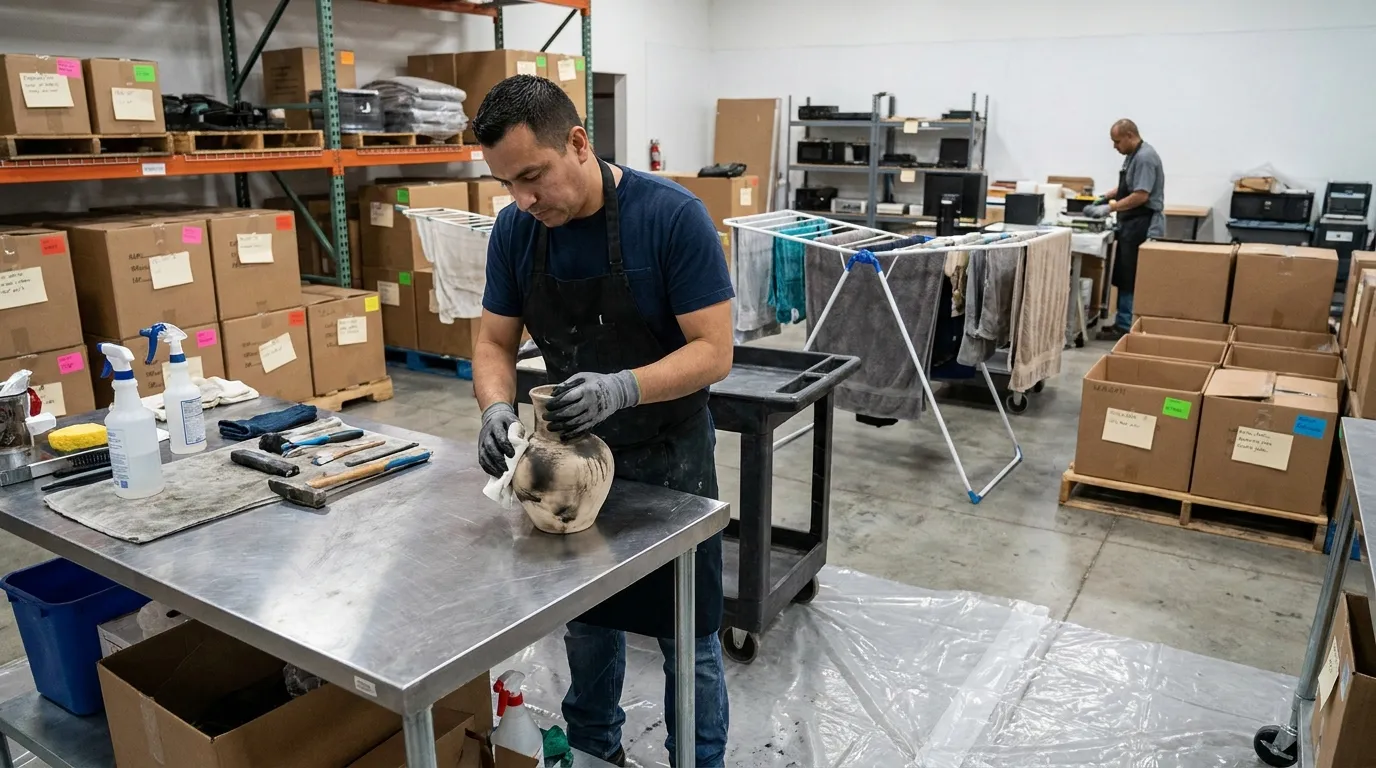
When a water, fire, or smoke loss hits, homeowners often assume that visible damage to their belongings means total loss. In most cases, that assumption is wrong. Specialty content cleaning recovers a far higher percentage of household contents than people realize. This guide walks through what gets cleaned, what gets replaced, and how the process works.
The Three Phases of Content Restoration
1. Inventory and Pack-Out
Every item in the affected zone is photographed, tagged, and logged. Salvageable items are packed for transport. Non-salvageable items are documented for the insurance claim and disposed of with the homeowner’s authorization.
This step takes longer than people expect but matters more than any other. The inventory becomes the insurance claim line items, the cleaning scope, and the basis for the replacement-cost discussion at the end.
2. Cleaning and Restoration
Items are transported to our climate-controlled facility where specialty cleaning runs by category:
- Hard goods (furniture, glass, metal, ceramics): Surface cleaning, deodorization, refinishing as needed.
- Soft goods (clothing, linens, drapes): Specialty laundering with ozone and HEPA filtration in the wash cycle.
- Electronics: Ultrasonic cleaning, corrosion inhibition, function testing.
- Photos and documents: Freeze-drying for water damage, gentle cleaning for soot exposure.
- Artwork and antiques: Conservation specialists for high-value pieces.
- Books: Page-by-page cleaning or freeze-drying depending on damage.
3. Storage and Pack-Back
Cleaned items stay in climate-controlled storage until the home is ready. When the rebuild is complete, the same crew that packed out delivers and places items back in their original locations using the inventory photographs as the guide.
For more on the pack-out side, see how furniture is saved during a restoration pack-out.
What Saves and What Does Not
Usually Salvageable
- Solid wood furniture (cleaning, refinishing).
- Metal furniture and fixtures.
- Glass, ceramic, and stone items.
- Electronics if cleaned within 1 to 2 weeks of exposure.
- Most clothing and linens.
- Hardcover books with limited water exposure.
- Photos if processed within 48 hours of wetting.
Sometimes Salvageable
- Upholstered furniture (depends on saturation and contamination level).
- Mattresses (rarely saved on Category 2 or 3 water, sometimes on smoke).
- Wood case goods with veneer damage.
- Paperback books and magazines.
Not Salvageable
- Anything contaminated with Category 3 water (sewage, flood water).
- Particleboard furniture that has swelled.
- Insulation, mattress padding, pillows once saturated.
- Food items.
- Cosmetics and toiletries.
Specialty Categories
Electronics
Soot and smoke residue is acidic. Within days, it begins corroding circuit boards, contacts, and connectors. Specialty restoration involves:
- Power disconnection (never test a smoke-exposed device).
- Disassembly in a clean environment.
- Ultrasonic cleaning of internal components.
- Corrosion inhibitor application.
- Reassembly and function testing.
Recovery rates run 70 to 90 percent when work begins within two weeks.
Photos and Documents
Wet paper begins fiber breakdown within hours. The standard preservation pathway:
- Freeze immediately (a household freezer works for triage).
- Transport to a freeze-drying facility.
- Sublimation removes moisture without liquid phase, preserving the original.
- Optional digitization for backup.
Heirlooms and Antiques
Family pieces of high sentimental but variable monetary value are handled with separate documentation and conservator coordination. Restoration vs. replacement decisions are made with the homeowner directly.
What Homeowners Get Wrong
- Trying to clean smoke-damaged items at home. Standard cleaners drive soot deeper into porous materials.
- Running smoke-exposed electronics to “test” them. Powers up corrosion and shorts components.
- Throwing wet photos in a pile. They fuse together within hours. Separate or freeze immediately.
- Discarding items without inventory documentation. Lost insurance value.
The Insurance Side
Personal property coverage on a standard homeowners policy typically pays cleaning and restoration costs up to the item’s replacement value. We provide itemized documentation showing:
- Original item, photographed.
- Cleaning scope and cost.
- Replacement cost comparison.
- Final disposition (cleaned vs. replaced).
This format is what insurance adjusters expect and what gets the claim closed quickly.
Related Services
Bingham Restoration provides full content cleaning and pack-out as part of pack-out services. Call 520-FLOODED to discuss a project.
Frequently Asked Questions
Can smoke-damaged electronics be saved?
Often yes, if cleaned promptly. Soot is acidic and corrodes electronic components within days to weeks. Specialty restoration techniques including ultrasonic cleaning and corrosion inhibitors recover most electronics if work begins quickly.
What about photos and documents?
Wet photos and documents can usually be saved through freeze-drying (sublimation), which removes moisture without further damage. Time-sensitive: freeze within 48 hours of wetting, then process at a freeze-drying facility.
Does insurance cover content cleaning?
Most policies cover personal property loss including cleaning and restoration of contents. The carrier typically pays for cleaning when the cost is less than replacement value. Heirlooms and irreplaceable items are evaluated separately.
Need Emergency Restoration Right Now?
Our crews arrive in 48 minutes on average and bill your insurance directly.
Call 520-FLOODED