
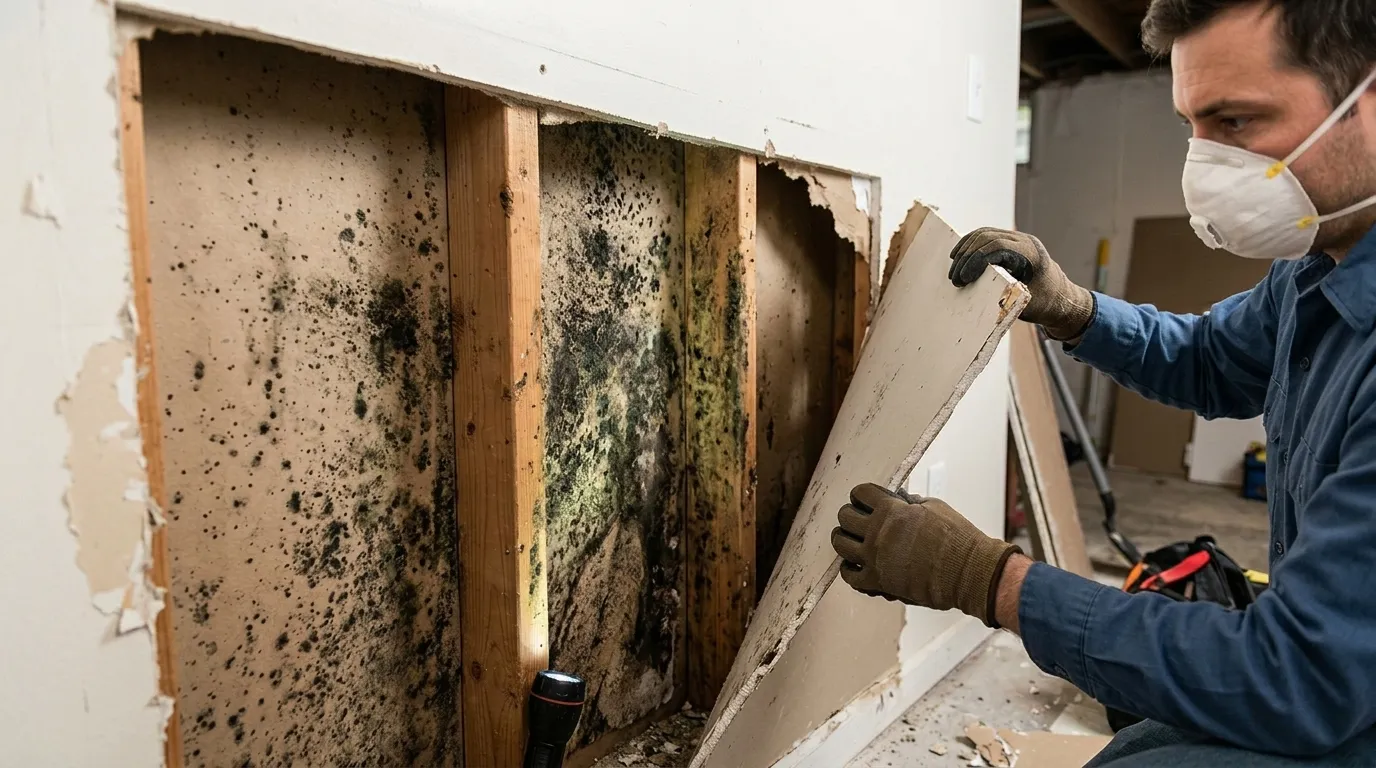
Mold and Asbestos Remediation Contain, Remove, and Restore
Mold and asbestos require careful containment and certified handling. We inspect, remove, and restore your property with safety and documentation in mind.
Certified Remediation Services
We provide safe, compliant remediation with clear reporting.
Inspection and Testing
Visual inspection and sampling to identify affected areas.
Containment Setup
Negative air and sealed barriers reduce cross-contamination.
HEPA Filtration
Air scrubbers reduce airborne particles during remediation.
Material Removal
Safe removal and disposal of affected building materials.
Clearance Support
Post-remediation air quality testing and verification to confirm areas are clean and safe for reoccupation.
Prevention Planning
Moisture control and repair guidance to prevent recurrence.
Safety-First Remediation
We follow strict protocols to protect your family and property.
Certified Technicians
Trained teams that follow industry remediation standards.
Containment and Control
Negative air and sealed barriers reduce risk during removal.
Clear Documentation
Reports that support insurance and property disclosure needs.
When Mold and Asbestos Become a Problem
Moisture drives mold growth; older building materials often hide asbestos until renovation or water damage exposes them. Testing first keeps remediation scoped correctly and keeps fibers and spores from spreading.
Water Damage and Hidden Moisture
Mold can begin growing within 24–48 hours of water exposure. Slow leaks inside walls, crawlspace humidity, and incomplete drying after a flood leave framing and drywall wet long enough for colonies to spread out of sight, often behind baseboards and under cabinets.
HVAC and Poor Ventilation
Condensation in ducts, clogged condensate lines, and rooms without adequate airflow create recurring mold conditions even when no pipe has burst. Remediation must address the moisture source or growth returns after cleaning.
Pre-1980s Building Materials
Homes and buildings built before the 1980s commonly contain asbestos in flooring, insulation, popcorn ceilings, and drywall compound. Disturbing those materials during demo or repair without testing and containment releases fibers into the air and can contaminate the rest of the home.
Containment, Removal, and Clearance
Certified protocols protect the rest of your home while contaminated materials are removed.
Inspect and Test
We assess visible growth, moisture sources, and suspected asbestos-containing materials. Sampling and lab analysis confirm what must be remediated before work begins, so the scope matches the actual hazard.
Containment and Negative Air
Work zones are sealed with barriers. Negative air machines with HEPA filtration keep spores and fibers from migrating into clean areas of the home while technicians work inside the containment.
Remove and HEPA Clean
Affected building materials are removed and disposed of properly. Surfaces and air are cleaned with HEPA equipment. AHERA-certified crews handle asbestos abatement; mold work follows recognized industry remediation standards.
Clearance Testing and Restore
Post-remediation air quality testing verifies the space is safe for reoccupation. You receive clearance documentation, then we guide moisture-control repairs and rebuild so the problem does not return.
Coverage Depends on the Moisture Source
Mold is typically covered when it results from a sudden, covered water loss such as a burst pipe, and often excluded when it stems from long-term humidity or neglected leaks. Coverage caps are common. Asbestos abatement tied to a covered restoration is frequently included in the claim scope. Bingham documents the moisture source and materials involved, coordinates with your adjuster, and bills your insurance company directly. Your deductible remains your responsibility. Call 520-FLOODED for inspection and testing guidance anytime.
Mold & Asbestos FAQs
Mold & Asbestos Remediation Across the Country
Bingham Restoration responds 24/7 across 10 states with a 48-minute average arrival time. Find emergency help near you:
- Mold & asbestos remediation in Phoenix, AZ
- Mold & asbestos remediation in Tucson, AZ
- Mold & asbestos remediation in Salt Lake City, UT
- Mold & asbestos remediation in Las Vegas, NV
- Mold & asbestos remediation in Los Angeles, CA
- Mold & asbestos remediation in Seattle, WA
- Mold & asbestos remediation in Dallas, TX
- Mold & asbestos remediation in Kansas City, MO
- Mold & asbestos remediation in Nashville, TN
Need Remediation Help? We Are Ready.
Call now or request a callback. We work directly with your insurance company to streamline your claim.