
Bingham Restoration Resources
Safe Demolition: When Materials Can't Be Saved
Published May 20, 2026
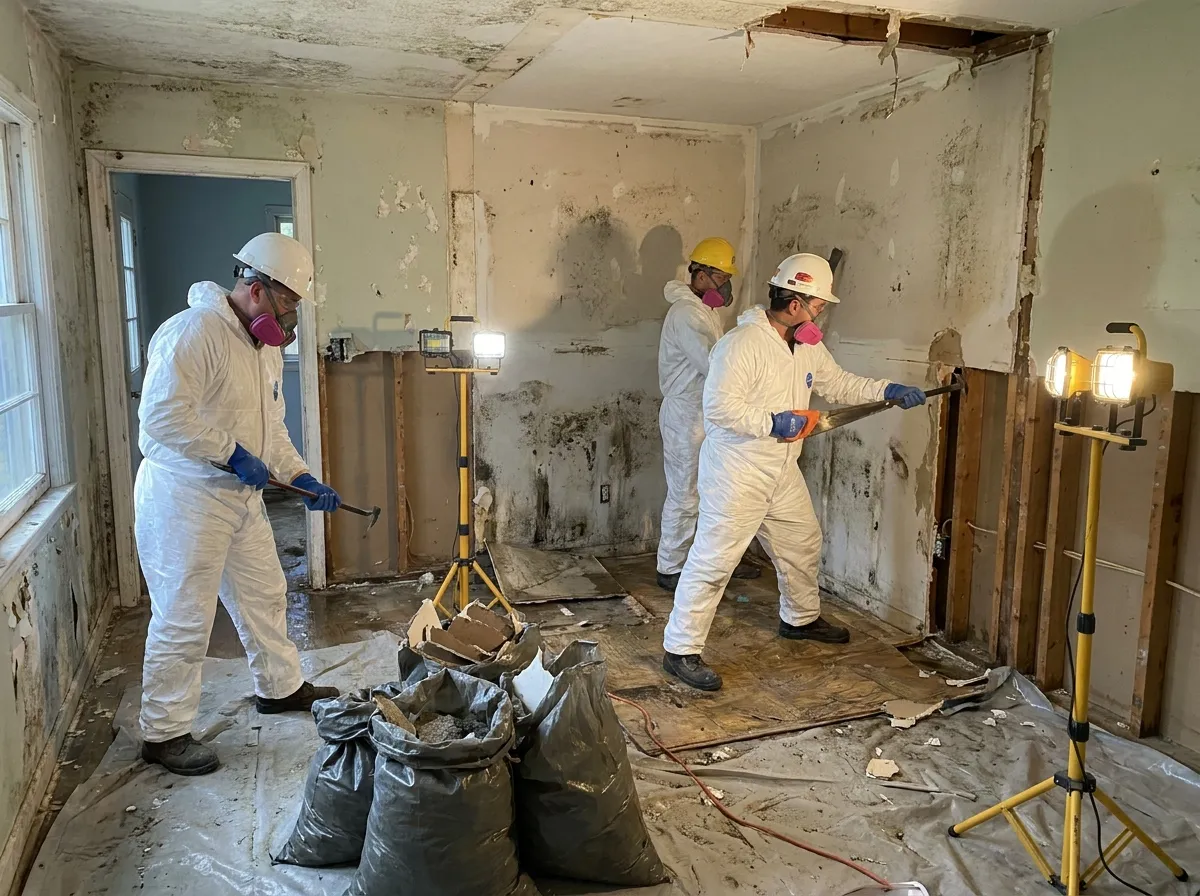
Restoration is often described as the process of returning a home to pre-loss condition, and most of the time that means cleaning, drying, and repairing what is already there. But on a meaningful share of projects, restoration includes controlled demolition, because some materials cannot be saved. Knowing when demo is the right call, and how to do it safely, is the difference between a project that holds up over time and one that produces hidden problems six months later.
This guide walks through when demolition is necessary, how safe demolition differs from standard demo, and what homeowners should expect from a controlled abatement project.
When Demolition Is Necessary
The decision to demolish rather than clean is made by IICRC standards, by the material itself, and by the type of contamination present. A few common triggers.
Category 3 water losses. Sewage, flood water, and other contaminated water are classified as Category 3 under IICRC S500. Porous materials that have touched Category 3 water, including drywall, insulation, carpet, carpet pad, and baseboards, have to be removed. The standard does not allow cleaning in place because porous materials cannot be reliably decontaminated.
Category 2 water on certain materials. Category 2 is gray water from sources like washing machine overflow or dishwasher leaks. The removal threshold is lower than Category 3 but higher than clean water. Materials that have been wet for more than 48 hours in a Category 2 loss often have to be removed.
Mold colonization. IICRC S520 calls for removal of colonized porous materials. Drywall with visible mold growth, insulation with any colonization, and carpet that has been wet long enough to grow mold all come out rather than being cleaned.
Fire-damaged framing. Wood framing that has been charred or has lost structural strength from heat exposure has to be replaced. Surface cleaning does not restore the material’s load-bearing capacity.
Asbestos or lead positive results. When a pre-1985 home has a water or fire loss and the affected materials test positive for asbestos or lead, removal has to follow abatement protocols. Standard demo is not legal on regulated materials.
Materials that failed drying. Occasionally a material that was supposed to be dried in place fails during the drying process. Subfloor that delaminates, drywall that shows delayed staining, or flooring that warps after drying all become demolition items partway through the project.
How Safe Demolition Differs from Regular Demolition
A regular demolition is fast. A wall comes down, debris is hauled off, and the next phase starts. Safe demolition is slower and more controlled, and for good reasons.
Containment. The work area is sealed off with polyethylene barriers to prevent dust, debris, and contamination from spreading to unaffected parts of the home. On a mold or asbestos job, the containment is built to standards that include a decontamination airlock for entry and exit.
Negative air pressure. HEPA air scrubbers are set up so air flows into the containment from the rest of the home, not out of it. This keeps any airborne contamination inside the work area where it can be captured by the air scrubbers.
PPE for the crew. Safe demolition means tyvek suits, respirators, eye protection, and in some cases full face protection. The PPE protects the crew from the same contamination the containment is keeping out of the rest of the home.
Controlled removal techniques. Power tools are avoided when they would create excess airborne dust. Wet removal, where material is wetted before being cut, is used on asbestos and in some mold situations to keep fibers and spores from becoming airborne.
HEPA cleaning during and after. The work area is HEPA vacuumed and wet wiped throughout the process, not just at the end. This keeps the containment from becoming a reservoir that reaches the rest of the home when the barriers come down.
Documented disposal. Materials removed during safe demolition are bagged, labeled, and disposed of per the regulations for that specific material. Asbestos waste goes to an approved landfill with documentation. Mold-contaminated material is double-bagged. Everything is tracked in the project file.
What Homeowners Should Expect
A few things to expect during a safe demolition phase.
It looks like more than you expected. A wall cavity that had a small leak often turns out to have more colonized material than the visible stain suggested. The scope can grow during demo as hidden damage becomes visible. This is normal and why daily communication with the crew matters.
Noise and dust are less than standard demo. Containment and HEPA scrubbing actually make a safe demo quieter and cleaner from the homeowner’s perspective than a regular remodeling demo. The containment muffles noise and traps dust before it reaches living areas.
Timeline is longer. Safe demo takes more time than regular demo because of the setup, the PPE changes, and the controlled removal. A room that would take two hours in a remodel might take a full day in a safe demo.
Testing may be part of the process. On asbestos jobs, post-abatement air clearance testing happens before the containment comes down. On mold jobs, air or surface sampling may verify the remediation before reconstruction begins. Bingham runs an in-house environmental lab, which returns results in hours instead of the days a third-party lab takes.
Documentation is continuous. Photos before, during, and after. Disposal records. Containment setup photos. Every stage of the demo is logged for the insurance file.
The Connection to Reconstruction
Safe demolition is not the end of a restoration project, it is the middle. Once the affected materials are out and the space is cleaned, the reconstruction phase replaces what was removed with new materials. A well-run project hands off cleanly from demo to reconstruction, with documentation that shows the adjuster exactly what came out and what is going back in.
The most common mistake homeowners make is treating demo and reconstruction as separate projects with separate contractors. A single crew that handles both phases preserves continuity, documentation, and accountability. Splitting the project almost always creates coordination gaps and claim problems.
What Bingham Does
Our demo and abatement crews work across every metro where we run restoration, including Phoenix, Salt Lake City, Las Vegas, Los Angeles, Seattle, Dallas, Kansas City, Tucson, Nashville, and the surrounding communities in each region. Our crew leads are trained on the S500 and S520 protocols, and we follow them in full on every project. We run testing through our in-house environmental lab, which shortens turnaround from days to hours on most samples.
We bill insurance directly, document every removal and every disposal, and coordinate with your adjuster through the full project. Our crews arrive in 48 minutes on average.
If you are in the middle of a loss that looks like it will require demolition or abatement, call 520-FLOODED and a Bingham crew will be on the way.
Frequently Asked Questions
When does restoration require demolition instead of drying in place?
Anytime the material cannot be restored to pre-loss condition through cleaning and drying. Category 3 water losses almost always require removal of porous materials. Mold-colonized drywall and insulation cannot be reliably cleaned. Fire-damaged framing that has lost structural strength has to be replaced. The threshold for removal is set by the IICRC standards and by whether the cleaned result would hold up over time.
How is safe demolition different from regular demolition?
Regular demolition is fast and does not worry about what becomes airborne. Safe demolition uses containment, negative air pressure, PPE, and controlled removal techniques to prevent contamination from spreading to the rest of the home. When the material being removed contains asbestos, lead, or biohazards, safe demolition is not optional, it is regulated.
Will my insurance cover the demolition phase of a restoration project?
When the demolition is necessary to complete a covered restoration, it is typically part of the covered scope. Demolition for elective remodeling is not covered. Demolition triggered by an asbestos or lead positive test is usually covered when the testing is tied to a covered loss. Final coverage is a decision between you and your carrier, and Bingham Restoration documents every removal decision and every line item for your claim file.
Need Emergency Restoration Right Now?
Our crews arrive in 48 minutes on average and bill your insurance directly.
Call 520-FLOODED