
Bingham Restoration Resources
Frozen Pipe Burst: What to Do in the First 60 Minutes
Published June 13, 2026
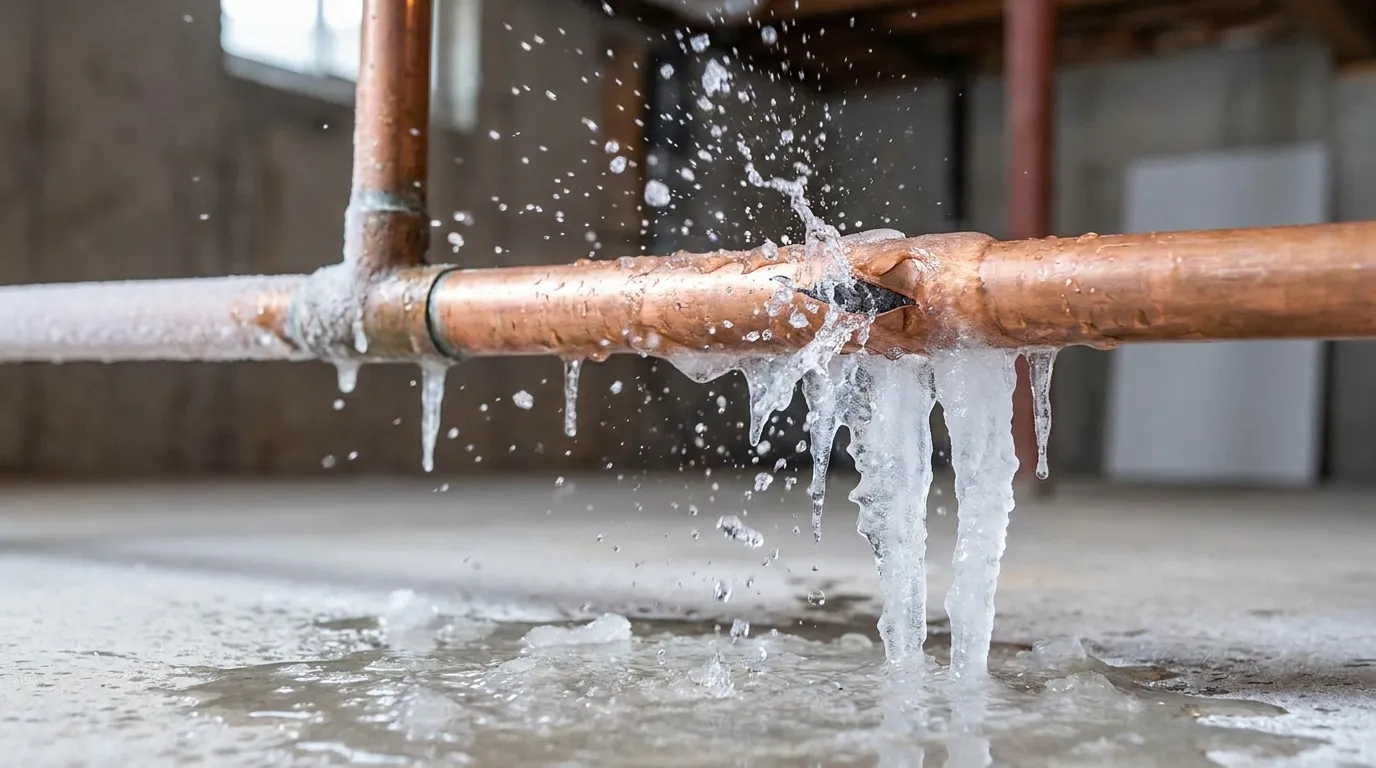
A frozen pipe that bursts is one of the fastest water losses in a home. The volume is high, the path is unpredictable, and the time pressure is intense. This guide gives you the exact sequence to run in the first 60 minutes, in order, so you do not lose the things you can save.
Minute 1: Shut Off the Water
The single most important action is closing the main shutoff valve. Every minute it stays open adds 50 gallons or more to the loss. Where to find it:
- Most homes: Inside near where the water line enters the home, often in a utility room, basement, or garage.
- Slab homes in warm climates: Often on an exterior wall near the front of the home.
- Apartments and condos: The unit shutoff is usually under a kitchen or bathroom sink or in a hallway closet.
If you do not know where it is, find it now, before the next cold snap. Tag it with a label.
Minute 5: Cut the Power to Affected Areas
If water has reached or is approaching outlets, the panel, or any electrical fixture, shut off the breakers for those circuits. If the breaker panel itself is in a wet area, shut the main breaker from a dry, grounded location.
Minute 10: Document Everything
Phone out, video walking the affected rooms. Capture:
- Wide shots showing the extent of water.
- Close-ups of the burst point if visible.
- Thermostat setting on the wall (proves the home was heated).
- Affected belongings, with serial numbers on electronics and appliances.
- Time stamps on every photo.
Skip this step and the adjuster will have questions you cannot answer.
Minute 15: Call Your Restoration Team
Call Bingham Restoration at 520-FLOODED. Our crews average 48 minutes from dispatch to on-site arrival. While you wait, do not start tearing into walls or pulling up floors. The wrong demolition costs you money on reinstallation and can damage the documentation chain for insurance.
Minute 30: Move What You Can
Focus on items that are salvageable right now and not on furniture you cannot lift alone:
- Documents, electronics, photo albums.
- Area rugs (lift, do not drag).
- Soft furnishings out of the wet zone.
- Place aluminum foil under wood furniture legs to prevent stain transfer.
Minute 45: Open Other Faucets
If the burst is in one section of the home, open faucets elsewhere in the system to relieve pressure on other frozen sections. This helps prevent a second burst when the system thaws.
Minute 60: Stay Out of Cold Air Until We Arrive
Resist the urge to open windows for ventilation in freezing weather. Cold outdoor air does nothing useful at this point, and it creates new freezing risk in other lines. Keep the heat running.
What Happens When We Arrive
Our crew will:
- Verify the source is fully isolated.
- Map moisture with thermal cameras through walls and floors.
- Begin extraction immediately.
- Identify saturated materials for removal.
- Coordinate with your plumber on permanent pipe repair.
- Set up structural drying with air movers and commercial dehumidifiers.
- Document everything for your insurance carrier.
For more on what to expect from the full timeline, see the emergency restoration timeline.
Preventing the Next One
- Insulate pipes in exterior walls, attics, and crawlspaces.
- Set the thermostat no lower than 55°F when traveling in winter.
- Open cabinet doors under sinks on exterior walls during cold snaps.
- Let one faucet drip during extreme cold.
- Know your shutoff valve location and confirm it turns easily.
Related Services
Bingham Restoration provides 24/7 water damage restoration for frozen pipe bursts. Call 520-FLOODED for an active loss.
Frequently Asked Questions
How much water comes out of a burst pipe?
A half-inch supply line under residential pressure delivers about 50 gallons per minute. An unattended burst that runs for 30 minutes releases as much water as 1,500 toilet flushes. Time to shutoff is the single biggest variable in damage scope.
Does insurance cover frozen pipe damage?
Most standard policies cover sudden water damage from a frozen pipe burst, provided the home was reasonably heated. Policies often deny claims where heat was off in unoccupied homes or where vacant property exclusions apply. Document the heat setting in your photos.
Can I thaw a frozen pipe myself?
If the pipe has not yet burst and you can locate the frozen section, gentle heat with a hair dryer or heating pad can work. Never use a torch, propane heater, or open flame. If the pipe is hidden in a wall, call a plumber rather than risk a burst inside the cavity.
Need Emergency Restoration Right Now?
Our crews arrive in 48 minutes on average and bill your insurance directly.
Call 520-FLOODED