
Bingham Restoration Resources
Pipe Burst Emergency Checklist: Stop the Damage
Published April 25, 2026
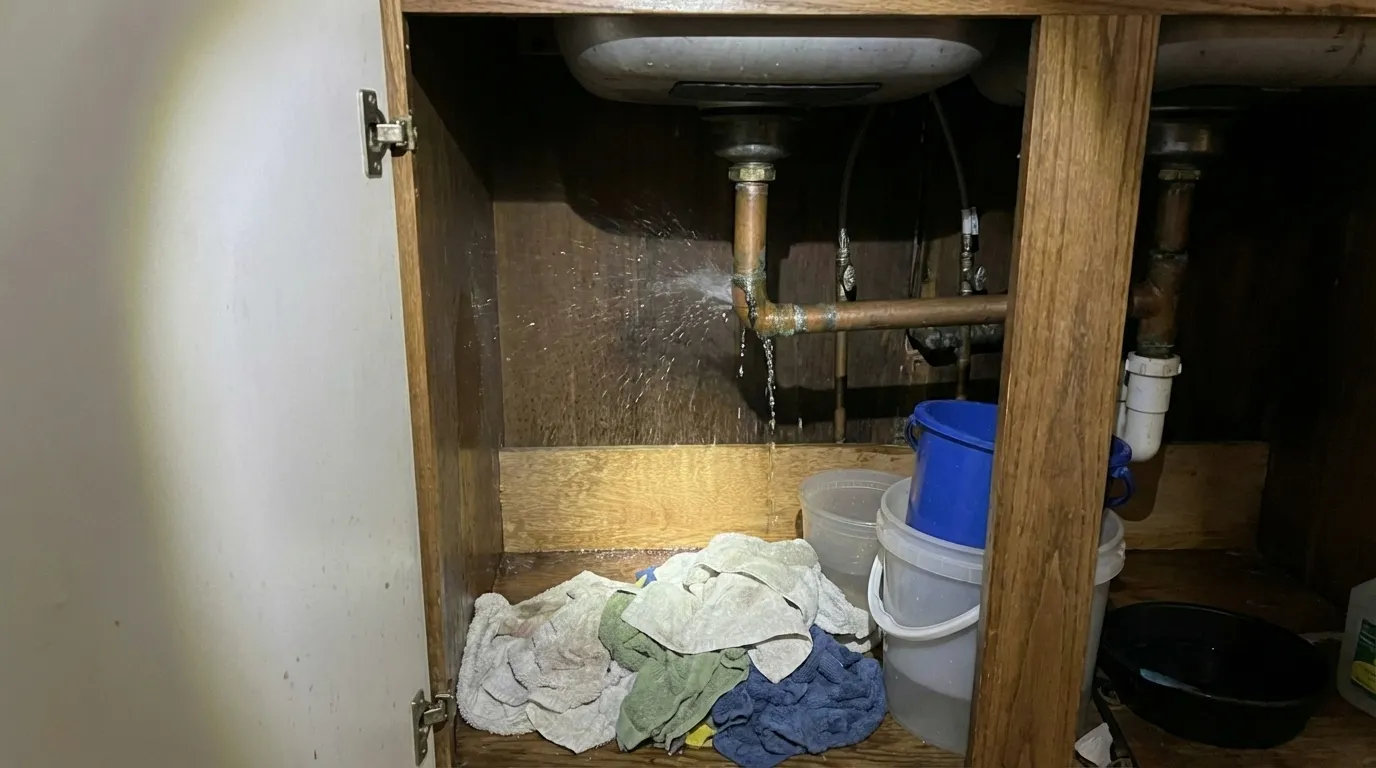
A burst pipe is one of the fastest water events a home can experience. A half-inch supply line at normal residential pressure pushes around six gallons per minute when it is fully open. That is 360 gallons an hour, or roughly 1,500 gallons in the time it takes to eat dinner and figure out what is happening. The first ten minutes after a burst shape how much of your home can be saved, how much the final repair costs, and how cleanly your insurance claim comes together.
This is a checklist you should read now, before you need it, and then come back to in the moment if you ever do. The steps are in order of priority. Work through them as fast as you can without putting yourself in danger.
The Ten-Minute Checklist
Minute 1: Stop the Water
The first thing, always, is to cut the supply at the nearest valve. Most homes have three levels of shutoff.
- Fixture valve. Under a sink or behind a toilet. Fastest for a localized failure.
- Appliance valve. Behind a washing machine or dishwasher.
- Main shutoff. Turns off every line in the house. Use this if you cannot identify the source in the first minute or if the failure is on a hidden line.
If you do not know where your main shutoff is, pause here and go find it. Label it with a piece of tape and a marker so anyone in the house can identify it in the dark, in a hurry, with water falling on the floor. This one prep step saves homes.
Minute 2: Cut the Power if Needed
If water has reached outlets, appliances, or is raining down from a ceiling below the failure, turn off the breaker for the affected area at the panel. Do not step into standing water that could be energized. If the panel itself is in the affected zone, stay out and call an electrician along with a restoration crew.
Minutes 3 to 5: Document Everything
Before you move anything, take photos and video. Wide shots of each affected room, then close-ups of wet walls, wet flooring, damaged belongings, and the actual burst location if it is accessible. This is the single most useful thing you can do for your insurance claim. Adjusters build their decisions around what they can see in the file, and your pictures from the first five minutes are better than any assessment done the next day.
Shoot more than you think you need. Delete the extras later. You can never go back and take these photos after the cleanup starts.
Minutes 6 to 8: Move Valuables Out of the Zone
Rugs, upholstered furniture, electronics, documents, and any soft goods on the wet side of the room. Prioritize anything porous. Hard surfaces can usually be cleaned and dried in place. Fabric, paper, and wood absorb water fast and get harder to save with every hour.
If you have access to a dry part of the house, stage items there on hard flooring. If furniture is too heavy to move, lift the legs onto plastic caps or foil to stop wicking from the wet floor.
Minutes 9 to 10: Call a Restoration Company
A real 24/7 restoration operation will answer the phone live, dispatch a crew immediately, and give you a clear timeline for arrival. Bingham Restoration arrives in 48 minutes on average. Our dispatchers will also walk you through anything else you can do on site while we are on the way.
This is also the point to call your insurance carrier if you have not already. You do not need to wait for an adjuster to arrive before restoration begins. In fact, every carrier expects you to take reasonable steps to prevent further damage, which is exactly what starting mitigation does.
What Not to Do
A few instincts to push back on in the moment.
- Do not wait for the water to stop on its own. It will not. A pipe at residential pressure flows as long as the supply is open.
- Do not start tearing out drywall or flooring yourself. Wait for a crew with the right equipment and a documented scope. Removing materials before a professional inspection can cost you on the claim.
- Do not use a household wet vac on more than a small puddle. Consumer wet vacs are not built for the volume a pipe burst creates, and they do not have the extraction capacity to save carpet pad or subfloor.
- Do not run box fans without a dehumidifier. Fans alone push moisture into walls and up into the air, where it settles somewhere else. Real drying requires air movement and dehumidification together.
Why Speed Matters
The 24 to 48 hour window before mold growth begins is not a suggestion. Mold spores are already present in every home, and once wet materials hit 60 to 80 degrees with moisture in place, colonization starts. Warm rooms shorten that window further. Every hour of delay between the burst and the start of professional drying expands the eventual scope of work.
A fast response routinely saves flooring, cabinets, and drywall that a next-day response has to remove. The cost difference between the two scopes is often the cost of a full kitchen or bathroom renovation.
What Bingham Does When We Arrive
On a pipe burst call, the first crew through the door does five things in the first hour.
- Assess the damage with moisture meters and thermal imaging across every affected surface.
- Extract standing water with truck-mounted or portable equipment, pulling out 80 to 90 percent of the total volume in the first pass.
- Set up drying equipment sized to the affected area: high-velocity air movers across wet surfaces and commercial dehumidifiers pulling moisture out of the air.
- Document the scope with photos, moisture readings, and an Xactimate line-item estimate for your insurance file.
- Coordinate with a plumber if the burst pipe has not already been repaired, so the source is fully stopped before drying runs.
From that point, we monitor daily until the structure is back to baseline moisture, and we stay in contact with your adjuster through the entire process.
If you are looking at a burst pipe right now, do not wait. Call 520-FLOODED and a Bingham crew will be on the way.
Frequently Asked Questions
Where is my main water shutoff usually located?
In homes with basements, the main shutoff is almost always on the wall where the water supply enters the house. In slab-on-grade homes, it is typically near the water heater, in a utility closet, or outside at the meter. Take five minutes right now to find yours and label it. That single piece of prep saves thousands of gallons if a pipe fails.
Should I try to patch the pipe myself?
Not usually. The priority is stopping the flow at the nearest shutoff and starting water removal. A temporary patch can help if it stops an active leak while you wait for a plumber, but do not put yourself near pressurized water, electrical hazards, or unstable ceilings. A restoration crew will coordinate with a licensed plumber on repairs.
Will a pipe burst be covered by homeowners insurance?
Sudden pipe failures from pressure, freezing, or corrosion are generally covered under a standard homeowners policy as a sudden and accidental water loss. Slow leaks that built up over time are usually excluded. Final coverage is a decision between you and your carrier, and Bingham Restoration documents the loss thoroughly for your claim file.
Need Emergency Restoration Right Now?
Our crews arrive in 48 minutes on average and bill your insurance directly.
Call 520-FLOODED