
Bingham Restoration Resources
Restoration vs. Remediation: What's the Actual Difference?
Published June 20, 2026
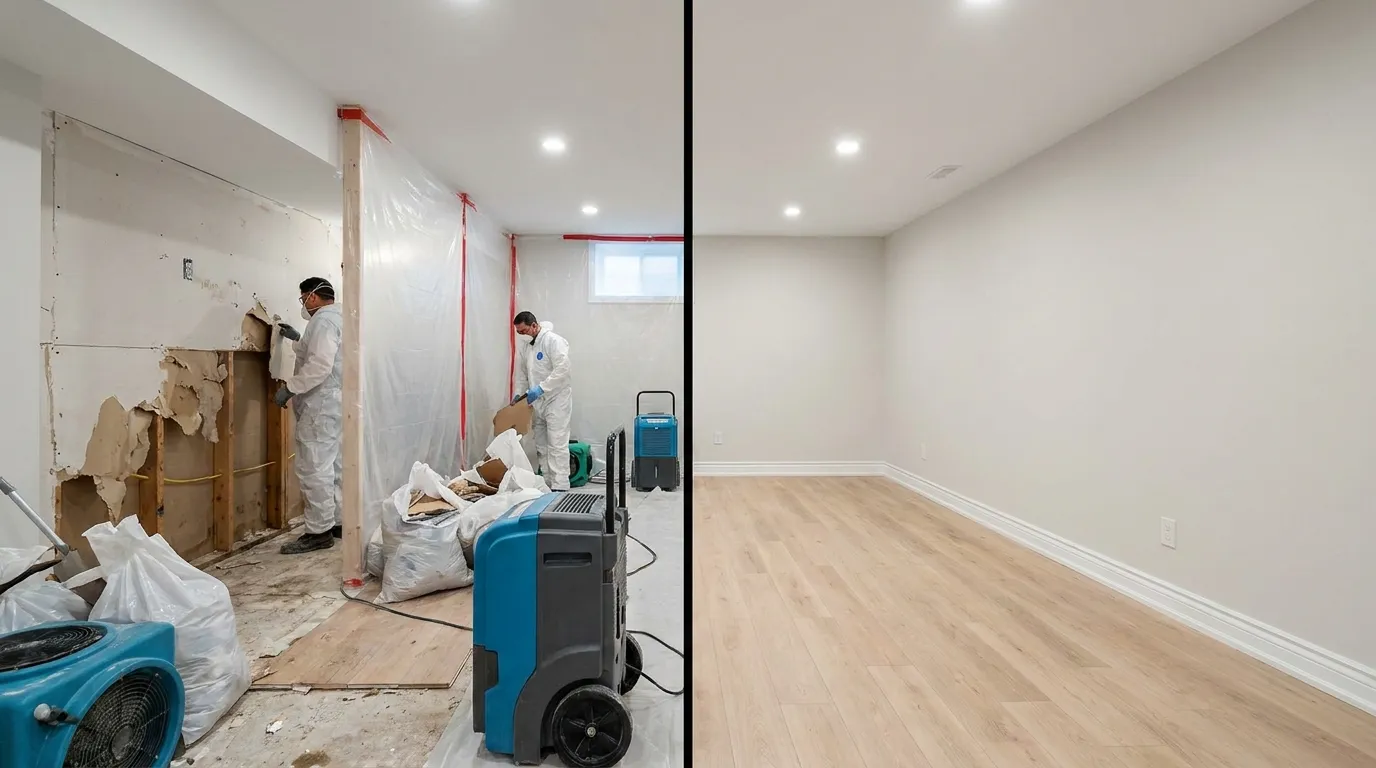
“Restoration” and “remediation” are often used interchangeably by homeowners, insurance professionals, and even some contractors. Technically, they describe different phases of recovery work, each with different standards, certifications, and outcomes. Understanding the difference helps you read estimates clearly and ask the right questions.
Remediation: Removing the Problem
Remediation is the process of removing damage, contamination, or hazardous material from a building. Examples:
- Water remediation: Extraction of standing water, removal of saturated materials, structural drying.
- Mold remediation: Containment, removal of mold-affected materials, HEPA cleaning, air clearance.
- Asbestos remediation (abatement): Licensed removal of asbestos-containing materials under regulated containment.
- Smoke remediation: Soot and residue removal, deodorization, HVAC cleaning.
The end state of remediation is a building that has been returned to a clean, dry, safe substrate condition. The walls may be open. The carpet may be gone. The space is not yet livable, but it is no longer contaminated.
Restoration: Returning to Pre-Loss Condition
Restoration is the process of returning the building to its pre-loss state. Examples:
- Reinstalling drywall, taping, texturing, painting.
- Installing new flooring matched to the original.
- Replacing baseboards, trim, and door casings.
- Rebuilding cabinetry, vanities, and built-ins.
- Final cleaning and walkthrough.
The end state of restoration is a building you would not know had a loss. The work is cosmetic and structural, performed against a clean and dry substrate that remediation produced.
Why the Distinction Matters
Three reasons the difference actually shows up on your project.
1. Different Standards Apply
Remediation work follows IICRC standards (S500 for water, S520 for mold, S700 for fire) and OSHA or EPA regulations for hazardous materials. Restoration work follows building codes and trade standards (drywall, paint, flooring).
2. Different Verification Required
Remediation has clearance criteria — moisture readings, air quality samples, surface tests — that must be met before restoration can begin. Skipping the verification step is the most common source of failed restoration projects. New drywall installed over wet framing leads to mold within weeks.
3. Different Insurance Treatment
Most insurance carriers separate the remediation scope from the restoration scope in their estimates. The remediation phase is often paid at one rate structure (often Xactimate emergency rates), the restoration phase at another. A contractor who confuses the two on the estimate can leave money on the table or trigger claim friction.
Why Splitting Vendors Is Risky
Some homeowners split the work between a “remediation company” and a separate “restoration contractor.” This creates handoff gaps:
- The remediation company says drying is complete. The restoration contractor disagrees on day one of installation.
- Documentation between the two is incomplete, and the insurance carrier asks questions neither vendor can fully answer.
- The remediation cleanup misses small areas the restoration phase needs to address, which then becomes a back-and-forth.
The cleaner path is a single team that handles end-to-end work with verified handoffs between phases.
For more on what the end-to-end timeline looks like, see the emergency restoration timeline.
What to Ask Your Contractor
- Are remediation and restoration both within your scope, or do you sub one out?
- What verification do you perform between the two phases?
- Who signs off that the substrate is ready for restoration?
- How is the documentation handed to my insurance carrier between phases?
Related Services
Bingham Restoration handles end-to-end water damage, fire damage, and mold remediation with verified handoffs between phases. Call 520-FLOODED to discuss a project.
Frequently Asked Questions
Are restoration and remediation the same thing?
No. Remediation is the removal of the contamination or damage. Restoration is the return of the building to pre-loss condition. Most projects involve both, but they are different phases with different specialties, certifications, and standards.
Do I need a restoration company or a remediation company?
For most water, fire, or mold losses, you need a company that handles both. Splitting the work between two contractors creates handoff gaps where moisture verification, documentation, and scope alignment can fall through. Bingham Restoration handles end-to-end.
Which phase costs more?
It varies. Remediation cost scales with the contamination severity (water category, mold square footage, smoke type). Restoration cost scales with the finish quality being restored. High-end finishes can make restoration the larger of the two on a small remediation.
Need Emergency Restoration Right Now?
Our crews arrive in 48 minutes on average and bill your insurance directly.
Call 520-FLOODED