
Bingham Restoration Resources
Storm Damage Restoration: From Tarp to Rebuild
Published June 23, 2026
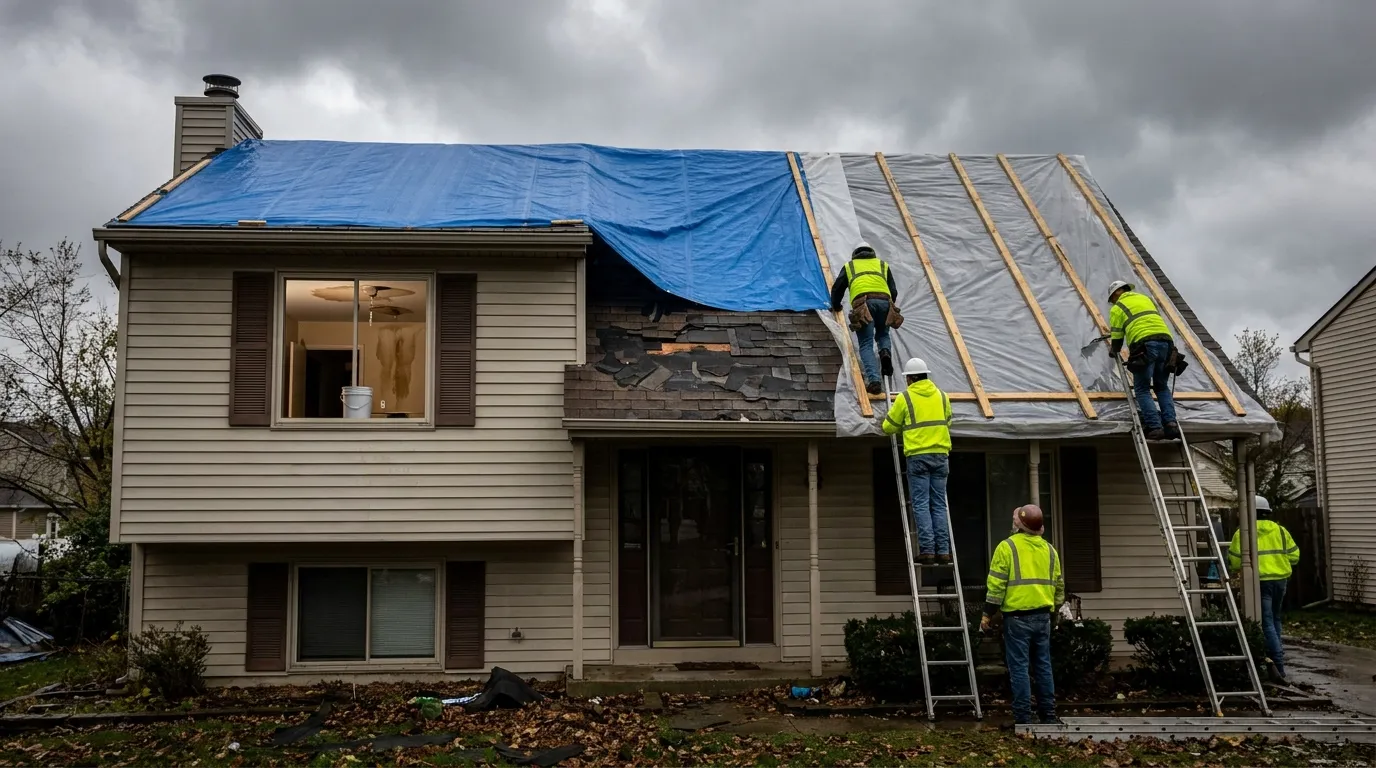
Storm damage is one of the most common reasons homeowners call a restoration company, and one of the most complex because it usually involves multiple trades, multiple causes, and a more involved insurance claim. This guide walks through how the work runs from the first hour through final rebuild.
The First Hour: Stabilize the Envelope
The first goal after a storm is to stop further damage. Every additional hour with an open roof or broken window adds to the loss. Emergency stabilization includes:
- Roof tarping over damaged sections to prevent further water intrusion.
- Board-up of broken windows, doors, or wall penetrations.
- Tree removal where limbs have fallen onto the structure.
- Temporary power coordination if utility service is disrupted.
Our crews carry tarping materials, plywood, and securing hardware on every truck so stabilization happens on arrival, not after a separate dispatch.
What Storm Damage Looks Like Inside
Once the envelope is stabilized, the interior scope becomes visible. Common storm damage patterns:
- Water intrusion from a damaged roof that has saturated insulation and drywall in attics and upper ceilings.
- Wind-driven rain that has entered through failed sealants around windows.
- Hail-bruised shingles that pass water through over the next several weeks as the storm damage worsens with normal rain.
- Tree impact damage that has compromised framing.
- Lightning strike damage to electrical systems and roofing.
Each of these has its own scope and often its own trade partner. We coordinate roofers, electricians, and structural engineers as needed while the restoration work proceeds.
The Restoration Sequence
- Emergency stabilization (tarping, board-up).
- Water mitigation — extraction, drying, dehumidification.
- Damage documentation for the insurance carrier.
- Trade coordination for permanent repairs (roof, windows, electrical).
- Demolition of unsalvageable materials.
- Drying verification.
- Reconstruction — drywall, paint, flooring, trim.
- Final walkthrough and warranty.
For more on water-side response specifically, see the emergency restoration timeline.
What Storm Coverage Usually Includes
A standard HO-3 policy covers:
- Wind damage to the structure.
- Hail damage to roof and exterior.
- Water damage from wind-driven rain through a wind-created opening.
- Lightning strike damage and resulting fire.
- Tree fall damage to the structure.
- Loss of use (additional living expense) during repairs.
What it usually does not cover:
- Rising water flood damage (requires separate flood policy).
- Damage from a roof in pre-existing poor condition.
- Wear and tear that the storm exposed but did not create.
- Mold that develops later if the original water damage was not promptly addressed.
The last point matters. Carriers routinely deny mold claims when the underlying water damage was not properly mitigated. Prompt response protects coverage.
Documenting the Claim
Storm claims have more documentation burden than typical losses because the cause attribution matters. We document:
- Date and time of storm event from public weather records.
- Damage with photos and video before any work begins.
- Source and direction of intrusion.
- Moisture readings throughout the loss.
- Materials affected, with measurements.
- Daily progress through the mitigation phase.
This level of documentation is what gets storm claims paid quickly. Without it, the carrier asks questions you cannot answer weeks later.
What Homeowners Get Wrong
- Waiting for the adjuster before tarping. Mitigation is a homeowner duty under nearly every policy. Failure to mitigate can reduce coverage.
- Accepting the first roofer who knocks. Post-storm door-knocking contractors are common in damaged neighborhoods. Many are legitimate; some are not. Vet credentials before signing.
- Signing a contractor “assignment of benefits.” This transfers your claim rights to the contractor. In many cases it limits your options.
- Skipping the mold check. Roof water intrusion is a top driver of attic and wall-cavity mold. Inspect 30 to 60 days after restoration.
Related Services
Bingham Restoration provides 24/7 storm response across our water damage restoration services including emergency tarping and board-up. Call 520-FLOODED for an active loss.
Frequently Asked Questions
Is storm damage covered by homeowners insurance?
Most named-peril and all-risk homeowners policies cover wind, hail, and lightning damage. They do not typically cover rising-water flood damage from a storm, which requires separate NFIP or private flood insurance. Wind-driven rain through a covered opening is usually covered.
What does emergency board-up include?
Tarping damaged roof sections, boarding broken windows and doors, and securing the property against weather and intrusion until permanent repairs begin. Most insurance policies cover emergency board-up as part of mitigation.
How long do I have to file a storm damage claim?
Most policies require notification within a reasonable time, often defined as 30 to 60 days. Document everything immediately and file as soon as possible. Delays beyond the policy window are a common reason for denials.
Need Emergency Restoration Right Now?
Our crews arrive in 48 minutes on average and bill your insurance directly.
Call 520-FLOODED