
Bingham Restoration Resources
Toilet Overflow Cleanup: When You Can DIY and When to Call
Published June 4, 2026
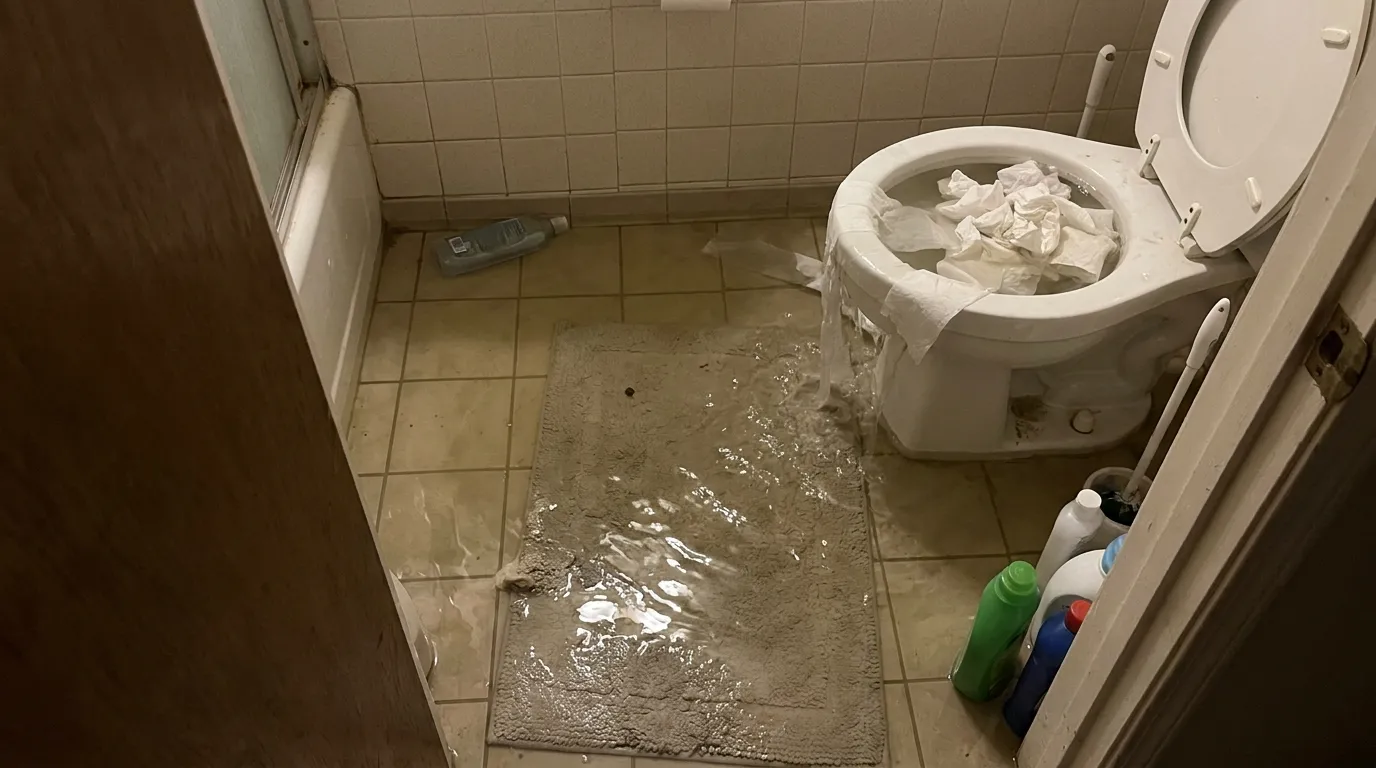
A toilet overflow is one of the most common water losses we respond to, and also the one homeowners most often try to handle themselves before realizing the scope is larger than the puddle on the floor. This guide walks through what to do in the first minute, how to read the water you are looking at, and when to stop and call.
Step 1: Stop the Flow
For most overflows, the immediate fix is at the toilet itself.
- Lift the tank lid and push down on the flapper valve. This seals the tank and stops the refill cycle.
- Reach behind the toilet and close the supply valve. A quarter turn clockwise on the oval handle stops water from the wall.
If the toilet is overflowing from the bowl rather than the tank, the issue is a clog combined with continued fill. Closing the supply valve is the right move either way. Do not flush again to “test” until you have cleared the blockage.
Step 2: Read the Water
Before you touch anything, identify the source. Cleanup gear and method depend on it.
- Tank water overflow. The tank cracked or the fill valve failed. This is clean potable water and a Category 1 loss.
- Bowl water from a clog. Water from above the trap seal that includes nothing from the drain side. Category 2.
- Bowl water from a sewer backup. Water rising up through the bowl because the main line is blocked. Category 3. Stop here and call.
- Wax ring failure at the base. Slow seepage rather than a flood, but the water is whatever is being flushed. Category 2 or 3 depending on use.
The visual that tells you the difference is direction and content. Clean water from above the rim is the tank. Water around the base only is the wax ring or supply line. Water with any visible content from the bowl, or water that keeps rising with no flushing, is the drain side.
Step 3: Containment and Extraction
For a Category 1 or contained Category 2 overflow under about 25 square feet:
- Lay towels at the bathroom threshold to keep water from migrating to adjacent rooms.
- Use a wet/dry vacuum to extract standing water. Start from the perimeter and work inward.
- Pull and dispose of any porous materials that are saturated. Bath mats, towels, and rugs in the affected zone are usually trash on a Category 2 loss.
- Wipe hard surfaces with a household disinfectant.
- Run a fan and a dehumidifier on the room for 24 to 48 hours.
Any of these factors flip the job to professional scope:
- Water crossed into another room or downstairs.
- The water source is or might be sewer-side.
- The subfloor feels soft.
- Anyone in the home is immunocompromised, pregnant, or under two.
- The toilet is on an upper floor and the ceiling below is showing stains.
What Homeowners Get Wrong
- Mopping instead of extracting. A mop spreads contamination. Extraction with a wet vacuum is the minimum first move on any toilet overflow.
- Leaving baseboards on after a Category 2 loss. The drywall behind the baseboard wicks moisture upward, and the colony that follows in the cavity is invisible.
- Bleaching everything. Standard household bleach is not the right antimicrobial for porous surfaces, and it does not address the moisture that is the real problem.
- Skipping the ceiling below. Upper-floor toilet overflows almost always damage the ceiling below before anyone notices. Inspect from the room below within an hour.
For more on how Category 2 and 3 cleanup should run, see our sewage backup cleanup guide.
When the Toilet Was Out of Use Overnight
A common scenario: the overflow happens overnight, and water has been sitting on the floor for hours by the time it is discovered. Treat this as a professional call regardless of category. The subfloor below tile or vinyl has almost certainly been affected, and the path forward needs moisture readings before any cleanup is meaningful.
Related Services
Bingham Restoration handles all three water categories. For an active overflow that exceeds the DIY scope above, call 520-FLOODED. Our water damage restoration services cover the full path from extraction to verified drying.
Frequently Asked Questions
Is toilet overflow water dangerous?
It depends on the source. Clean fill-line water that overflows from the tank is Category 1. Water from the bowl above the trap seal is Category 2. Anything from a sewer backup, or any water from the bowl that contains waste, is Category 3 and should not be handled without proper PPE.
How long does a toilet overflow take to dry?
A small overflow contained to a bathroom floor can dry in 24 to 48 hours with proper extraction and air movement. Water that reached the subfloor or migrated into adjacent rooms typically needs 3 to 5 days of commercial drying.
Will insurance cover a toilet overflow?
Sudden and accidental overflows from a working toilet are typically covered under standard homeowners policies. Backups from the sewer line into the toilet usually require a separate sewer backup endorsement. We document the source clearly so your claim is filed correctly.
Need Emergency Restoration Right Now?
Our crews arrive in 48 minutes on average and bill your insurance directly.
Call 520-FLOODED