
Bingham Restoration Resources
How Much Does Water Damage Restoration Cost?
Published May 23, 2026
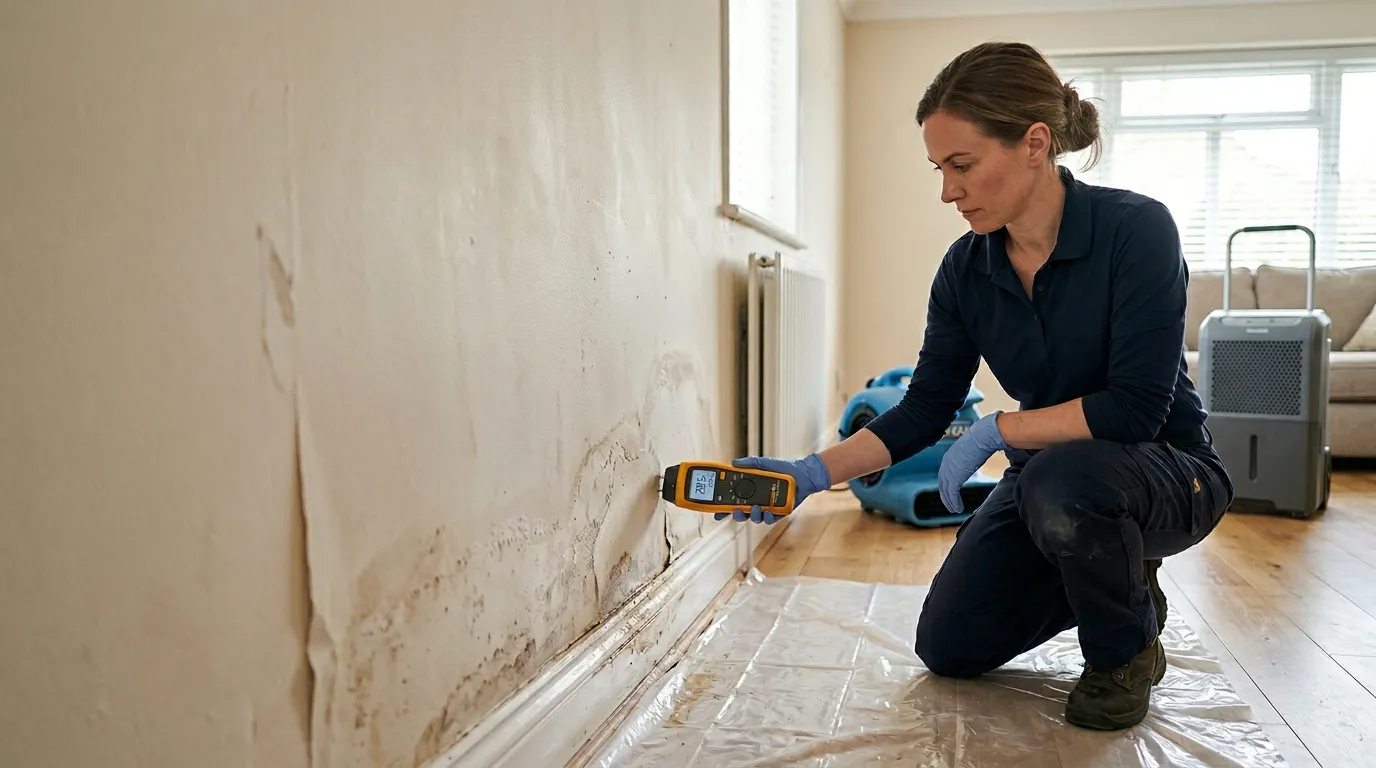
When water shows up where it does not belong, the second question after “how do I stop it” is almost always “what is this going to cost.” There is no honest single number, but there is a clear framework that explains why two seemingly similar jobs can be priced thousands of dollars apart. This guide walks through what actually drives the bill.
The Three Categories of Water
Restoration pricing starts with the IICRC water classification, because contamination changes everything about the scope of work.
- Category 1 (clean water) comes from a supply line, faucet, or appliance fill hose. Extraction and structural drying are the focus. Pricing typically runs the lowest of the three.
- Category 2 (gray water) carries some contamination, like a washing machine drain or a dishwasher discharge. Affected porous materials usually need removal, and the area needs antimicrobial treatment.
- Category 3 (black water) includes sewage, toilet trap-seal water, and outdoor flood water. Anything porous it touches comes out. PPE, containment, and disposal costs climb fast.
A pipe burst in a hallway is a very different job than the same volume of water from a backed-up main, even though the floor looks the same in both photos.
How Square Footage Multiplies the Bill
A single saturated room with intact flooring might be $2,000 to $4,000. Once water has crossed thresholds into two or three rooms, the equipment footprint doubles, drying time extends, and the structural materials affected start to compound. Multi-room and multi-floor losses commonly run $8,000 to $25,000.
The hidden multiplier is vertical travel. Water that flows from an upstairs bathroom into a kitchen ceiling below means two rooms of demolition, two rooms of drying, and two rooms of reinstallation. Pricing nearly always doubles when a ceiling is involved.
The Drying Phase: Often the Largest Line Item
Air movers and dehumidifiers are billed by the unit per day. A typical loss runs 3 to 5 days of equipment, and an average room needs 4 to 6 air movers plus a commercial dehumidifier. The math gets significant quickly, which is one more reason that fast extraction matters. The drier the structure is at the start of day one, the fewer days of equipment you pay for.
Materials and Reinstallation
Demolition and disposal of saturated drywall, baseboard, insulation, and flooring is usually billed by linear or square foot. Reinstallation is a separate scope and a separate trade. Hardwood floor replacement, custom cabinetry, and stone or tile substrates are where budgets stretch the most. We document everything that comes out so your insurance carrier can price the reinstallation against actual cash value and replacement cost coverage.
Hidden Costs That Surprise Homeowners
- Content manipulation and pack-out. If furniture and belongings have to come out of the work zone, that is a labor line.
- Antimicrobial application. Required on any Category 2 or 3 loss.
- Containment. Plastic barriers, negative air machines, and HEPA filtration when affected areas need isolation from clean zones.
- Post-remediation verification. Independent moisture and air quality clearance testing, often required for mold-adjacent losses.
A clean quote calls each of these out separately so you know what is in scope.
How Insurance Changes Your Out-of-Pocket
If the loss is a covered peril under your homeowners policy, your out-of-pocket cost is usually just your deductible. Bingham Restoration is in-network with all major carriers, bills directly, and handles the documentation your adjuster needs. We also flag uncovered scope before we start it so you are never surprised by a bill at the end of the job.
For the full picture of how insurance treats water losses, see our guide to homeowners insurance and water damage.
What to Ask Before Signing an Estimate
- Is the price line-itemed by extraction, drying, demolition, and reinstallation?
- How many days of equipment are included, and what happens if drying takes longer?
- Who is responsible for moisture verification before reinstallation begins?
- Does the company bill insurance directly or are you fronting the cost and getting reimbursed?
The cheapest estimate is rarely the cheapest job. A crew that under-dries the structure leaves you paying for mold remediation six weeks later. The best protection against an inflated final bill is a documented, certified process from the first hour.
Related Services
Bingham Restoration provides transparent, insurance-direct pricing across our water damage restoration services. Call 520-FLOODED for an on-site assessment if you have an active loss.
Frequently Asked Questions
What is the average cost of water damage restoration?
Most residential jobs land between $2,500 and $7,500, but contaminated water, multi-room saturation, or hardwood and cabinetry damage can push a project well past $20,000. The variable that drives cost more than any other is how quickly extraction and drying begin.
Does insurance pay restoration companies directly?
Yes, when the loss is covered. Bingham Restoration bills your carrier directly so you only owe your deductible. We also document the loss in the format adjusters expect, which reduces the back-and-forth that delays payment.
Will a small leak really cost thousands to fix?
Often, yes. The visible water is rarely the whole story. Drywall, subfloor, insulation, and framing wick moisture far beyond the obvious wet spot, and any of those materials hosting moisture for more than 48 hours typically need removal, drying, and reinstallation.
Need Emergency Restoration Right Now?
Our crews arrive in 48 minutes on average and bill your insurance directly.
Call 520-FLOODED