
Bingham Restoration Resources
Black Mold Symptoms: When Health Issues Point to Your Home
Published May 24, 2026
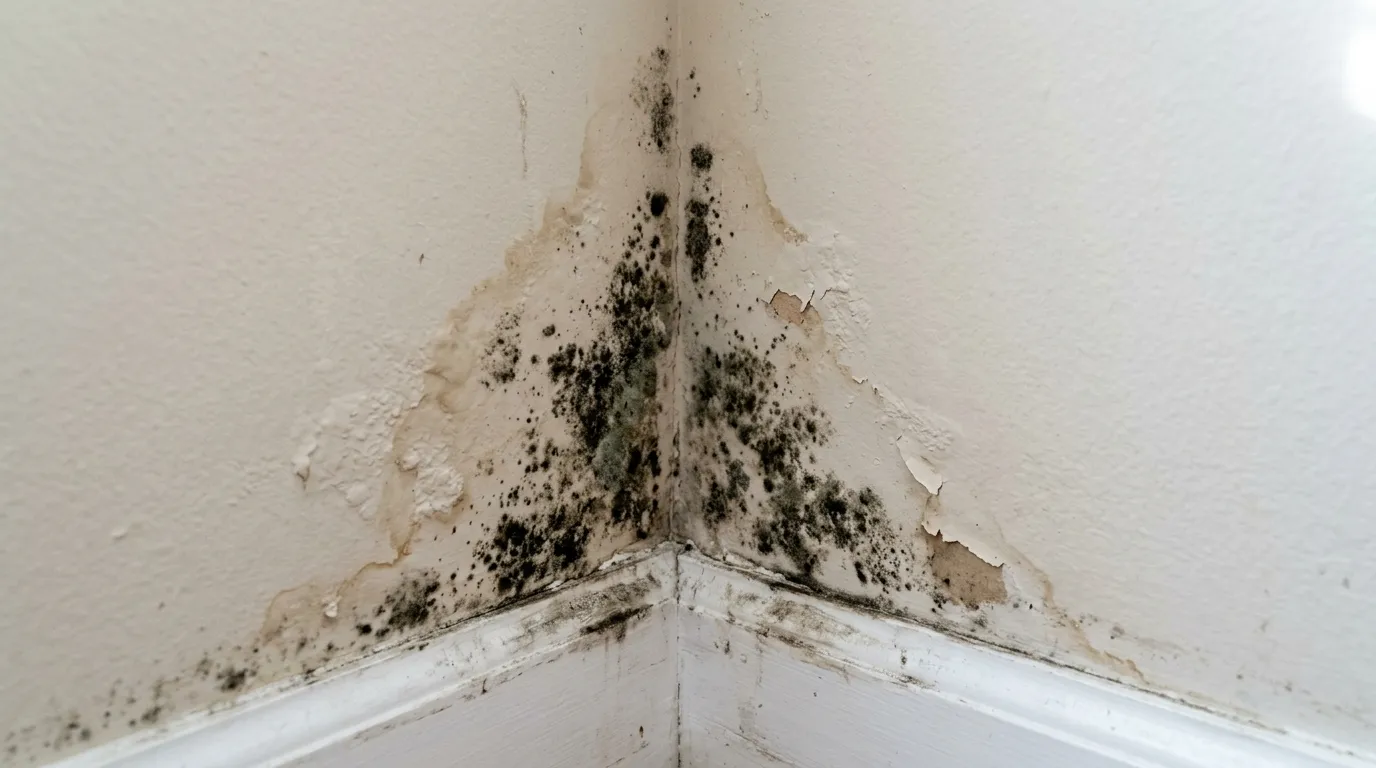
Black mold gets named in headlines more than any other indoor air quality issue, but most people who type “black mold symptoms” into a search bar are trying to answer a quieter question: is my home making me sick? This guide sticks to what CDC and EPA actually publish, flags the places where the popular story outruns the evidence, and lays out what to do about the building itself.
One thing up front. We are a restoration contractor, not a medical provider, and nothing here diagnoses anyone. If you have symptoms you are worried about, CDC’s advice and ours is the same: see a clinician. What we can speak to with authority is the water, the building materials, and the cleanup.
What CDC Actually Says About Mold and Health
CDC’s position is narrower than the headlines suggest. Exposure to damp and moldy environments may cause no health effects at all. In people who do react, it can cause a stuffy nose, sore throat, coughing or wheezing, burning eyes, or a skin rash. Two groups react more strongly: people with asthma or a mold allergy can have severe reactions, and people who are immune-compromised or living with chronic lung disease can develop lung infections.
Research on damp buildings more broadly has associated them with respiratory symptoms and infections, worsening or newly developed asthma, hypersensitivity pneumonitis, allergic rhinitis, and eczema.
The complaints homeowners most often bring to us line up with that list:
- Persistent nasal congestion or sinus pressure.
- A cough or scratchy throat that does not resolve with cold medicine.
- Watery, itchy, or burning eyes.
- Wheezing, or asthma that is harder to control than usual.
- Skin irritation or rash.
Two honest caveats about that list. First, every item on it is also caused by a dozen ordinary things: a cold, seasonal pollen, a new pet, dry winter air. The overlap is close to total, which is why no symptom checklist can stand in for a clinician. Second, the pattern people find most convincing, where symptoms ease on vacation and return at home, is genuinely worth reporting to your doctor, but it points at something in the building rather than at mold specifically.
Who Reacts Most Strongly
CDC names the groups whose reactions tend to be more serious:
- People with asthma or a diagnosed mold allergy, who can have severe reactions.
- People who are immune-compromised, including those on chemotherapy or immunosuppressants.
- People living with chronic lung disease, who can develop lung infections.
If someone in your home is in one of those groups, that is a reason to talk to a clinician and to move faster on the moisture problem. It is not a reason to order a mold test first.
Where the “Toxic Black Mold” Story Outruns the Evidence
The species people mean by “black mold” is usually Stachybotrys chartarum, a greenish-black mold that grows on high-cellulose materials such as fiberboard, gypsum board, and paper once water damage, a leak, condensation, or flooding gives it moisture. It does produce mycotoxins.
What CDC adds is the part that rarely makes the headline: no test exists that proves an association between Stachybotrys chartarum and particular health symptoms, and people with persistent symptoms should see their physician. Meanwhile Aspergillus and Penicillium are far more common indoors and are associated with the same kinds of respiratory complaints.
So the color of the colony is close to the least useful thing about it. The moisture that let it grow is the part you can act on.
Does Testing Actually Help?
CDC does not recommend mold testing, and the reasoning is sound: no matter what type of mold is present, it needs to be removed. If you can see growth, or you already know you have a moisture problem, a lab result does not change the decision. It only delays it.
We still run testing on a minority of jobs, for reasons that have nothing to do with identifying a species:
- Insurance documentation. A carrier disputing scope responds to lab data and moisture mapping in a way it does not respond to a written description.
- Scoping before demolition. Air samples with an outdoor control help define how far containment needs to extend.
- Confirming a hidden source. When there is a smell and no visible growth, sampling alongside infrared and pin meters narrows down where to open the wall.
- Post-remediation verification. Clearance testing is how you demonstrate the work actually worked.
If anyone quotes you a test on the premise that the species determines the treatment, that is a sales step rather than a technical one.
Where Mold Hides
By the time you can see black spots on a wall, the colonization upstream is usually larger. The places we find hidden mold most often:
- Behind baseboards, especially in rooms with a history of leaks.
- Inside HVAC ducts, drip pans, and around the air handler.
- Under flooring above a crawlspace or basement.
- Behind toilets and beneath bathroom vanities.
- Inside wall cavities adjacent to plumbing chases.
Surface cleaning the visible part does nothing for the colony in the cavity. That is the most common mistake we see homeowners make.
What an Assessment Actually Looks Like
A proper mold assessment is more than a flashlight tour. We map moisture with infrared cameras and pin meters, take air samples from the affected rooms and an outdoor control, and where appropriate take surface samples from suspect growth. Samples go to an independent accredited lab. You get a written report with spore counts and species before any remediation work is scoped, so the recommendation is grounded in data rather than a sales pitch.
For an overview of how we approach the broader process, see why environmental testing matters before restoration.
When to Call a Professional Versus Clean It Yourself
EPA draws the clearest line available. If the moldy area is less than about 10 square feet, roughly a 3 ft by 3 ft patch, in most cases you can handle the job yourself. EPA also says that if you have health concerns, you should consult a health professional before starting cleanup.
Above that patch size, or anywhere there is active or recent water damage, bring in a contractor. Disturbing a larger colony without containment aerosolizes spores into the rest of the house and makes the problem worse. The same applies if the moisture source is still live: cleaning the surface before fixing the leak just resets the clock.
Sources
- Mold — CDC
- Facts About Stachybotrys chartarum — CDC
- Health Problems Related to Mold — CDC/NIOSH
- Mold Cleanup in Your Home — EPA
- A Brief Guide to Mold, Moisture and Your Home — EPA
Related Services
Bingham Restoration handles mold remediation across our mold and asbestos services. If you have found growth or you know you have a water problem, call 520-FLOODED to schedule an assessment. If you have health concerns, start with your clinician.
Frequently Asked Questions
What does black mold exposure feel like?
CDC's position is that damp, moldy environments affect people differently: many have no symptoms at all, while others report a stuffy nose, sore throat, coughing or wheezing, burning eyes, or a skin rash. People with asthma or a mold allergy can react more strongly. Because those symptoms overlap almost entirely with colds and seasonal allergies, a clinician is the only one who can tell you what is causing yours.
How do I know if it is really black mold and not just mildew?
You cannot tell by looking, and CDC's guidance is that it does not change what you do: whatever the species, the mold needs to be removed and the moisture source fixed. Lab testing earns its cost when you need documentation for an insurance claim, a defined scope before demolition, or confirmation of a hidden source. Bingham Restoration coordinates third-party testing so the result is independent of the remediation quote.
Is black mold an emergency?
Not in the way a fire is, and anyone worried about their health should call their clinician rather than wait on a mold report. It is still worth acting on quickly for a different reason: mold keeps colonizing wet material, so the longer the moisture sits, the larger and more expensive the remediation scope becomes.
Need Emergency Restoration Right Now?
Our crews arrive in 48 minutes on average and bill your insurance directly.
Call 520-FLOODED