
Bingham Restoration Resources
Nashville Mold Remediation: Humidity, Storms & Older Homes
Published June 17, 2026
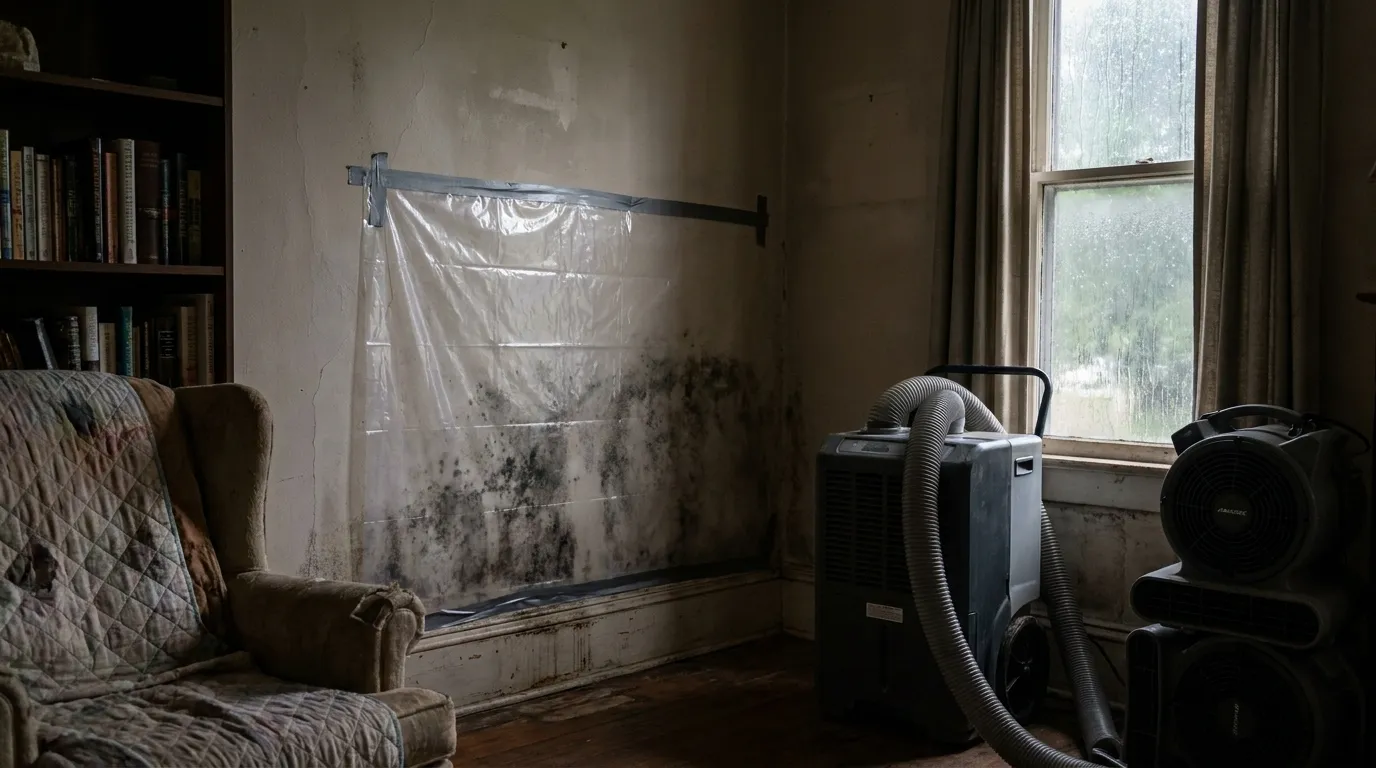
Nashville’s climate is hospitable to mold most of the year. Add the Cumberland River basin’s storm and flood activity, plus a large stock of older homes with crawlspaces and unsealed envelopes, and you get a market with steady mold remediation demand. This guide explains what proper Nashville remediation looks like and what local homeowners should know.
The Climate Reality
Middle Tennessee runs warm and humid from late April through October. Outdoor relative humidity routinely exceeds 70 percent for weeks at a time. Air conditioning helps indoor humidity, but only when:
- The AC is properly sized (oversized units short-cycle and do not dehumidify).
- Ductwork is sealed and insulated.
- Crawlspace and attic moisture are managed separately.
When any of those fails, indoor humidity rises above the 60 percent threshold where mold colonizes building materials. The most common scenario we see is a recently installed oversized AC that cools the house quickly but never runs long enough to remove moisture.
Where Nashville Mold Hides
- Crawlspaces. Unsealed crawlspaces with damp soil drive whole-home humidity through the stack effect.
- HVAC systems. Improperly insulated supply lines sweat condensation onto attic floors and into walls.
- Behind shower walls. Original tile installations in mid-century homes often lack proper waterproofing.
- Attics. Bath fans that exhaust into the attic instead of outside cause widespread sheathing mold.
- Storm-damaged exterior walls. After a hail event, sealant failures let driven rain into wall cavities.
Why Storm Activity Compounds the Issue
Nashville sits in a corridor of severe weather. Hail, straight-line winds, and tornado-spawning systems regularly damage roofs and siding. The water intrusion that follows often goes unnoticed until weeks later, when:
- A ceiling stain appears.
- A musty smell develops.
- A homeowner pulls an air sample for a real estate transaction.
By that point, the moisture has been in the wall cavity long enough for substantial colonization.
The Remediation Approach
A proper Nashville mold remediation follows the IICRC S520 standard.
- Independent assessment. Third-party air sampling with outdoor control.
- Source identification. No remediation begins until the moisture source is understood and the fix is scoped.
- Containment. Plastic barriers and HEPA negative air to prevent spore migration.
- Removal. Saturated drywall, insulation, and substrate bagged and removed.
- HEPA cleaning of remaining surfaces and air.
- Drying. To verified equilibrium moisture content.
- Independent post-remediation verification. Not by the remediator.
For a deeper look at why third-party testing is critical, see our environmental testing guide.
Insurance and Nashville Mold
Standard homeowners policies in Tennessee typically cover mold remediation only when it results from a covered water loss (sudden pipe burst, appliance failure). Long-term humidity-driven mold is usually excluded. Many policies cap mold coverage at $5,000 to $10,000 even when the loss is covered. We document the trigger carefully so the claim is filed correctly and ask about endorsements before any work begins.
What Nashville Homeowners Can Do
- Keep indoor humidity below 55 percent year-round, with a dedicated dehumidifier if AC alone cannot.
- Inspect crawlspaces annually for standing water, vapor barrier integrity, and insulation condition.
- After every major storm, walk the exterior for soft sealant, missing shingles, and stained siding.
- Run bath fans for at least 30 minutes after every shower.
Related Services
Bingham Restoration provides S520-standard mold remediation across Middle Tennessee. Call 520-FLOODED for an assessment.
Frequently Asked Questions
Why is mold common in Nashville homes?
Middle Tennessee combines high summer humidity (often 70 to 85 percent), strong storm activity, and a large stock of older homes with original windows, crawlspaces, and limited vapor management. Each of those conditions feeds mold; the combination accelerates it.
How fast does mold grow after Nashville flooding?
Mold colonization typically begins within 24 to 48 hours on wet cellulose materials in Middle Tennessee's warm season. After a storm event in July or August, that window can be as short as 18 hours.
Do I need professional remediation for visible mold?
If the affected area is over 10 square feet, if anyone in the home is symptomatic, or if the moisture source has not been definitively fixed, yes. Smaller surface growth on non-porous materials with no underlying moisture can often be handled by a homeowner with proper PPE.
Need Emergency Restoration Right Now?
Our crews arrive in 48 minutes on average and bill your insurance directly.
Call 520-FLOODED