
Bingham Restoration Resources
Carpet Water Damage: When It Can Be Saved and When It Cannot
Published June 7, 2026
Wet carpet is one of the most misunderstood pieces of a water loss. Homeowners are often told it must be ripped out, when in many cases the carpet itself is salvageable. They are also sometimes told it can be saved when the contamination level means it cannot. This guide walks through the actual decision framework professional crews use.
The Three Factors That Decide
Three questions determine whether carpet can be saved:
- Water category. Clean, gray, or black.
- Time to extraction. Hours, not days.
- Substrate condition. What is under the carpet and pad.
A Category 1 loss extracted within 24 hours on a healthy plywood subfloor is almost always salvageable. A Category 2 loss that sat for 36 hours over particleboard subfloor is usually not.
Why Pad Almost Always Comes Out
Carpet pad is engineered for cushion, not for shedding water. Once saturated, it holds moisture against the subfloor for days, breeding mold and odors. The pad-replacement path is faster, cheaper, and produces a more reliable result than trying to dry pad in place.
The Professional Drying Sequence
- Extract standing water with weighted truck-mounted vacuums that pull from carpet and pad simultaneously.
- Float the carpet. Carpet is lifted from the tack strip on the affected edge so air can move underneath.
- Remove and dispose of pad. Bagged and removed as part of the scope.
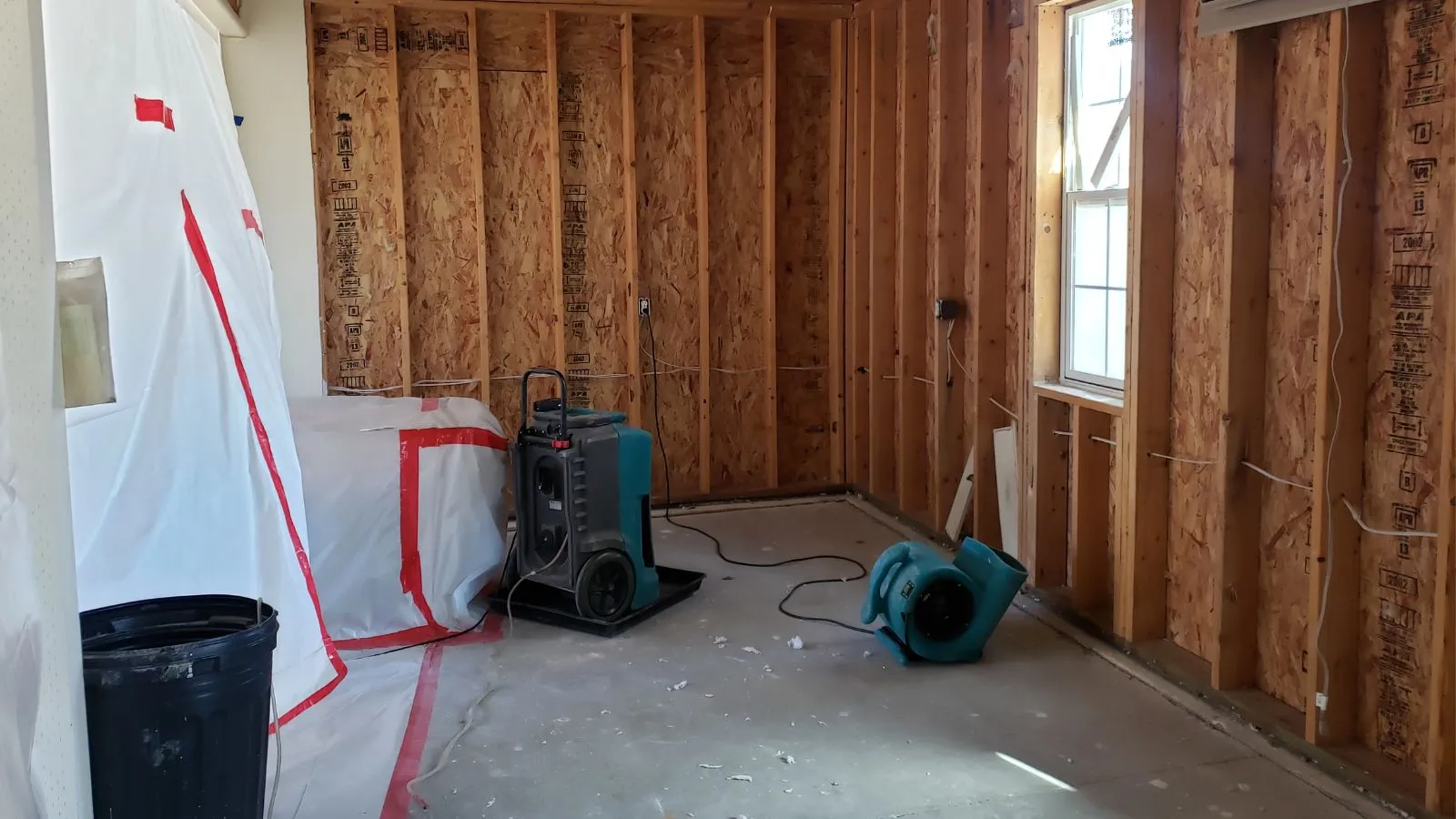
- Dry the subfloor directly. Air movers and a commercial dehumidifier targeted at the exposed subfloor.
- Verify with moisture meters. Both carpet and subfloor at equilibrium.
- Reinstall fresh pad and re-stretch carpet. Often by a flooring partner, with seams hidden against the original install.
This is faster and produces a more durable result than leaving the carpet down and trying to dry through it.
When Replacement Is the Only Honest Answer
- Category 3 water (sewage, outdoor floodwater) — carpet is discarded.
- Delamination of the carpet backing visible after drying.
- Subfloor damage that requires repair from above.
- Older carpet near end of life where replacement is more cost-effective than restoration.
For cost expectations on carpet versus subfloor work, see our water damage cost breakdown.
What Homeowners Get Wrong
- Walking on saturated carpet repeatedly. Compresses the pad and drives water into the subfloor.
- Placing fans without extraction first. Moves wet air around without removing moisture.
- Reinstalling baseboard before subfloor is dry. Traps moisture in the wall cavity.
- Skipping antimicrobial treatment. Required on any Category 2 loss before drying.
Related Services
Bingham Restoration handles carpet drying and full water damage restoration. Call 520-FLOODED for an active loss.
Frequently Asked Questions
Can wet carpet be saved?
Often yes for Category 1 (clean water) losses caught within 48 hours, especially if the pad can be replaced separately. Category 2 water requires a judgment call based on substrate and dry time. Category 3 water means the carpet is discarded.
How long does carpet take to dry?
With commercial extraction, air movers, and a dehumidifier, properly wet carpet over an undamaged pad dries in 2 to 4 days. Air-drying without extraction equipment typically takes 1 to 2 weeks and almost always leaves residual moisture.
Do I have to replace the pad?
Usually yes. Carpet pad is highly absorbent and difficult to dry in place. On most water losses, the pad is removed and replaced while the carpet itself is floated, dried, and reinstalled.
Need Emergency Restoration Right Now?
Our crews arrive in 48 minutes on average and bill your insurance directly.
Call 520-FLOODED