
Bingham Restoration Resources
Salt Lake City Fire Damage: Cold Weather Restoration Realities
Published July 4, 2026
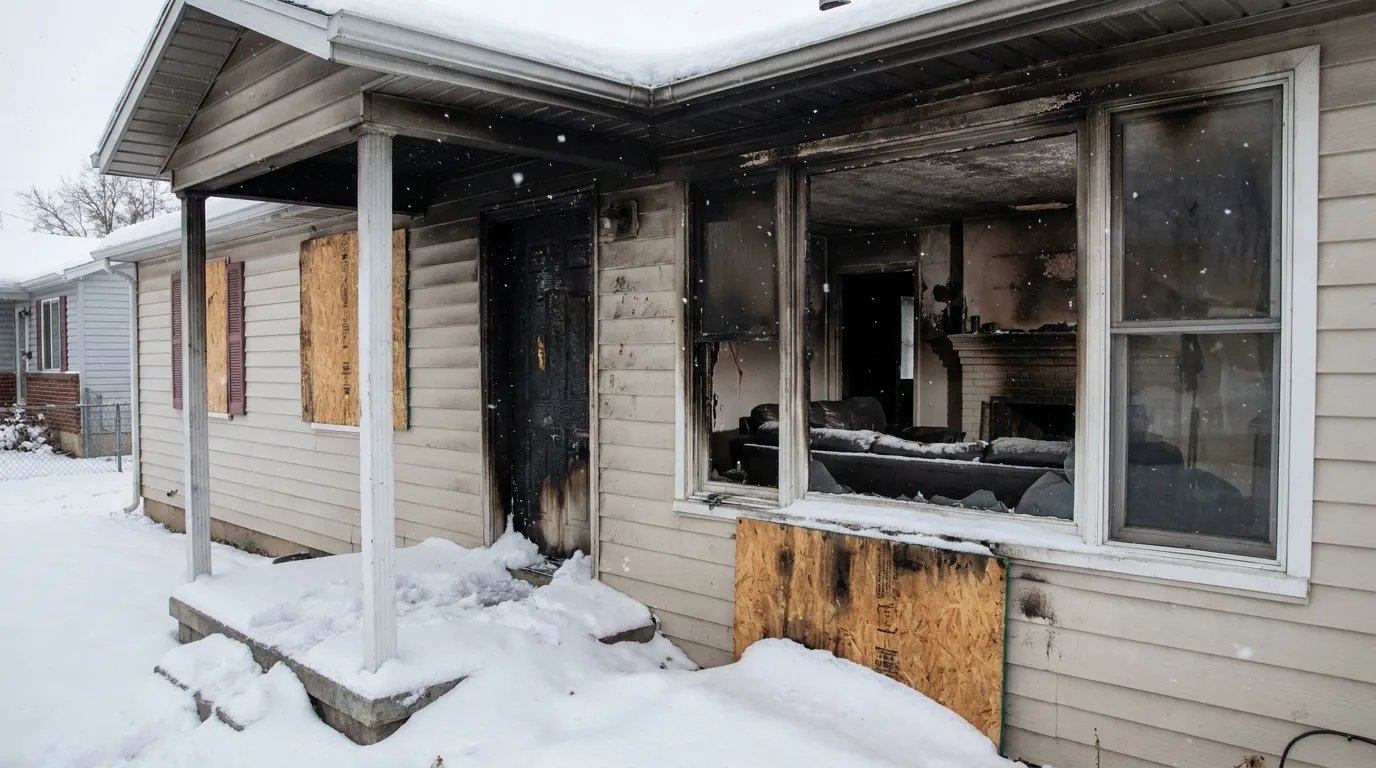
Fire damage restoration along the Wasatch Front operates against a specific set of conditions: older housing stock concentrated in the central city, cold winters that complicate response, and a wildfire-adjacent summer that drives smoke damage even where no structure fire occurred. This guide walks through what Salt Lake City homeowners should expect.
What Makes SLC Fire Damage Distinct
Older Housing Stock
Central SLC neighborhoods — the Avenues, Sugar House, Liberty Wells, Rose Park — feature significant pre-1950 housing. The implications for fire damage:
- Knob-and-tube and early Romex wiring increases the rate of electrical-origin fires.
- Lath-and-plaster walls behave differently than modern drywall during fires and during demolition.
- Asbestos-containing materials (popcorn ceilings, vinyl floor tile, pipe insulation) require testing before demolition.
- Lead paint in any home built before 1978 requires RRP-compliant work practices.
A scope that does not account for these older-home realities understates cost and timeline. We test and document upstream.
Winter Conditions
Salt Lake winters affect fire response in specific ways:
- Suppression water freezes in walls, attics, and on exterior surfaces, creating secondary water damage as it thaws.
- Inversion days trap smoke residue indoors longer, intensifying odor.
- Heating must be maintained during restoration to enable drying.
- Frozen pipes after a fire are common when the heat is interrupted.
We carry winter-specific equipment including drying systems that operate efficiently at lower temperatures and emergency heating capacity for board-up scenarios.
Wildfire Smoke Damage
Salt Lake summers increasingly include wildfire smoke from Utah, Idaho, Nevada, and California fires. Even homes that did not burn can sustain meaningful smoke damage from prolonged exposure to wildfire smoke through HVAC intake. The scope is different from a structure fire (no soot deposits, but VOC and particulate contamination) and the insurance treatment is different. We assess both.
Common Fire Sources Along the Wasatch Front
- Kitchen fires. Year-round, dominant single cause.
- Heating fires. Furnaces, space heaters, fireplace and chimney issues during October–March.
- Holiday-related. Christmas tree, candle, and decorative lighting incidents in December and January.
- Garage and shop fires. Workshop equipment, vehicle, and stored chemical.
- Electrical in older homes. Aging knob-and-tube, overloaded circuits in modernized old houses.
The SLC Restoration Sequence
- Emergency response and board-up within 30 minutes, with winter weather hardening.
- Suppression water mitigation — extraction and drying before secondary damage compounds.
- Hazardous materials testing (asbestos, lead) in older homes before demolition.
- Soot and smoke removal from hard surfaces.
- HVAC isolation and cleaning to prevent contamination spread.
- Demolition of unsalvageable materials, with proper handling of asbestos or lead where present.
- Drying verification.
- Deodorization with thermal fogging or hydroxyl treatment.
- Reconstruction — drywall, paint, flooring, trim, in many older homes matching original lath-and-plaster details.
- Final walkthrough and warranty.
For a deeper look at what smoke cleaning involves, see smoke damage cleaning.
Utah-Specific Insurance Notes
- Most Utah homeowners policies cover fire from accidental sources.
- Wildfire smoke damage (no structural fire) is usually covered as a separate loss type, often with photo and air-sample documentation requirements.
- Additional living expense coverage during displacement typically runs 12 to 24 months and varies significantly by policy. Document expenses from day one.
- Older home replacement-cost issues are common. Confirm with your agent whether coverage is replacement cost or actual cash value before a loss.
What to Do in the First Hour
- Do not re-enter the home until cleared by the fire department.
- Do not run the HVAC.
- Photograph and video everything visible from the outside.
- Call your insurance carrier and a certified restoration team.
- If displaced, save every receipt for hotel, meals, and incidentals — ALE coverage usually reimburses these.
Related Services
Bingham Restoration is headquartered locally and provides 24/7 fire damage restoration across Salt Lake County and the Wasatch Front. Call 520-FLOODED for an active loss.
Frequently Asked Questions
What is the most common fire cause in Salt Lake City?
Across our SLC response history, the top three causes are kitchen incidents (year-round), heating equipment fires (October through March), and electrical issues in older homes. Wildfire-adjacent smoke damage spikes during summer fire seasons.
Does cold weather make fire damage harder to restore?
It changes the response. Frozen suppression water creates ice damming and secondary water damage. Cold-weather board-up has to manage condensation. Drying timelines extend if the home cannot be heated during restoration. Each of these is manageable but adds scope.
How quickly can Bingham respond in Salt Lake County?
Bingham Restoration is headquartered in Utah with crews staged across Salt Lake County. Average response to SLC, Murray, West Jordan, Sandy, and surrounding areas is under 30 minutes, 24/7.
Need Emergency Restoration Right Now?
Our crews arrive in 48 minutes on average and bill your insurance directly.
Call 520-FLOODED