
Bingham Restoration Resources
Burst Pipe Insurance Claim: What to Document
Published November 6, 2026
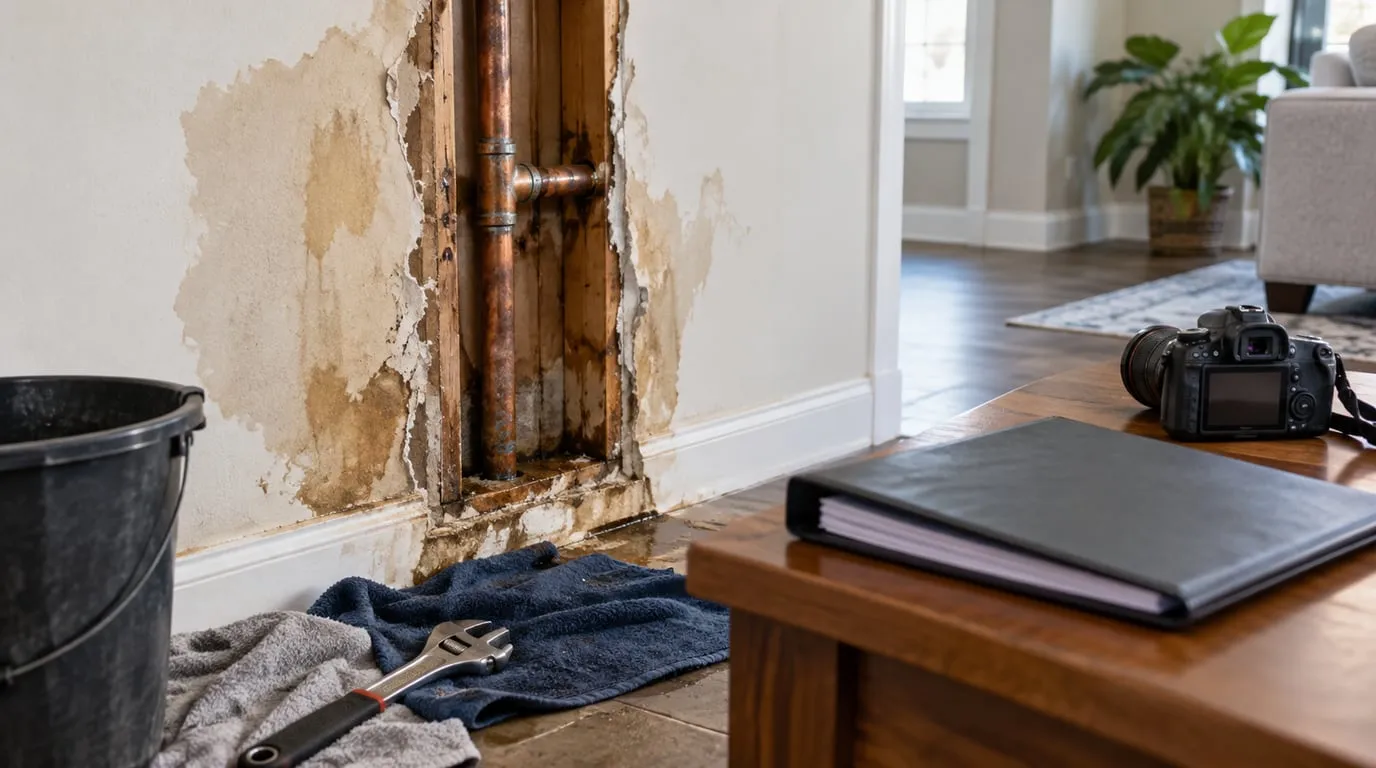
Quick answer: A burst pipe claim should show what failed, when it was discovered, and which materials were affected. Stop the leak safely, document emergency mitigation, and notify the insurer promptly. Coverage depends on the policy and circumstances, including maintenance and freezing provisions.
What proves the cause and timing?
Keep the plumber’s description of the failed pipe, dated photos, and the approximate discovery time. If weather or a power outage played a role, record those facts without guessing at the failure mechanism. Preserve the removed component when safe and when the insurer or plumber asks for it.
Which items should you compare?
| Record | Question it answers |
|---|---|
| Plumbing finding | What failed? |
| Moisture map | What was wet? |
| Drying log | How was mitigation tracked? |
| Rebuild scope | What remains to repair? |
What damage documentation is useful?
Photograph wet rooms before safe cleanup, then keep moisture maps and material decisions. Separate plumbing repair from extraction, drying, demolition, and finish work. A single total without quantities makes it harder to compare the loss scope with the adjuster’s estimate.
How should you handle unresolved scope?
Ask for a written explanation of the policy terms and any disputed items. Provide supporting photos, measurements, or contractor findings instead of assuming every disagreement is a denial. Read filing a water claim and frozen pipe response.
The Washington insurance commissioner’s water-loss guidance illustrates why freezing conditions and policy terms matter; confirm your own policy with the insurer.
Who can help with the next step?
Bingham Restoration provides restoration insurance documentation support and can document the affected areas and next steps. For 24/7 help, call 520-FLOODED (520-356-6333).
Frequently Asked Questions
Is the pipe repair covered too?
The failed pipe and resulting damage can be treated differently under a policy. Ask the insurer to explain each part.
Should cleanup wait for the adjuster?
Discuss the loss promptly, but do not let avoidable damage continue. Document necessary emergency work and keep receipts.
Who decides insurance coverage?
The insurer applies the policy to the loss. Restoration documentation supports the review but does not guarantee payment.
What should stay in the project file?
Keep policy correspondence, source findings, safe photos, itemized scopes, invoices, and relevant drying records.
Need Emergency Restoration Right Now?
Our crews arrive in 48 minutes on average and bill your insurance directly.
Call 520-FLOODED