
Bingham Restoration Resources
How to File a Water Damage Insurance Claim: Step by Step
Published August 21, 2026
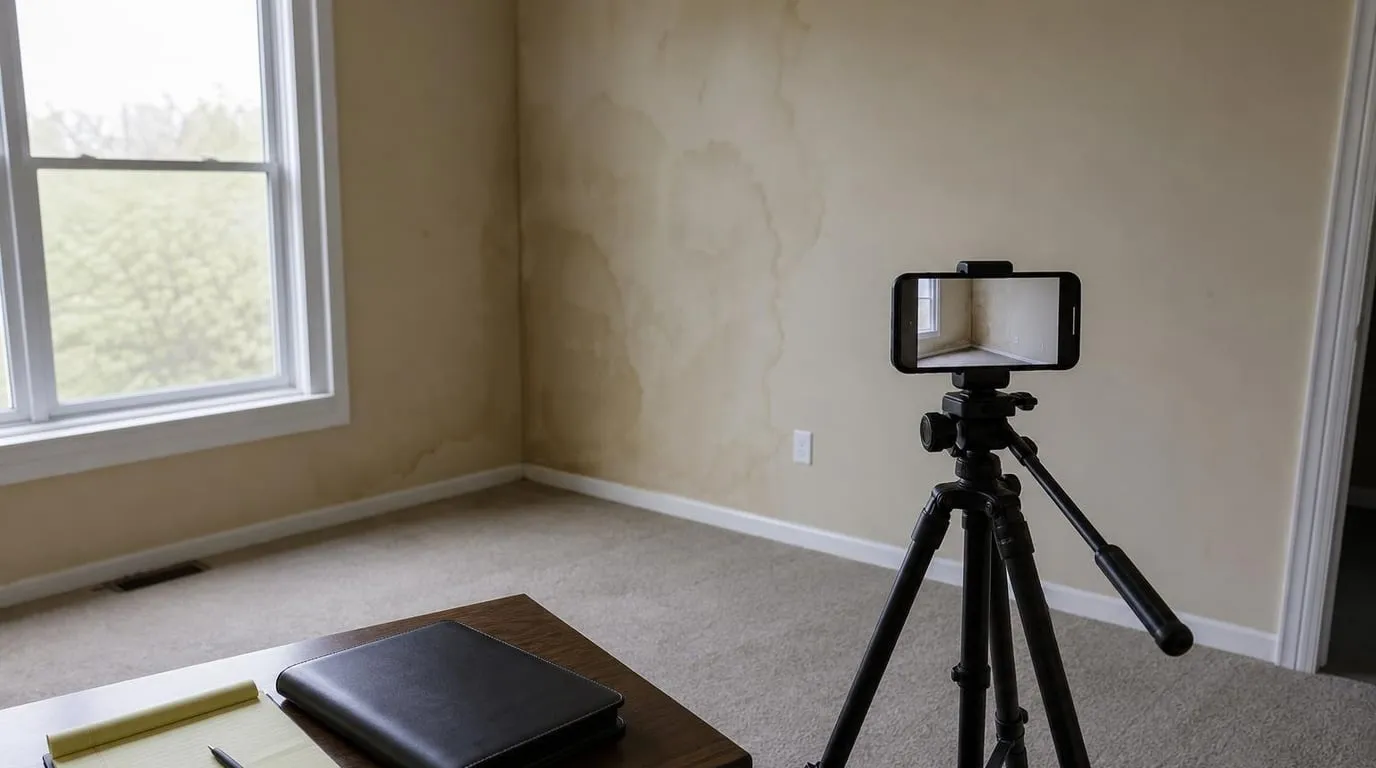
A water damage claim is won or lost in the first 48 hours, before any adjuster arrives. The homeowners who get paid fully are not the lucky ones; they are the ones whose documentation made the loss impossible to dispute.
Quick answer: Stop the water, document everything with photos and video before touching anything, report the claim promptly, mitigate the damage (your policy requires it), keep every receipt and the failed part, and meet the adjuster with a written timeline and a professional scope. Do not throw away damaged materials before they are documented, and do not give a recorded statement guessing at how long the leak existed.
The Sequence
1. Stop the source and make it safe. Water off, electricity off in affected areas if needed. Safety outranks paperwork.
2. Document before you disturb. Photograph and video the source, the failed component, standing water, waterlines on walls, and every affected room and item, with wide shots plus close-ups. This ten minutes of filming is the strongest evidence you will ever have; the scene only degrades from here.
3. Report the claim. Call your carrier or file through their app the same day. State the facts plainly: what failed, when you discovered it, what you have done. Do not speculate about how long a leak “might” have been going. Guesses about duration are how sudden losses get reclassified as gradual ones and denied.
4. Mitigate. Policies require reasonable steps to prevent further damage, and real mitigation (extraction, drying, controlled demolition of unsalvageable materials) is the step that protects both house and claim. A professional response documented with daily moisture logs, like our structural drying process, doubles as claim evidence. What to do hour-by-hour is covered in the first 24 hours.
5. Preserve evidence. Keep the burst hose, the failed valve, the corroded fitting. Photograph discarded materials before disposal and keep a list. Save every receipt: emergency services, equipment, tarps, hotel nights if displaced.
6. Meet the adjuster prepared. A written timeline, your photo set, mitigation records, and ideally your restoration contractor present to walk the scope. Adjusters write from what they can see and prove; your job is to make the full loss visible.
7. Review the estimate line by line. Carrier estimates commonly miss hidden moisture scope: wet insulation, flooring layers, and moisture inside walls. Supplements are normal; scope gaps only become losses if unchallenged.
Mistakes That Shrink Payouts
- Waiting days to report, or to dry the structure (invites mold and mitigation disputes; see how mold coverage works)
- Discarding evidence before documentation
- Speculating on causes and durations in recorded statements
- Accepting the first estimate as final
- Signing an assignment-of-benefits contract without reading it
If the claim gets denied, that is a process, not a verdict — see water damage claim denied: what to do next.
Related Services
Bingham Restoration documents to carrier standards, provides drying logs and scope detail adjusters accept, and bills insurers directly. See how we handle insurance or call 520-FLOODED.
Frequently Asked Questions
Should I start cleanup before the adjuster sees the damage?
Yes. Your policy requires reasonable steps to prevent further damage, and delays make losses worse. Document thoroughly with photos and video first, keep damaged materials as evidence where practical, then mitigate.
How long do I have to file a water damage claim?
Report promptly, within days rather than weeks. Policies require timely notice, and late reporting invites disputes about when the damage occurred and whether it was gradual.
What documentation does a water damage claim need?
Photos and video of the source, standing water, and every affected room and item; the failed part if there is one; a written timeline; receipts for emergency costs; and mitigation records like drying logs.
Will filing a water damage claim raise my rates?
It can affect renewal pricing, which is why minor losses below or near your deductible may not be worth filing. For significant losses, the coverage you paid for outweighs the rating impact.
Do I have to use the restoration company my insurer recommends?
No. You have the right to choose your own contractor in virtually all states. Carrier-preferred vendors can be fine, but they are selected by the payer; an independent IICRC-certified firm works for you.
Need Emergency Restoration Right Now?
Our crews arrive in 48 minutes on average and bill your insurance directly.
Call 520-FLOODED