
Bingham Restoration Resources
Saving Hardwood Floors After Water Damage
Published May 27, 2026
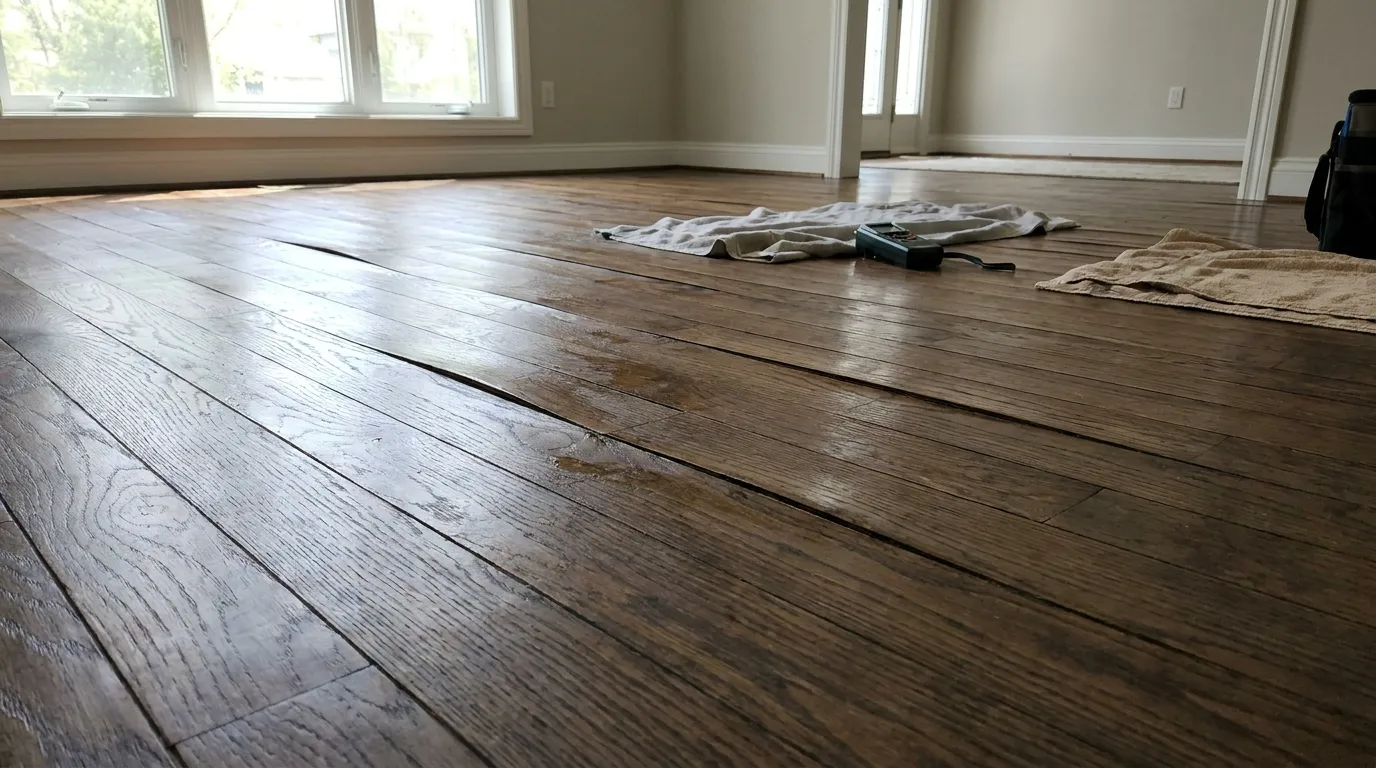
Hardwood floors are usually the most expensive material in a water loss to replace, and they are also the material homeowners most often write off too early. The right response in the first 48 hours can be the difference between a sand-and-refinish and a full tear-out. This guide explains how drying actually works on solid and engineered hardwood, and how to read what your floor is telling you.
What Water Does to Hardwood
Wood is hygroscopic. It absorbs water from the underside more readily than the top because the finish on top is a partial moisture barrier. As the underside swells faster than the top, the planks deform in a predictable pattern.
- Cupping is when the edges of the plank rise higher than the center. This is the most common pattern in fresh water damage and is often reversible.
- Crowning is the opposite, with the center rising higher than the edges. It usually appears after a floor has been sanded too early, before full drying, and the underside dries before the top.
- Buckling is full separation from the subfloor. This means saturation has gone past the planks into the substrate, and the floor is almost always a replacement.
The pattern you see is diagnostic. We read it on arrival to estimate whether the floor is salvageable before we commit a drying plan.
The First 48 Hours Are Everything
A solid hardwood floor that has standing water on it for 6 hours is a very different problem than the same floor after 60 hours. Once moisture has migrated through the planks into the subfloor and across the framing, the drying scope expands dramatically, and the chance of saving the original wood drops.
If you can do nothing else in the first hour, do these three things:
- Extract surface water with towels or a wet vacuum, working in the direction of the plank grain.
- Do not place box fans on the floor. They dry the top faster than the bottom and accelerate crowning.
- Call a certified crew with floor drying mats. Household equipment cannot pull moisture from under hardwood.
How Professional Floor Drying Works
Specialized hardwood drying systems use suction mats placed directly on the floor and connected to a dedicated vacuum dehumidifier. The negative pressure pulls air through the seams between planks, drying the underside without overdrying the top. Combined with low-grain refrigerant dehumidifiers that bring the room to a controlled humidity, this approach reverses cupping in most cases.
We monitor with pin meters daily, measuring the wood directly. The reading we are working toward is equilibrium moisture content, usually 6 to 9 percent depending on your climate. Reinstallation or refinishing before that number is hit is the most common cause of recurring damage.
Engineered Versus Solid Hardwood
Engineered hardwood is a thin hardwood wear layer over a plywood core. The plywood handles moisture differently than solid wood, and the wear layer has limited sanding cycles. If an engineered floor has buckled or shown delamination between the wear layer and the core, replacement is usually the right answer. Solid hardwood has more recovery range because it can be sanded several millimeters and refinished.
When Replacement Is the Honest Recommendation
We will tell you a floor needs to come up when:
- Buckling is widespread.
- The subfloor is saturated and cannot be dried from above.
- The water was Category 3 (sewage or outdoor flood water), which means the wood itself is contaminated and cannot be returned to clean condition.
- Multiple sanding cycles have already been done and the wear layer cannot survive another.
A documented case for replacement is also what your insurance adjuster needs to approve coverage. We provide that documentation regardless of the outcome.
The Refinish Step
Once moisture content is stable, the floor is typically sanded to remove residual cupping and any finish damage, then stained and sealed. We coordinate with finish contractors on this phase or hand off a fully documented floor at the end of drying so your preferred installer can take over.
Related Services
Bingham Restoration handles water damage restoration including hardwood-specific drying systems. Call 520-FLOODED if water has crossed onto your floors in the last 48 hours.
Frequently Asked Questions
Can cupped hardwood floors flatten back out?
Often, yes, if drying begins within 48 hours and the planks have not been over-saturated. Specialized floor drying mats pull moisture from the underside, and many cupped floors return to flat within 7 to 14 days. Sand and refinish closes out the recovery.
How long do hardwood floors need to dry?
Typical hardwood drying with proper equipment runs 5 to 10 days, longer than the rest of the structure. Engineered hardwood often dries faster than solid because of its thinner wear layer.
Should I tear up the floor immediately?
Not without an assessment. Pulling a salvageable floor costs you thousands in unnecessary replacement. A moisture map and a 48-hour drying response tells us whether the floor can be saved before any planks come up.
Need Emergency Restoration Right Now?
Our crews arrive in 48 minutes on average and bill your insurance directly.
Call 520-FLOODED