
Bingham Restoration Resources
Lead Paint Removal Cost: What Determines the Price
Published September 15, 2026
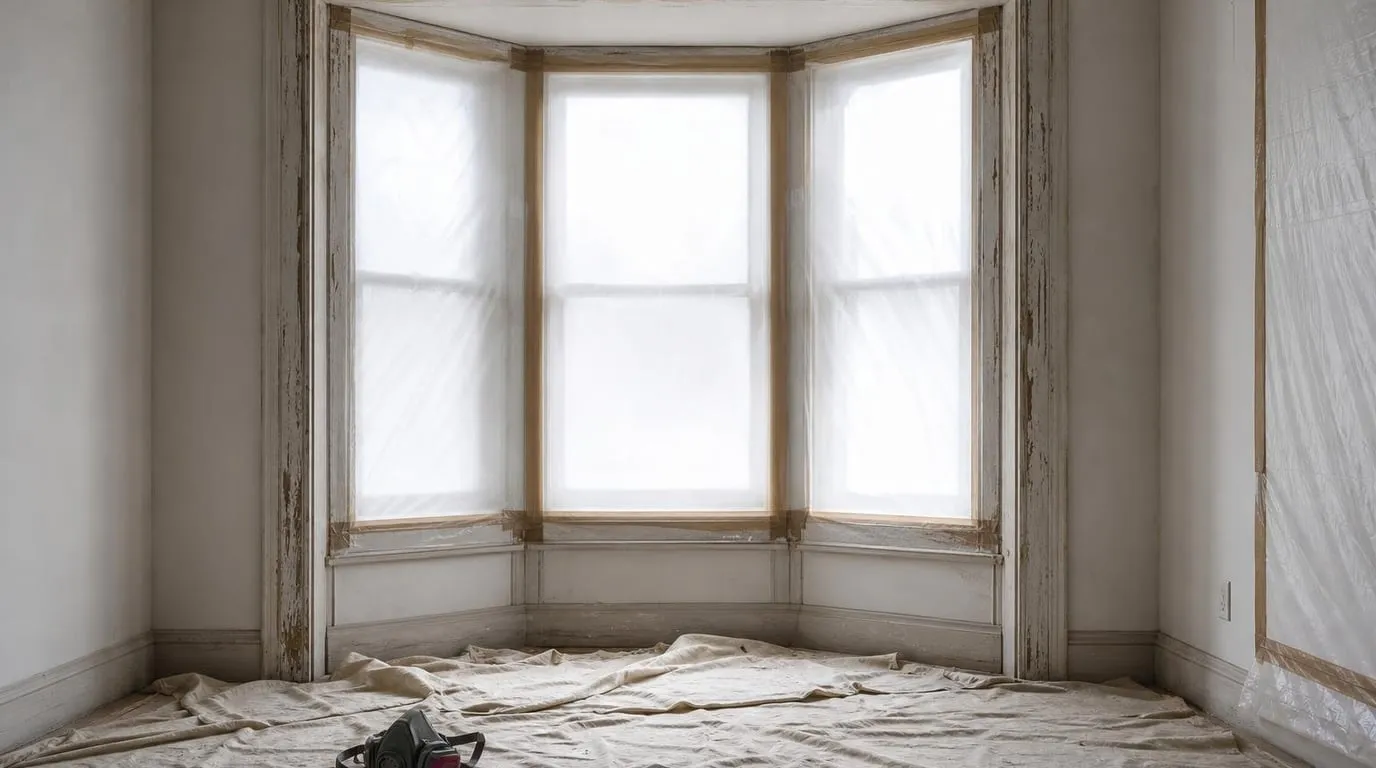
Lead paint pricing confuses people because “removal” is only one of four legitimate strategies, and they differ in cost by an order of magnitude. The right project starts with testing, then matches the method to each surface: what is deteriorating, what gets rubbed and chewed (windows, doors, sills), and what is intact and paintable.
Quick answer: Full lead paint abatement costs roughly $8 to $17 per square foot, putting whole-house projects at $10,000 to $30,000+. But most homes do not need whole-house removal: encapsulation ($1 to $4 per square foot) handles intact surfaces, component replacement handles windows and trim, and targeted removal handles friction and deteriorated areas. Testing first, at a few hundred dollars, is what keeps you from paying abatement rates everywhere.
Cost by Strategy
| Strategy | Typical cost | Best for |
|---|---|---|
| Encapsulation (specialized coating) | $1–$4/sq ft | Intact paint on walls, ceilings, siding |
| Enclosure (new drywall, siding, paneling) | $2–$7/sq ft | Intact but rough surfaces |
| Component replacement (windows, doors, trim) | $300–$1,000+ per window/door unit | Friction surfaces, deteriorated components |
| Chemical/mechanical removal (full abatement) | $8–$17/sq ft | Deteriorated paint, historic details that must stay |
A typical older-home project mixes all four: replace the worst windows, remove on the chewable sills and friction jambs, encapsulate the intact walls. That blended approach is why realistic quotes for meaningful lead work often land in the $3,000 to $15,000 range rather than the whole-house figure.
What Drives the Price
- Condition. Peeling, chalking, and flaking paint must be stabilized or removed; intact paint has options.
- Surface type. Windows and doors, the friction surfaces that generate lead dust with every use, are the priciest per unit and the highest-value fixes for households with children.
- Containment and cleanup. Lead-safe work means plastic containment, wet methods, HEPA vacuuming, and clearance dust-wipe testing. It is a large share of the labor.
- Testing scope. XRF surveys map exactly which surfaces are positive; details are in our lead paint testing guide.
- Disposal of lead waste under local rules.
The Rules That Shape Every Quote
Homeowners are generally not required to abate lead paint, but the moment paint gets disturbed professionally in a pre-1978 home, the EPA’s RRP rule applies: certified firms, lead-safe practices (no dry sanding, no torching), containment, and cleanup verification. Quotes from certified firms carry that overhead honestly; quotes without it are telling you the dust ends up in your ducts. Renovation and demolition projects in older homes trigger the same requirements, which is why lead testing belongs in pre-renovation planning next to asbestos.
Water and fire losses add one more trigger: restoration demolition through pre-1978 painted surfaces is regulated disturbance, so testing is built into professional damage response for older homes.
Related Services
Bingham Restoration provides lead testing through our in-house lab and certified lead-safe demolition and abatement. See our demolition and abatement services or call 520-FLOODED.
Frequently Asked Questions
How much does lead paint removal cost?
Full abatement typically runs $8 to $17 per square foot of painted surface. Whole-house projects commonly land between $10,000 and $30,000, while targeted work on windows, doors, and trim can run $1,000 to $5,000.
Is there a cheaper alternative to removing lead paint?
Yes: encapsulation (specialized coatings sealing intact paint) and enclosure (covering with new material) cost a fraction of removal and are legitimate strategies for intact surfaces. Friction surfaces and deteriorated paint usually still need removal or component replacement.
Do I legally have to remove lead paint from my home?
Generally no. Homeowners are not required to abate. But any contractor disturbing paint in a pre-1978 home must follow EPA RRP rules, and rental properties face disclosure and, in some jurisdictions, hazard-control requirements.
What is the EPA RRP rule?
The Renovation, Repair and Painting rule: firms disturbing more than minimal painted surface in pre-1978 homes must be EPA-certified, use lead-safe work practices (containment, no open flame or dry sanding, HEPA cleanup), and document the work.
Does testing come before removal?
Always. XRF instrument testing or lab-analyzed paint samples establish which surfaces actually contain lead, so you pay abatement prices only where they apply.
Need Emergency Restoration Right Now?
Our crews arrive in 48 minutes on average and bill your insurance directly.
Call 520-FLOODED