
Bingham Restoration Resources
Vermiculite Insulation and Asbestos: What Attics Hide
Published September 13, 2026
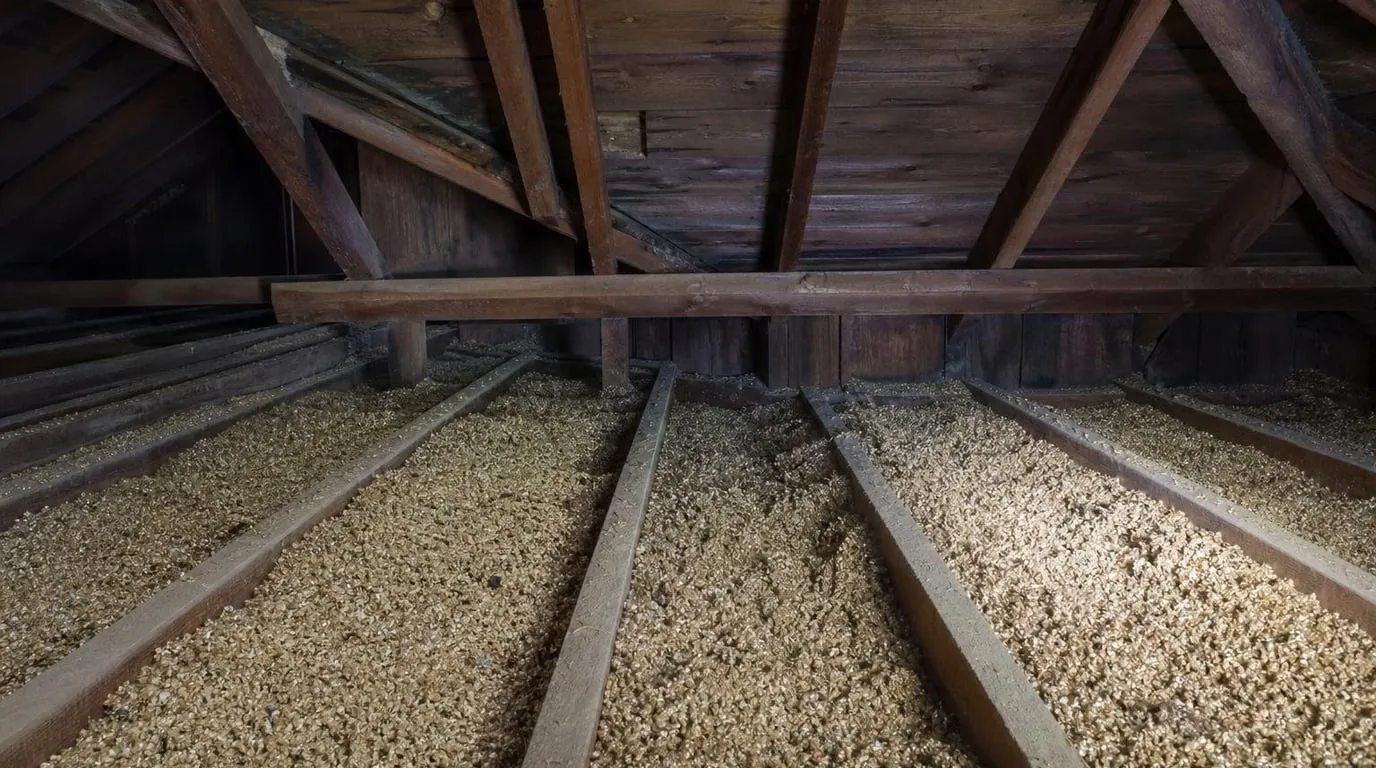
Vermiculite is the asbestos problem homeowners find by flashlight: a poured layer of golden, pebble-like granules between the attic joists of a home built or insulated between the 1920s and 1990. Most of it came from a single mine in Libby, Montana, and Libby ore was contaminated with asbestos. The EPA’s position is unusually blunt: assume it contains asbestos, and do not disturb it.
Quick answer: If your attic has loose, poured, pebble-like golden-brown or gray insulation, treat it as asbestos-containing vermiculite. Do not disturb it, store belongings on it, or renovate through it. Undisturbed, it can be managed in place; removal, which is required before insulation upgrades, major renovations, or after damage, is a licensed abatement job with specialized vacuum extraction, typically $10,000 to $25,000 per attic.
Why “Assume Positive” Is the Rule
Roughly 70 percent or more of U.S. vermiculite insulation traces to the Libby mine, sold widely under the brand Zonolite. Libby ore carried tremolite-actinolite asbestos — an amphibole type of particular concern. Two facts drive the assume-positive guidance: sampling loose fill is unreliable (contamination is uneven, and negative samples cannot clear a whole attic), and the fibers release with trivial disturbance. Even walking through it raises measurable fiber counts.
Recognition is straightforward: vermiculite pours like gravel and shows a flat, layered, accordion-like structure per granule. Fiberglass is fluffy strands; cellulose is gray shredded paper. When in doubt, photograph it and ask a professional rather than handling it.
Living With It vs. Removing It
Managed in place. Undisturbed vermiculite under an unused attic is a containable situation: seal attic bypasses (recessed lights, hatch edges) so fibers cannot drift into living space, keep everyone out, and document its presence for contractors and future buyers. Any tradesperson entering that attic, whether HVAC, electrical, or cable, needs to know before they kneel in it.
Removal. Insulation upgrades, attic conversions, major renovations, and damage events force the issue. So does a roof leak or water loss that wets the material, and fire or storm damage that scatters it. Removal is genuine abatement: containment with negative air, crews in full PPE, high-powered HEPA vacuum extraction (often truck-based), post-removal cleaning, clearance air testing, and manifested disposal. The regulatory and cost logic parallels other asbestos abatement work, with the vacuum-extraction scope pushing attic projects into five figures.
What it is never: a DIY bagging project. Disturbing an attic’s worth of contaminated fill without containment seeds the entire house through ceiling penetrations, and the decontamination that follows costs multiples of professional removal.
The Transaction Angle
Vermiculite surfaces during home inspections and stops deals cold when it surprises people. Sellers do better disclosing it with documentation, either managed-in-place condition or removal records, and buyers of 1920s–1990 homes should have attics checked before closing, alongside the other older-home material questions like lead and conventional asbestos products.
Related Services
Bingham Restoration handles vermiculite assessment and licensed removal with containment, clearance testing through our in-house lab, and regulated disposal. See our demolition and abatement services or call 520-FLOODED.
Frequently Asked Questions
What does vermiculite insulation look like?
Loose, poured pebble-like granules between attic joists, golden brown to silvery gray, lightweight, with a layered, accordion-like structure visible up close. It pours rather than fluffs, unlike fiberglass or cellulose.
Does all vermiculite insulation contain asbestos?
Most of the U.S. supply came from the Libby, Montana mine, which was contaminated with asbestos. Because testing loose fill reliably is difficult, the EPA's guidance is to assume vermiculite contains asbestos and treat it accordingly.
Is vermiculite in my attic dangerous if I leave it alone?
Undisturbed vermiculite sealed away from living space is a managed risk. The EPA advises not disturbing it: no DIY work in the attic, no storing boxes on it, no renovations through it without professional handling.
How is vermiculite insulation removed?
By licensed abatement crews under containment with negative air, using specialized HEPA-filtered vacuum extraction, followed by cleaning, clearance testing, and regulated disposal. It is not a shop-vac or bagging job.
What does vermiculite removal cost?
Typically $10,000 to $25,000 for a full attic, depending on depth, area, and access, reflecting containment, specialized vacuum equipment, disposal, and clearance testing.
Need Emergency Restoration Right Now?
Our crews arrive in 48 minutes on average and bill your insurance directly.
Call 520-FLOODED