
Bingham Restoration Resources
Las Vegas Mold Remediation: Yes, It Happens in the Desert
Published July 2, 2026
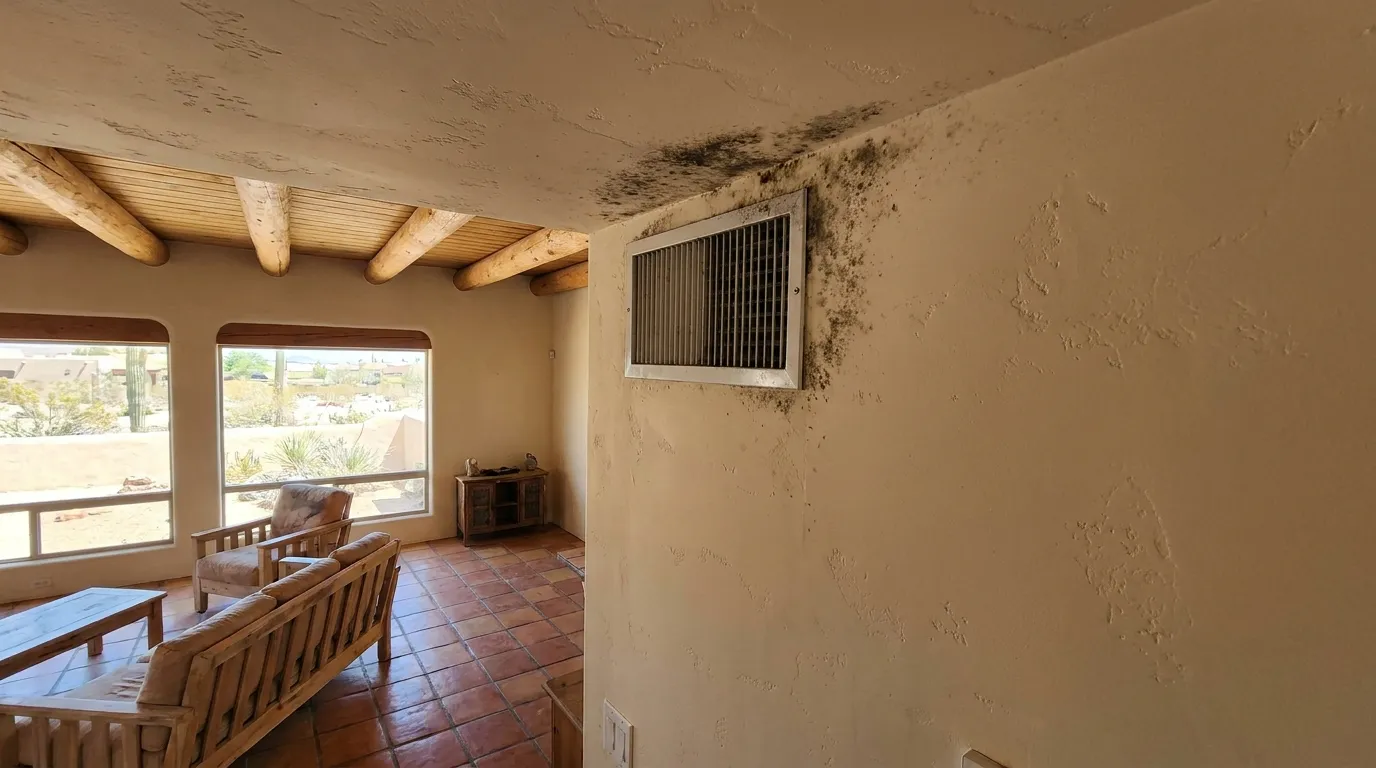
Las Vegas has a counterintuitive mold problem. The outdoor air is dry most of the year, but indoor moisture from plumbing, HVAC, and pool environments creates the conditions mold needs in specific locations throughout most homes. This guide explains where Las Vegas mold tends to grow and what proper remediation involves.
The Las Vegas Moisture Paradox
Outdoor relative humidity in Las Vegas often runs below 20 percent. Building materials in that environment shed moisture quickly. But mold does not need outdoor conditions to thrive — it needs surface moisture for more than 48 hours on a cellulose substrate. Several Las Vegas-specific conditions create exactly that:
- HVAC condensation. Cold supply air contacting warm humid pockets condenses on drywall, framing, and inside duct components.
- Plumbing leaks. A slow leak in a Las Vegas home runs for the same duration before detection as in any other climate, with the same colonization result.
- Pool and spa humidity. Indoor or near-indoor pool environments elevate localized humidity far above outdoor averages.
- Evaporative cooler use. “Swamp coolers” deliberately add humidity to indoor air, creating mold conditions when ductwork or surfaces stay damp.
- Irrigation overspray. Sprinkler systems hitting exterior walls drive moisture into stucco and through to interior framing.
Where We Find Las Vegas Mold
After years of remediation calls in the Valley, the patterns are clear.
- Around HVAC vents and air handlers. Most common single source.
- Under kitchen and bathroom sinks. Slow supply line and drain leaks.
- Behind toilets. Wax ring failures and supply line drips.
- In water heater closets. Tank leaks, condensate accumulation, or T&P valve discharge.
- Around pool equipment rooms. Humidity from pumps and filtration.
- Master bath ceilings. Inadequate venting on long showers.
- Garage walls adjacent to laundry rooms. Washing machine supply line leaks migrating through shared walls.
Stucco and block construction limits some of the wall-cavity colonization patterns you see in other climates, but does not eliminate them.
The Remediation Approach
A defensible Las Vegas mold remediation follows the IICRC S520 standard:
- Independent assessment. Third-party air samples with outdoor control.
- Source identification and repair. The moisture source is fixed before remediation begins.
- Containment. Plastic barriers with HEPA negative-air machines.
- Removal. Affected drywall, insulation, and substrates bagged and removed.
- HEPA cleaning. Surfaces vacuumed and wiped with appropriate antimicrobials.
- Drying to verified equilibrium. No remediation closes until moisture readings are stable.
- Independent post-remediation verification. Third-party clearance testing, never by the remediator.
For more on why third-party clearance matters, see air quality testing after restoration.
HVAC Cleaning Is Often Required
If mold has been found anywhere near the HVAC system, the entire duct network and air handler should be inspected and cleaned. Skipping this step is the most common reason for recurring mold after remediation in Las Vegas homes. The supply system distributes spores back through the home.
Insurance and Nevada Mold
Standard Nevada homeowners policies cover mold remediation only when it results from a covered water loss (sudden pipe burst, appliance failure). Long-term leaks and humidity-driven mold are typically excluded. Many Nevada policies cap mold coverage at $5,000 to $10,000 even when covered. We document the trigger carefully and ask about mold endorsements before any work begins.
What Las Vegas Homeowners Can Do
- Service HVAC twice a year and verify condensate drain function.
- Check under every sink and behind every toilet every 6 months for soft drywall or staining.
- Keep indoor humidity below 50 percent year-round.
- Address irrigation overspray and grading issues that direct water at the home.
- Inspect water heater closets quarterly for active drips or staining.
Related Services
Bingham Restoration provides S520-standard mold remediation across the Las Vegas Valley. Call 520-FLOODED for an assessment.
Frequently Asked Questions
Can mold grow in Las Vegas?
Yes. Despite low outdoor humidity, indoor conditions in Las Vegas homes routinely create the moisture environments mold needs. Plumbing leaks, HVAC condensation, irrigation overspray, and pool-area humidity all create localized growth conditions.
Why is mold often found near HVAC vents in Las Vegas?
Las Vegas HVAC systems run cooling for most of the year. Cold supply air condenses on surrounding surfaces when humidity is elevated. The drywall around vents, the supply boots, and the air handler closet are all common growth sites.
How do I know if my Las Vegas home has hidden mold?
Musty odors that come and go, recurring sinus or respiratory symptoms, and visible staining around HVAC components or below sinks are the most common signals. An independent air quality test confirms or rules it out.
Need Emergency Restoration Right Now?
Our crews arrive in 48 minutes on average and bill your insurance directly.
Call 520-FLOODED