
Bingham Restoration Resources
Saving Documents and Photos After Water Damage
Published September 19, 2026
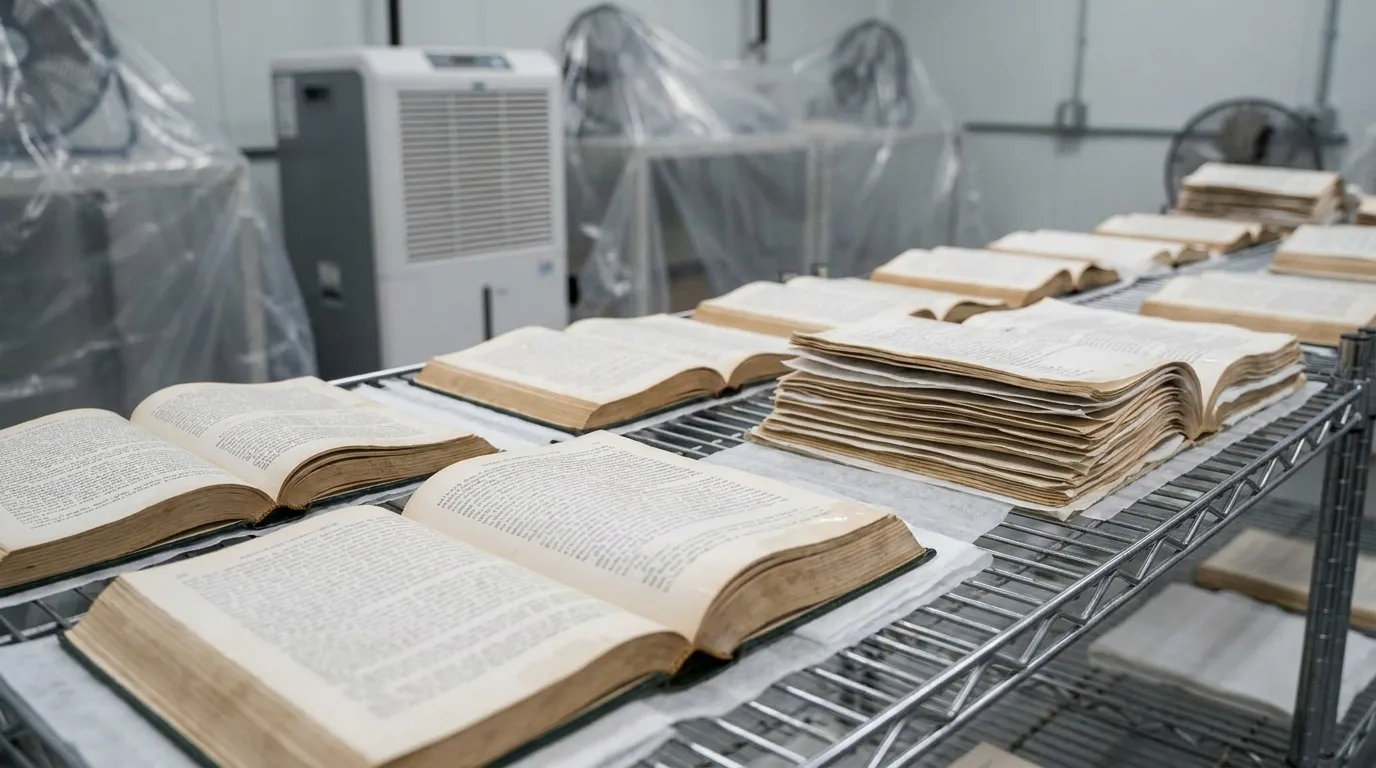
Of everything a flood touches, paper carries the most meaning per pound: birth certificates, photo albums, a grandparent’s letters. It is also the contents category where amateur handling does the most harm and where one counterintuitive move, the freezer, saves collections that look beyond hope.
Quick answer: Work within the 48-hour mold window. Small quantities of wet documents can be air-dried flat or hung; photographs get rinsed, separated wet, and dried face-up. Anything you cannot dry in time goes into a freezer in small batches for later professional vacuum freeze-drying; freezing stops all deterioration indefinitely. Never apply heat, never peel stuck items apart dry, and never write off a soaked collection before a recovery specialist sees it.
The Enemy Is Time, Not Water
Paper survives wetting surprisingly well; what destroys collections is what happens next. Inks migrate, coated papers fuse into bricks, emulsions lift off photographs, and, decisively, mold colonizes within about 48 hours, staining and digesting what it grows on. Every recovery decision is a race against those processes, which is why the professional playbook centers on one move: stop the clock.
Freezing stops the clock. A frozen document does not mold, bleed, or stick. Household freezers work fine for triage: wax paper between batches, small bundles, freeze first and make decisions later. Commercial recovery then uses vacuum freeze-drying, in which ice sublimates directly to vapor without passing through liquid, returning paper dry, separated, and remarkably close to its pre-loss state.
DIY Triage, Item by Item
| Item | Handling |
|---|---|
| Loose documents | Air-dry flat on absorbent paper, or hang; separate sheets while wet |
| Books | Stand on end, fan pages, absorbent paper every ~20 pages; freeze if more than damp |
| Photographs | Rinse in clean cool water, separate while wet, dry face-up; never blot the image |
| Stuck photo stacks | Do not peel dry: soak in cool water until they release, or freeze for professionals |
| Framed items | Remove from frames while wet if the item is not stuck to the glass; if stuck, leave it and get help |
| Negatives and film | Keep wet in clean water and get to a specialist within days |
Universal rules: gentle handling (wet paper tears at a fraction of its dry strength), no heat and no direct sun (both accelerate distortion and adhesion), cool moving air, and gloves for anything from contaminated water. If the loss involves sewage or floodwater, the contamination category matters — Category 3-soaked paper is a health decision as well as a preservation one.
When to Go Professional
Volume, value, or stuck-together condition are the triggers. Recovery services handle what home methods cannot: vacuum freeze-drying at scale, mold remediation on paper, deodorization (smoke-damaged documents from a fire loss respond to the same processes), and digitization as a preservation endpoint. In a whole-home loss, documents route through the pack-out inventory like other contents, and restoration costs belong on the contents claim, because sentimental items have no replacement price, which is precisely why recovery is the right line item.
Related Services
Bingham Restoration’s contents teams triage, freeze, and coordinate recovery of documents and photographs as part of every pack-out. See our pack-out services or call 520-FLOODED.
Frequently Asked Questions
Can water-damaged documents and photos be saved?
Very often, if handled fast. Wet paper and photographs are fragile but recoverable through air drying (small quantities) or freezing followed by professional freeze-drying (large or valuable collections). Mold, not the water itself, is the main permanent threat.
Why freeze wet documents?
Freezing stops everything: mold growth, ink migration, page adhesion, and decay. Frozen documents hold indefinitely until they can be professionally vacuum freeze-dried, which removes ice without re-wetting the paper.
How do I dry wet photographs?
Rinse gently in clean water if dirty, separate carefully (never peel stuck photos dry; soak them apart), and air-dry face-up on clean absorbent surfaces. Do not blot the image side or use heat.
What is the time window before mold sets in?
About 48 hours in typical conditions, less in warm humid rooms. Anything not dried or frozen inside that window is at risk of staining, adhesion, and mold that makes recovery far harder.
Does insurance cover document and photo restoration?
Restoration costs are generally claimable under contents coverage in a covered loss. Sentimental items have no replacement value, which is exactly why recovery services exist and are worth claiming.
Need Emergency Restoration Right Now?
Our crews arrive in 48 minutes on average and bill your insurance directly.
Call 520-FLOODED