
Bingham Restoration Resources
Building a Contents Inventory for Your Insurance Claim
Published August 26, 2026
The structure side of a property claim is scoped by professionals with software. The contents side, meaning everything you own, is scoped by you from memory, in the weeks after a disaster. That asymmetry is why personal property is the most under-claimed portion of major losses: not denied, just never fully listed.
Quick answer: Build the inventory item by item: photograph everything damaged, list each item with description, quantity, approximate age, and replacement cost, and attach receipts or serial numbers for high-value pieces. Do not dispose of anything undocumented. If your loss involves a professional pack-out, the crew’s item-level documentation becomes the backbone of the claim.
Why Inventories Decide the Payout
Carriers pay contents claims against a sworn itemized list, often a formal proof of loss with a deadline. Under-listing has no advocate: no adjuster hunts for items you forgot, and memory reconstructs a home poorly. Industry experience is blunt on this: households that inventory methodically recover meaningfully more than households that estimate, for the same loss.
Know which valuation your policy carries. Actual cash value (ACV) pays depreciated value. Replacement cost value (RCV) pays the cost of a new equivalent — typically ACV up front, with the depreciation holdback released when you actually replace items and submit receipts. RCV policyholders who never do the replacement paperwork quietly forfeit the difference.
Building the List
- Video first. Slow walkthrough of every affected room, opening drawers, closets, and cabinets. Narrate as you go. This is the master record everything else hangs from.
- Then itemize, room by room. For each item: description, brand/model where known, quantity, age, condition, and replacement cost (current retail links work as support).
- Tier your effort. High-value items (electronics, jewelry, instruments, tools) get serial numbers, receipts, and individual photos. Mid-tier gets line items and group photos. Bulk items like clothing, kitchenware, and linens get counted honestly by category.
- Mine your records for proof: old photos with items in the background, email receipts, bank statements, registry lists, phone photo libraries.
- Track damaged vs. cleanable. Some contents get restored rather than replaced; the contents cleaning process handles textiles, furniture, and electronics, and cleaning costs are claimable scope.
- Dispose of nothing undocumented. Photograph before anything leaves, and hold high-value damaged items for adjuster inspection.
The Pack-Out Advantage
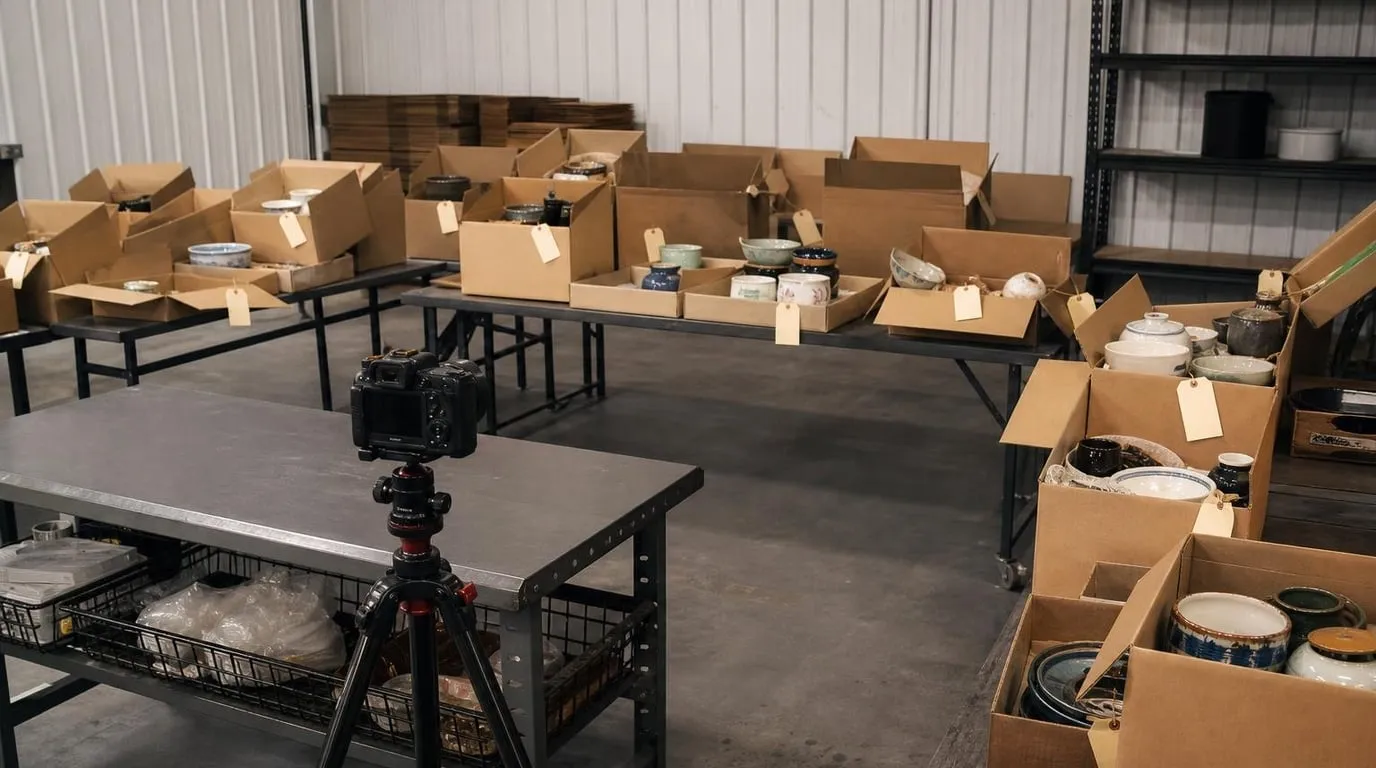
When damage forces belongings out of the home, a professional pack-out generates the inventory as a byproduct: every item is tagged, photographed, condition-noted, and tracked into climate-controlled storage. That documentation set is item-level, timestamped, and third-party, precisely what the contents claim needs, and it protects belongings from the secondary damage of sitting in a wet, smoky structure during the fire claim or water claim.
Before You Ever Need It
The best contents inventory is made in an intact house: a 20-minute video walkthrough of every room and closet, updated yearly, stored in the cloud. It converts the worst documentation problem in insurance into a solved one.
Related Services
Bingham Restoration’s pack-out teams inventory, clean, and store contents with claim-ready documentation. See our pack-out services or call 520-FLOODED.
Frequently Asked Questions
What is a contents inventory?
An itemized list of your damaged personal property (description, quantity, age, condition, and replacement cost) that becomes the basis for the personal property portion of your claim. No inventory, no payment.
How detailed does a contents inventory need to be?
Item-level. 'Kitchen contents - $5,000' gets challenged; '42 items listed with photos, models, and prices' gets paid. Serial numbers and receipts strengthen high-value items, but photos plus honest descriptions carry most of the list.
What is the difference between ACV and replacement cost for contents?
Actual cash value pays depreciated value; replacement cost coverage pays what a new equivalent costs, usually as depreciation 'holdback' released after you actually replace the item. Check which your policy carries.
Should damaged items be thrown away before the claim settles?
Not until documented and, ideally, seen by the adjuster. Photograph everything before disposal, and keep high-value damaged items physically when practical. Discarded-undocumented is the classic unforced error.
Does a professional pack-out help the insurance claim?
Substantially. Pack-out crews create item-level inventories with photos and condition notes as part of the process, producing exactly the documentation the contents claim requires.
Need Emergency Restoration Right Now?
Our crews arrive in 48 minutes on average and bill your insurance directly.
Call 520-FLOODED