
Bingham Restoration Resources
Fire Insurance Claims: A Homeowner's Guide
Published August 23, 2026
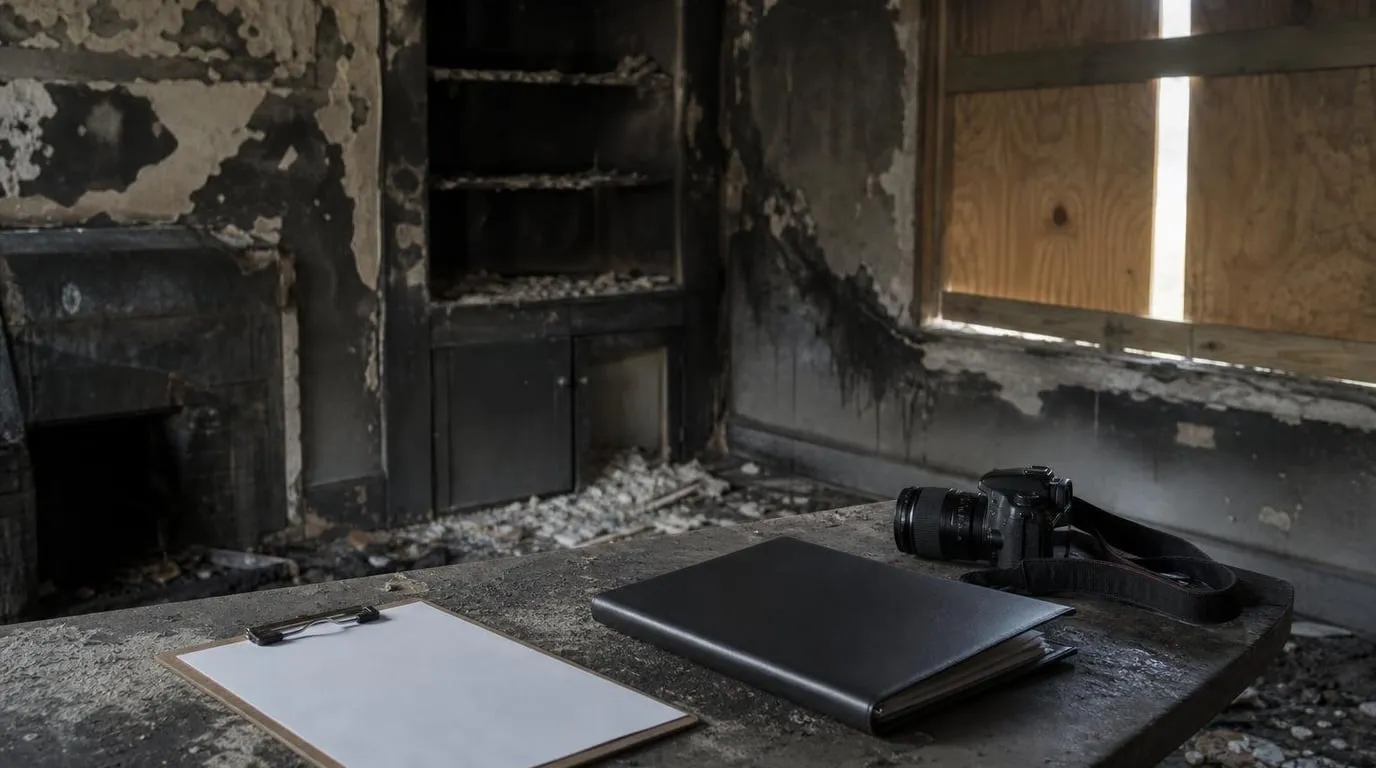
A serious house fire produces the largest insurance claim most families ever file, at the worst possible moment to manage paperwork. The claim has more moving parts than any other property loss: structure, smoke, water, contents, and your living expenses all run as parallel tracks, and each track pays only what gets documented.
Quick answer: After the fire is out: secure the property (board-up and tarping are covered and expected), open the claim immediately, start ALE documentation the first night, photograph everything before any cleanup, and build the contents inventory early. The claim will run months; the evidence you preserve in week one funds all of it.
The Five Tracks of a Fire Claim
1. Structure. Demolition, repair, and rebuild of the building itself. Watch for two chronic gaps: smoke and heat damage beyond the burn area (smoke migrates house-wide, as explained in smoke vs. fire damage), and code-upgrade costs when rebuilding older homes, where ordinance-or-law coverage pays these only if scoped.
2. Suppression damage. Fire crews put water and sometimes chemicals into the structure. That water damage belongs to the fire claim and often rivals the burn scope. It also starts a real clock: wet materials need professional drying within days, or mold complicates everything.
3. Contents. Everything you own that was damaged: cleaned where possible, replaced where not. The mechanics, and the inventory that determines payment, are covered in building a contents inventory. Salvageable items typically go through a pack-out and specialty cleaning process.
4. Additional Living Expenses (ALE). Hotel, rental, meals above normal, laundry, mileage — the extra cost of living displaced. ALE has limits (in dollars and months), so track it from night one and spend deliberately.
5. Odor and air quality. Full smoke odor elimination is legitimate scope, not a luxury; see what real deodorization involves.
The Sequence That Protects You
- Secure the site: board-up, tarping, fencing as needed. Covered, and required by your duty to protect the property.
- Open the claim same day and ask three questions: ALE limits, proof-of-loss deadline, and whether emergency mitigation is pre-approved.
- Document before cleanup: video walkthrough of every room, exterior, and contents.
- Start mitigation fast: suppression water and acidic soot are actively destroying value daily; see why speed changes fire costs.
- Keep a claim file: every receipt, every adjuster conversation with date and summary, every report.
- Review estimates as drafts. Supplements for hidden and smoke scope are normal; a restoration contractor who documents to carrier standards does most of this arguing with evidence instead of adjectives.
When to Get Help
Large-loss claims justify professional support: an experienced restoration contractor for scope, and in disputed or very large cases, a licensed public adjuster or attorney. The trade-offs are covered in public adjuster vs. restoration company.
Related Services
Bingham Restoration manages fire losses end to end and bills carriers directly, from board-up through rebuild. See how we handle insurance, our fire damage services, or call 520-FLOODED.
Frequently Asked Questions
What does a fire insurance claim cover?
Structure repair and rebuild, smoke damage throughout the home, water and chemical damage from firefighting, contents (furniture, clothing, belongings), and additional living expenses (ALE) for housing, meals, and extra costs while displaced.
What is ALE coverage and how do I use it?
Additional Living Expenses pays the difference between your normal costs and your costs while the home is uninhabitable: rent or hotel, meals above your normal grocery spend, laundry, extra mileage. Keep every receipt from day one.
Should I accept the insurer's first offer on a fire claim?
Treat it as a first draft. Fire scopes routinely miss smoke migration, HVAC contamination, and code-upgrade costs. Supplements based on documented scope are a normal part of large claims.
How long does a fire insurance claim take?
Small smoke claims can close in weeks. Significant structure fires typically run 6 to 18 months from loss to final payment, with mitigation and ALE paid along the way.
What is a proof of loss?
A sworn statement itemizing your damages, often required within 60 days of the carrier's request. Take the deadline seriously and build it from your contents inventory and contractor scope rather than memory.
Need Emergency Restoration Right Now?
Our crews arrive in 48 minutes on average and bill your insurance directly.
Call 520-FLOODED