
Bingham Restoration Resources
Evaporative Cooler Mold: The Desert's Hidden Moisture Problem
Published July 17, 2026
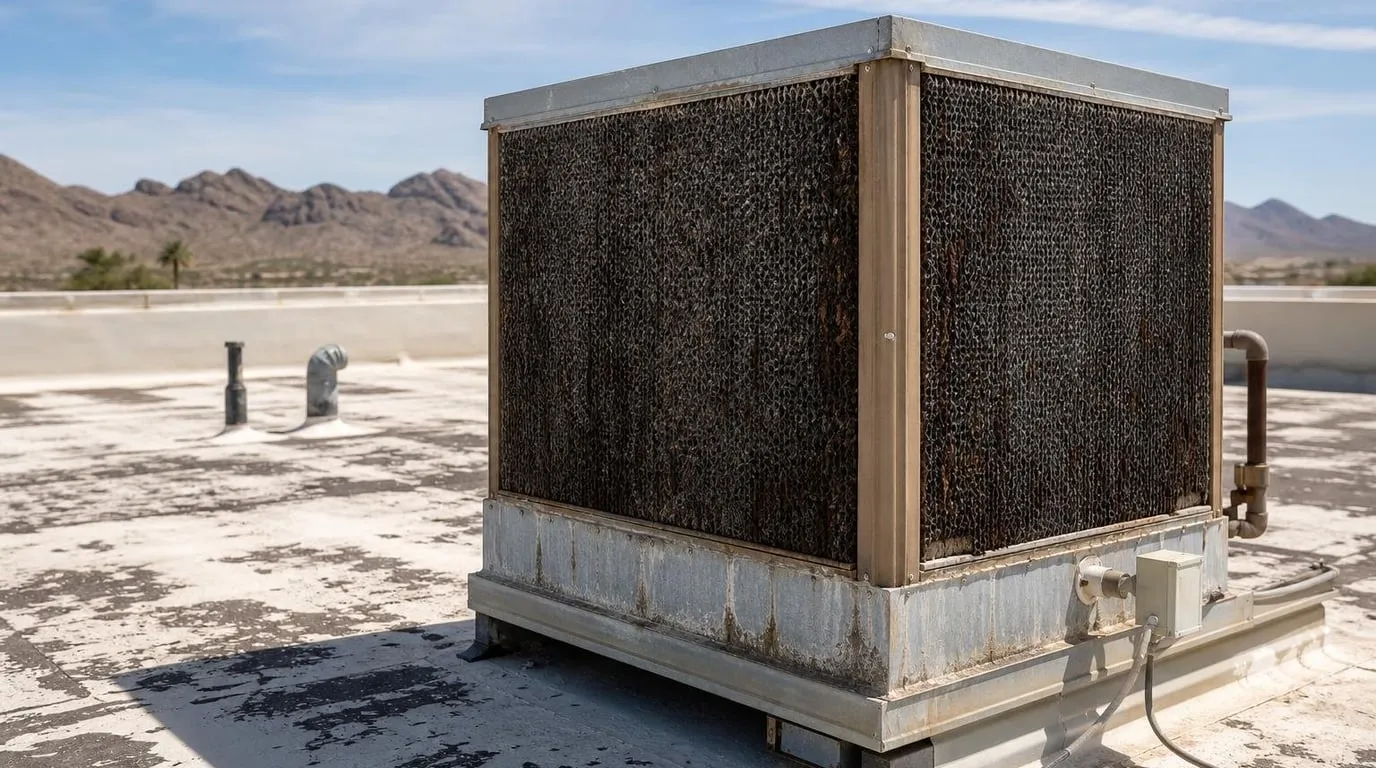
Evaporative coolers earn their keep in Arizona, cutting cooling costs dramatically in dry months. They also introduce the one thing desert construction never planned for: a continuously wet appliance sitting on the roof, connected directly to your air supply.
Quick answer: Evaporative cooler mold shows up in three places: on the pads and pan inside the unit, in the ductwork that carries its humid air, and in the roof or ceiling assembly below a leaking unit. A musty smell when the cooler kicks on means growth somewhere in that chain. Pads get replaced, pans get cleaned, but duct and ceiling growth is a remediation job.
How a Cooler Becomes a Mold Source
A swamp cooler works by pulling hot air through water-saturated pads. Everything about that design favors biology:
- Standing water in the reservoir pan sits warm for months, growing bacteria and mold slime, especially with mineral scale to anchor it.
- Pads stay wet by design and collect windblown dust — organic food plus moisture plus warmth.
- Discharge air runs at high humidity, keeping duct interiors damp, and dust in ducts feeds growth.
- Leaks are routine. Float valves stick, supply tubing splits, pans rust through. The water goes onto the roof deck and into the ceiling cavity around the duct drop.
Warning Signs by Location
| Where | Sign | Severity |
|---|---|---|
| Pads and pan | Musty smell on startup, visible slime or dark growth | DIY: replace pads, clean and disinfect pan |
| Supply ducts | Odor from all vents, dust with dark speckling at registers | Professional duct inspection and cleaning |
| Ceiling around duct drop | Stains, soft drywall, bubbling paint | Professional moisture mapping and remediation |
| Roof deck under unit | Sagging, staining visible from attic | Remediation plus roof repair |
The pattern that catches homeowners: they replace smelly pads each season while a slow pan leak feeds a colony in the ceiling below. The smell improves briefly, then returns, because the source was never in the pads. Confirming concealed growth takes air quality testing rather than guesswork.
Seasonal Maintenance That Prevents It
- Replace pads at season start; clean and disinfect the pan and check the float.
- Drain, dry, and cover the unit at season end, since water left over winter is a growth incubator.
- Inspect supply tubing and the roof penetration seal every spring.
- Check attic-side framing under the unit once a year.
When to Call for Remediation
Persistent odor after pad replacement, any ceiling staining below the unit, or visible growth at supply registers means the problem has moved into the building. Remediation at that point follows the IICRC S520 standard: containment, HEPA-filtered negative air, removal of colonized drywall and insulation, duct cleaning or replacement, and source repair. In Phoenix and Tucson, cooler-related calls peak in late summer when monsoon humidity compounds the problem, the same seasonal dynamic described in our Tucson mold guide.
Related Services
Bingham Restoration handles cooler-related mold from testing through rebuild across Arizona. See our mold and asbestos services, get air quality confirmed by our environmental testing lab, or call 520-FLOODED.
Frequently Asked Questions
Can an evaporative cooler cause mold in the house?
Yes, three ways: mold growing in the cooler itself blows spores into living space, humid discharge air raises indoor moisture, and water leaks from the unit saturate the roof and ceiling cavity below it.
How do I know if my swamp cooler has mold?
A musty or fishy smell when the cooler runs is the classic sign. Visible dark growth on pads, slime in the reservoir pan, and ceiling stains around the duct drop are confirmation.
Should moldy cooler pads be cleaned or replaced?
Replaced. Pads are inexpensive porous media that cannot be reliably decontaminated. Replace pads at the start of each season and mid-season in heavy use.
Does a swamp cooler make indoor mold more likely overall?
It raises indoor humidity by design, often to 50 to 60 percent. That alone will not grow mold on dry materials, but it slows the drying of any leak and pushes marginal areas like bathrooms over the threshold.
When is cooler-related mold a professional job?
When mold has reached ductwork, the ceiling cavity, or drywall, or when the smell persists after pad replacement and cleaning. Growth inside supply ducts distributes spores to every room.
Need Emergency Restoration Right Now?
Our crews arrive in 48 minutes on average and bill your insurance directly.
Call 520-FLOODED