
Bingham Restoration Resources
Tucson Mold Remediation: Monsoon Humidity in the Desert
Published July 16, 2026
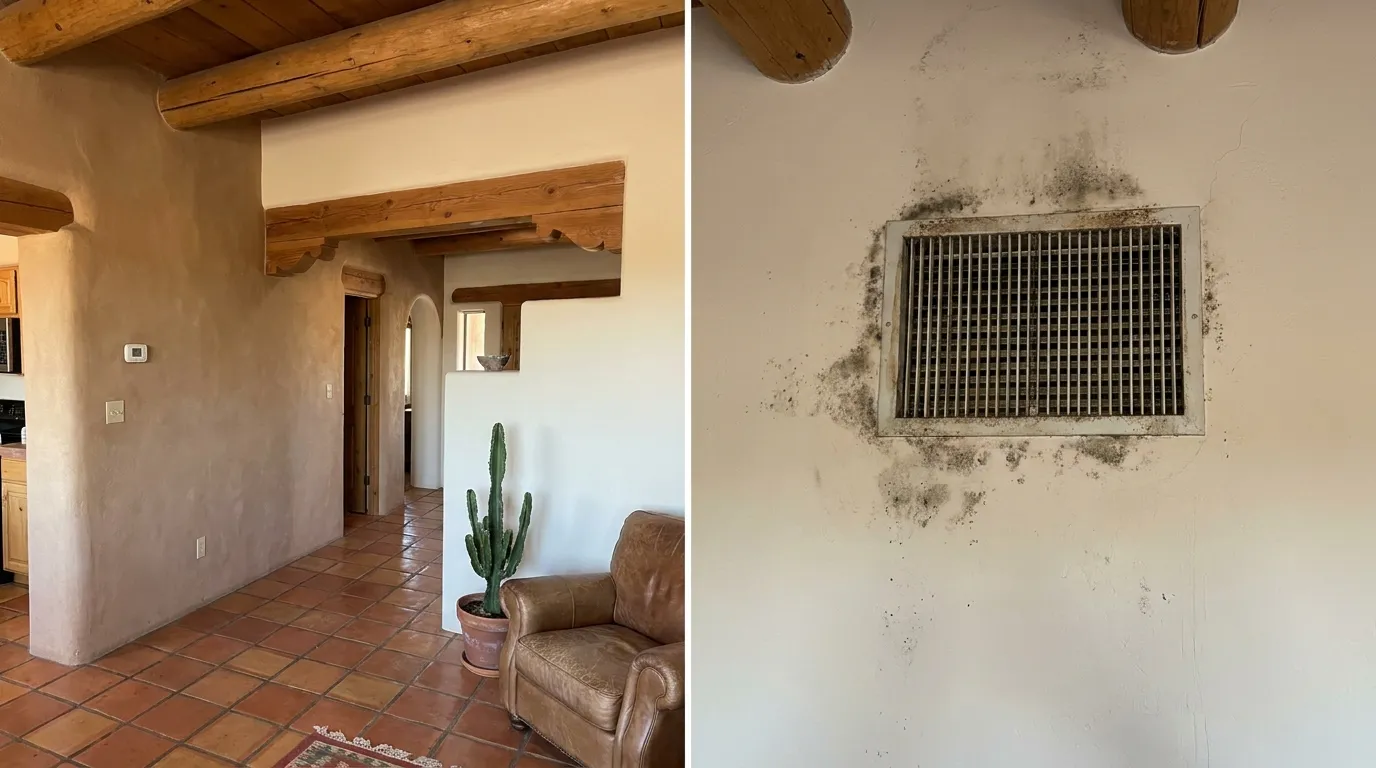
Tucson homeowners tend to assume the Sonoran Desert makes mold impossible. Remediation crews in southern Arizona know otherwise: the combination of monsoon moisture, evaporative coolers, and slab-built housing produces steady mold work every summer, most of it hidden until someone smells it.
Quick answer: Mold in Tucson grows wherever water lingers indoors, regardless of outdoor humidity. The usual sources are swamp cooler leaks, monsoon intrusion, and slow plumbing failures. Proper remediation requires containment, HEPA-filtered negative air, removal of colonized porous materials, and fixing the moisture source, done to the IICRC S520 standard.
Where Mold Hides in Tucson Homes
- Around evaporative coolers. Supply tubing leaks, overflowing pans, and humid discharge air feed mold in ceiling cavities and around vents. Our evaporative cooler mold guide covers this failure mode in depth.
- Ceiling and wall cavities after monsoon storms. Wind-driven rain enters through parapets, flashing, and cracked stucco, then dries slowly inside shaded assemblies.
- Under and beside slab plumbing leaks. Hot-side slab leaks in older copper systems keep flooring and baseplates damp for months.
- Adobe and older masonry homes. Thick walls hold moisture long after the source stops, especially in midtown and barrio-era construction.
- Bathrooms without exhaust fans, common in older housing stock.
Monsoon Season Changes the Math
From late June through September, Tucson’s dew point climbs and indoor humidity follows, especially in homes cooled by swamp coolers, which add moisture by design. Materials that would flash-dry in April stay damp in August. A roof leak during a July storm sequence can sustain growth conditions for weeks. This is why Tucson mold calls cluster in late summer, trailing the monsoon by two to six weeks.
What Certified Remediation Involves
Arizona does not license mold remediation, so process is the differentiator. A proper project includes:
- Assessment and moisture mapping to find the full extent, not just the visible patch.
- Containment with plastic sheeting and HEPA-filtered negative air so spores do not spread through the house.
- Removal of colonized porous materials (drywall, insulation) and HEPA/damp cleaning of structural surfaces.
- Drying the cavity and repairing the moisture source, without which mold simply returns.
- Post-remediation verification, ideally with independent clearance testing before rebuild. Our in-house lab supports environmental testing with fast turnaround.
Anything less, whether spray-and-paint over visible growth, no containment, or no source repair, is cosmetic and temporary. Health-wise, the stakes are covered in our guide to black mold symptoms.
Related Services
Bingham Restoration provides S520-standard mold remediation across Tucson and southern Arizona, with AHERA-certified testing when asbestos-era materials are involved. See our mold and asbestos services or call 520-FLOODED.
Frequently Asked Questions
Can mold really grow in Tucson's dry climate?
Yes. Outdoor aridity does not protect wet indoor cavities. A plumbing leak inside a wall creates its own humid microclimate, and monsoon season pushes outdoor humidity up just as cooler-related moisture peaks.
What causes most mold problems in Tucson homes?
Evaporative cooler leaks and duct condensation, monsoon roof and wall intrusion, plumbing leaks in slab-built homes, and moisture trapped in adobe or older masonry construction.
Does Arizona require mold remediation licensing?
Arizona has no state mold licensing program, which makes credentials matter more. Look for IICRC-certified firms that follow the S520 standard with containment, negative air, and post-remediation verification.
How much does mold remediation cost in Tucson?
Small contained areas often run $1,500 to $3,500; multi-room or HVAC-involved projects can reach $10,000 or more. Source repair and rebuild are additional.
Is mold covered by homeowners insurance in Arizona?
Only when it results from a covered sudden water loss, and often subject to a mold sublimit. Mold from long-term neglect or maintenance failures is typically excluded.
Need Emergency Restoration Right Now?
Our crews arrive in 48 minutes on average and bill your insurance directly.
Call 520-FLOODED