
Bingham Restoration Resources
Musty Smell in Your House? How to Find the Source
Published August 9, 2026
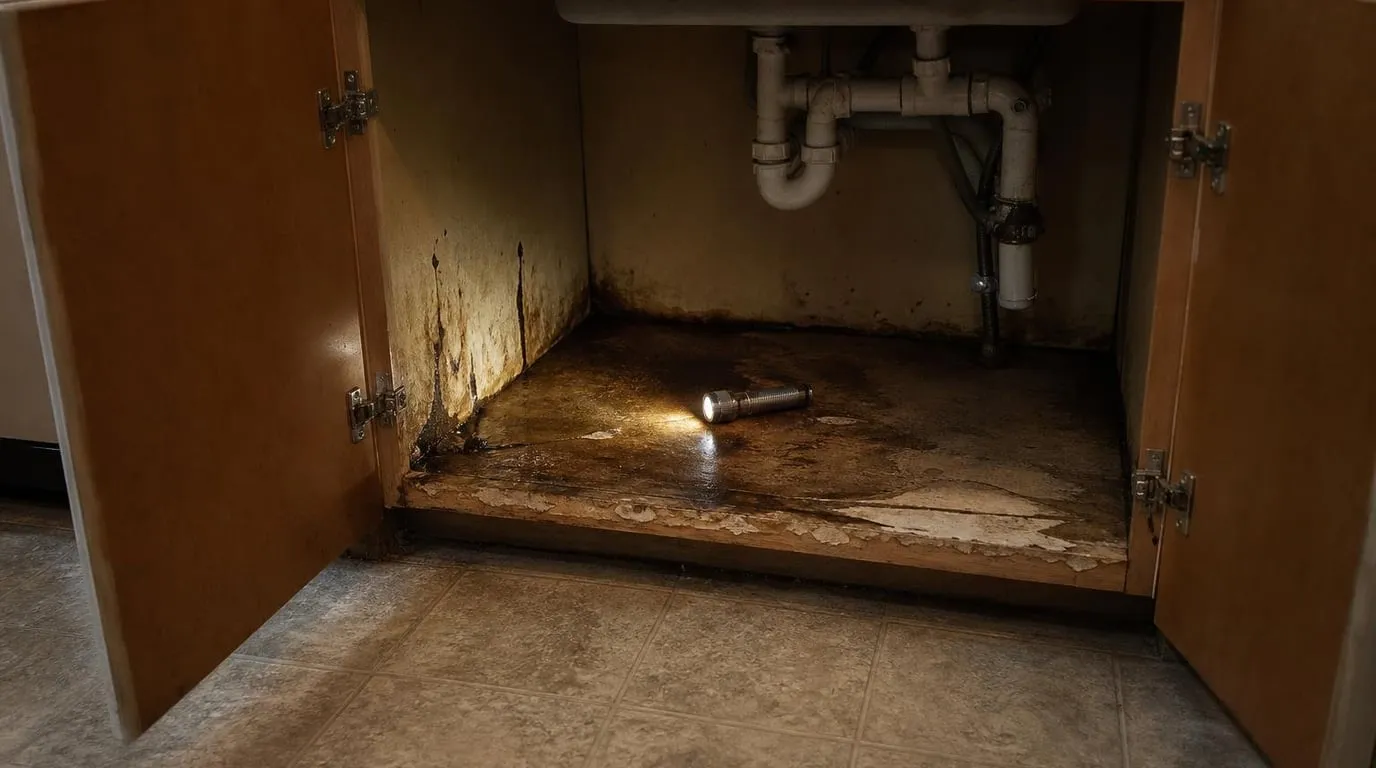
A musty smell is data. Mold and bacteria release microbial volatile organic compounds (MVOCs) only while actively growing, which means the odor is a live report: somewhere in the house, something is wet enough to support a colony right now. The nose finds mold before the eyes do, and usually before the damage bill grows a digit.
Quick answer: A persistent musty smell almost always indicates active mold or bacterial growth on damp material. Hunt in moisture-prone zones (under sinks, around appliances, basements, crawlspaces, exterior-wall closets) and note when and where the smell is strongest. If you cannot find a visible source, the growth is likely inside a wall, floor, or HVAC system, and that is the point to bring in moisture mapping and air sampling.
Use the Smell’s Behavior as a Map
- Strongest in one room → local source: plumbing, window, or exterior wall in that room.
- Everywhere when HVAC runs → coil, drain pan, or duct growth distributing MVOCs house-wide; see HVAC mold contamination.
- Worse on rain days → envelope intrusion: roof, flashing, grading, or foundation seepage.
- Worse in the morning → overnight condensation cycle, often windows or poorly insulated walls.
- Ground floor and stairwells → basement or crawlspace, with odor rising through the stack effect; the mechanics are covered in crawlspace water damage.
The Physical Search
Work through moisture-prone zones with a flashlight:
- Plumbing cabinets: under every sink, feeling supply lines and drain fittings for dampness.
- Appliance perimeters: dishwasher toe kick, washing machine walls, refrigerator alcove, water heater base.
- Bathrooms: behind the toilet, tub/shower perimeter caulk, exhaust fan effectiveness.
- Basement/crawlspace: foundation walls, stored cardboard, the underside of subfloor.
- Closets on exterior walls: dead air plus a cold surface equals condensation growth.
- Windows and attic: sill staining, sheathing discoloration.
Look for the moisture signatures: staining, bubbling paint, warped baseboard, cupped flooring, white mineral deposits on masonry. The visual checklist overlaps heavily with our hidden water damage signs guide.
When the Source Won’t Show Itself
A strong, persistent musty smell with no findable source usually means growth inside an assembly: a wall cavity fed by a slow plumbing leak, subfloor under vinyl, or sheathing behind siding. This is where professional tools pay for themselves — moisture meters and thermal imaging locate the wet zone without exploratory demolition, and air sampling can confirm elevated spore levels and even narrow the type. The confirmation process is described in mold behind walls.
One warning: do not deodorize and move on. Masking the MVOCs removes your only free monitoring system while the colony and the moisture damage keep growing.
Related Services
Bingham Restoration locates hidden growth with moisture mapping and in-house lab air sampling, then remediates to the S520 standard. See our mold and asbestos services, our environmental testing lab, or call 520-FLOODED.
Frequently Asked Questions
Does a musty smell always mean mold?
Usually. The odor comes from microbial volatile organic compounds (MVOCs) released by actively growing mold and bacteria. You are smelling active biology, which means active moisture, even if nothing is visible.
Why does the musty smell come and go?
MVOC release rises with humidity and temperature, and HVAC cycles move the odor around. A smell that peaks on rainy days, in the morning, or when the AC starts points toward the moisture source's location.
Where should I look first for a musty smell?
Under sinks, behind toilets, around the dishwasher and washing machine, in the basement or crawlspace, and inside exterior-wall closets. Follow the smell to where it is strongest, then look for staining, warping, or dampness.
Can a musty smell be in the HVAC system?
Yes. If the odor appears in every room when the system runs, the source may be the coil, drain pan, or ducts, a distribution problem rather than a room problem.
When should I get professional testing for a musty smell?
When you cannot locate a source, when the smell persists after cleaning visible areas, or when household members have unexplained respiratory symptoms. Air sampling and moisture mapping find what flashlights cannot.
Need Emergency Restoration Right Now?
Our crews arrive in 48 minutes on average and bill your insurance directly.
Call 520-FLOODED