
Bingham Restoration Resources
Public Adjuster vs. Restoration Company: Who Does What?
Published August 24, 2026
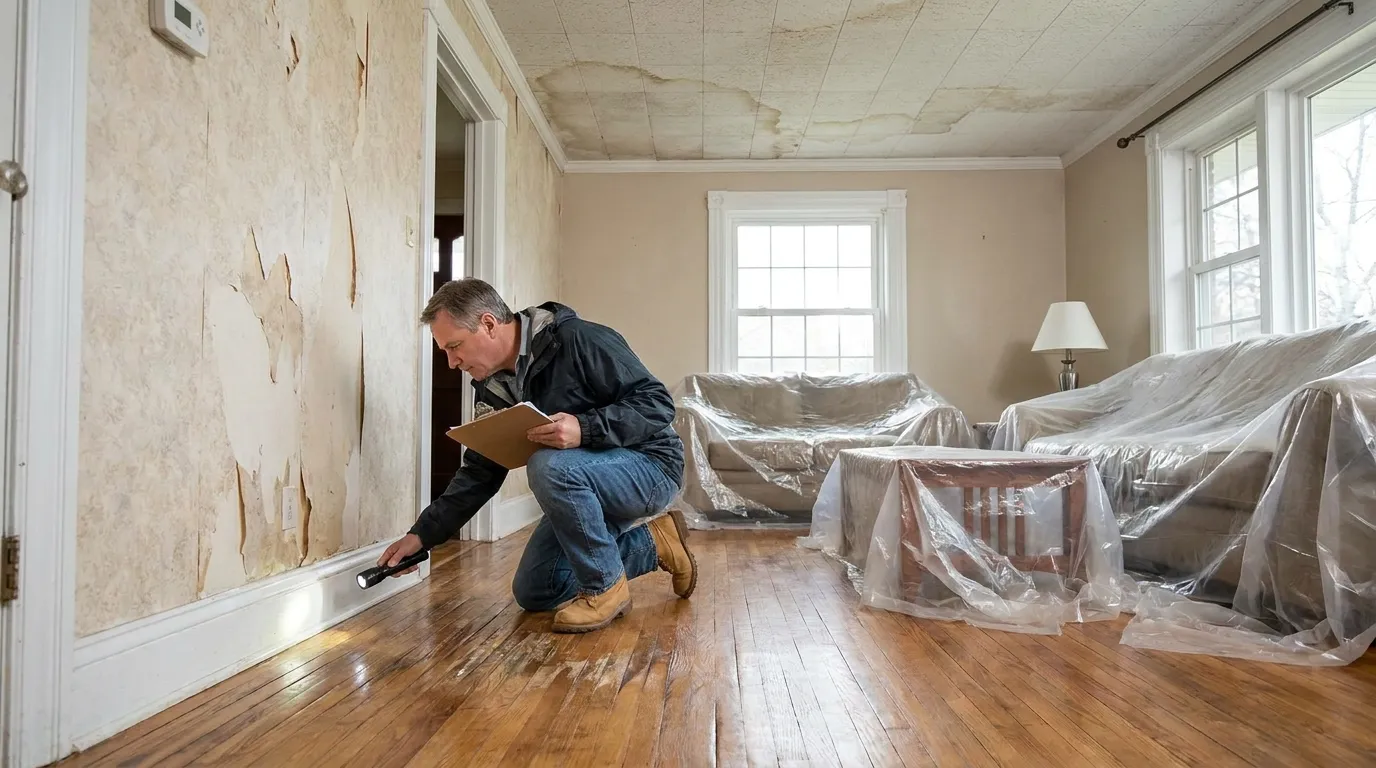
After a major loss, two kinds of professionals offer to help with your insurance claim, and homeowners routinely confuse them. One repairs the damage and documents it; the other represents you in the negotiation and takes a share of the settlement. They are not competitors — they are different tools, and the right choice depends on the claim.
Quick answer: A restoration company mitigates and repairs the damage, and a good one documents the loss so thoroughly that the claim largely settles itself. A public adjuster is your hired representative in the claim negotiation, paid 5 to 15 percent of the payout, and earns that fee mainly on large, complex, disputed, or denied claims. Most routine losses need excellent documentation, not paid representation.
Side by Side
| Restoration company | Public adjuster | |
|---|---|---|
| Core job | Mitigate, document, repair | Value, negotiate, settle |
| Paid by | The claim proceeds (for the work) | Percentage of the settlement (5–15%) |
| Does repair work | Yes | No |
| Handles mitigation urgency | Yes, same-day | No |
| Writes repair scope | Yes, in carrier-standard estimating platforms | Reviews and argues scope |
| Negotiates coverage disputes | Supports with evidence | Yes, directly |
| Licensed as | Contractor (plus IICRC certifications) | State-licensed public adjuster |
| Best for | Every loss (someone must do the work) | Large, disputed, or denied claims |
What a Good Contractor Already Solves
Most claim friction is evidence friction: the adjuster cannot pay for what is not documented. A restoration contractor who photographs everything, keeps daily drying logs, writes line-item scopes in the platforms carriers use, and submits supplements when hidden damage emerges resolves the majority of scope disagreements as a routine part of the job, the approach described in our guide to filing a water damage claim. This is included in the work, not billed as a percentage of your settlement.
What a contractor cannot do: formally represent you in a coverage dispute, argue policy interpretation, or negotiate a denied claim. In most states that is licensed activity reserved for public adjusters and attorneys.
When the Public Adjuster Earns the Fee
- Large, complex losses such as major fires and total losses, where valuation itself is the battlefield; see the scale involved in fire insurance claims.
- Lowball or stalled claims where documented scope is being refused rather than missed.
- Cause-of-loss disputes (sudden vs. gradual, covered vs. excluded), the battleground described in claim denials.
- Capacity problems: you are displaced, overwhelmed, or managing the loss remotely.
Run the arithmetic honestly: 10 percent of a fairly-paid $40,000 claim is $4,000 for representation the documentation might have made unnecessary, but 10 percent of a claim that moves from $40,000 to $90,000 paid for itself several times over. Timing matters too; adjusters engaged early shape the claim, while those hired after a bad settlement offer have less room.
The Practical Default
For most losses: hire a certified restoration company immediately (mitigation cannot wait), insist on carrier-standard documentation, and escalate to a public adjuster only if the claim turns adversarial. For catastrophic losses, engaging both early is a reasonable strategy, with each doing the job the other cannot.
Related Services
Bingham Restoration documents every loss to carrier standards and bills insurers directly, the documentation-first approach that keeps most claims out of dispute. See how we handle insurance or call 520-FLOODED.
Frequently Asked Questions
What does a public adjuster do?
A public adjuster is a state-licensed professional who represents you (not the insurer) in the claim itself: documenting the loss, valuing it, negotiating with the carrier, and managing the paperwork. They do no repair work.
What does a public adjuster cost?
A percentage of the claim payout, commonly 5 to 15 percent depending on state caps and claim size. On a $100,000 claim at 10 percent, that is $10,000 of your settlement.
Does a restoration company negotiate with insurance?
Reputable ones document the loss to carrier standards, write detailed scopes in the estimating platforms insurers use, and support supplements when adjusters miss scope. That resolves most disagreements without anyone being formally 'hired' to fight.
When is a public adjuster worth it?
Large or complex losses, claims the carrier has lowballed or denied, disputes over cause of loss, and situations where you cannot manage the process. For routine, well-documented losses, the fee often buys little.
Can I have both a public adjuster and my own restoration company?
Yes, and on major losses that pairing is common: the adjuster handles claim strategy and negotiation while the contractor handles mitigation, scope detail, and the actual work.
Need Emergency Restoration Right Now?
Our crews arrive in 48 minutes on average and bill your insurance directly.
Call 520-FLOODED