
Bingham Restoration Resources
The Structural Drying Process: What Actually Happens
Published June 26, 2026
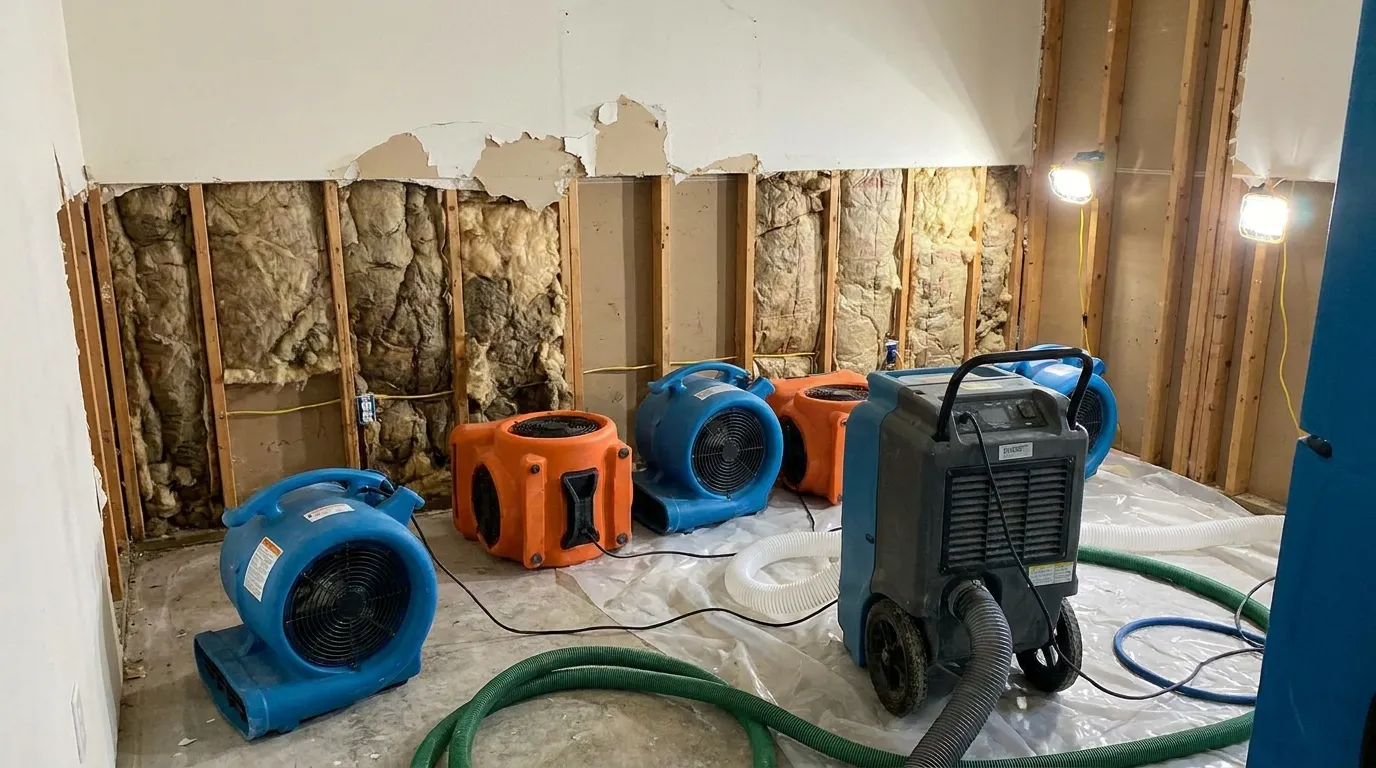
Structural drying is the part of water damage restoration that homeowners see the most of and understand the least. The equipment runs for days. The bill includes line items per fan and per dehumidifier. Understanding what is actually happening inside the wet structure makes the timeline and cost legible. This guide walks through the science and the equipment.
What “Dry” Actually Means
Building materials always contain some moisture. The goal of structural drying is not to remove all moisture — it is to return materials to the same moisture content they had before the loss, called equilibrium moisture content (EMC).
EMC varies by climate and material:
- Framing lumber: 8 to 12 percent in most US climates.
- Drywall: 0.5 percent or less on the surface.
- Hardwood flooring: 6 to 9 percent.
- Concrete slab: Varies; measured with relative humidity probes.
A drying job is complete when the affected materials reach the same readings as unaffected materials nearby. Anything less leaves residual moisture that feeds mold.
The Four Variables in Drying
Professional drying manipulates four variables to move moisture out of materials and out of the building:
1. Air Movement
Air movers (high-velocity fans) push air across wet surfaces. The moving air strips moisture from the surface, allowing more moisture to wick from inside the material to the surface. Without air movement, the surface stays saturated and internal moisture stops migrating outward.
2. Humidity Control
Once moisture is in the air, it has to go somewhere. Commercial dehumidifiers pull water vapor out of the air and discharge it as liquid water down a drain. Without dehumidification, the air saturates and the cycle stops.
3. Temperature
Warm air holds more moisture than cold air. Bringing the drying chamber to 70 to 90°F accelerates evaporation and dehumidifier efficiency. In cold weather, the equipment includes heat.
4. Time
Even with optimal equipment, materials release moisture at a finite rate. Pushing too hard (extreme heat, excessive air velocity) can damage materials. The right plan respects the physical limits.
The Equipment
A typical residential drying chamber includes:
- Air movers: Usually one per 10 to 16 linear feet of wet wall. A flooded room with four walls might run 6 to 12 air movers.
- Dehumidifier: Sized to the cubic footage and load. Often a 130 to 200 pint-per-day commercial refrigerant or desiccant unit.
- Containment: Plastic barriers that isolate the work zone, concentrating drying capacity.
- Moisture meters: Pin meters for direct contact readings, pinless for surface scans, thermo-hygrometers for ambient conditions.
Bingham Restoration techs log readings daily, comparing day-over-day moisture content to a target curve. If a material is not on track, equipment placement is adjusted.
Specialty Drying Systems
Certain materials require specialized equipment:
- Hardwood floors: Suction mat systems that pull air through the seams between planks. See our hardwood floor water damage guide.
- Wall cavities: Injection systems that push dry air through small drilled holes into the cavity.
- Concrete slabs: Desiccant dehumidifiers that achieve much lower vapor pressure than refrigerant units.
- Cabinet interiors: Wand drying with dedicated low-velocity air movers.
Why Drying Takes the Time It Does
Two cases for the same homeowner. A bathroom water loss caught within 6 hours might dry in 48 hours. The same loss caught at 72 hours might take 10 days. The difference is how deep the moisture migrated before drying began. Once water reaches framing, insulation, and behind cabinetry, the path back out is slower than the path in.
This is why the first call matters more than any single decision later in the project. Fast extraction shortens drying. Shortened drying means less equipment time, less material damage, and a cleaner final bill.
What Homeowners Often Want to Know
- “Can we turn the equipment off at night?” No. Drying is most efficient when run continuously. Turning equipment off resets the chamber’s vapor pressure each cycle.
- “Why is it so loud?” Air movers run at 2,000 to 3,000 RPM. Newer low-grain refrigerant dehumidifiers are quieter, but the chamber still produces 70 to 80 dB. Earplugs help if you must occupy the space.
- “Will it raise my electric bill?” Yes, modestly. Most restoration projects include power usage in the scope billed to insurance.
Related Services
Bingham Restoration provides certified structural drying as part of water damage restoration. Call 520-FLOODED for an active loss.
Frequently Asked Questions
How long does structural drying take?
Most residential losses dry in 3 to 5 days with commercial equipment. Larger losses, hardwood floors, and saturated framing can run 7 to 14 days. The variable is moisture content, which is measured directly rather than estimated.
Why can't I just use my home's fans?
Fans move air but do not remove moisture. Without a dehumidifier, you are circulating wet air through wet materials, which slows drying rather than accelerating it. A commercial drying system pairs air movement with active moisture removal.
How do you know when drying is done?
Materials are measured directly with pin and pinless moisture meters. Drying is complete when the affected materials match the equilibrium moisture content of unaffected materials nearby — typically wood at 8 to 12 percent, drywall at 0.5 percent or less.
Need Emergency Restoration Right Now?
Our crews arrive in 48 minutes on average and bill your insurance directly.
Call 520-FLOODED