
Bingham Restoration Resources
Sump Pump Failure Flooding: Why It Happens and What to Do
Published July 20, 2026
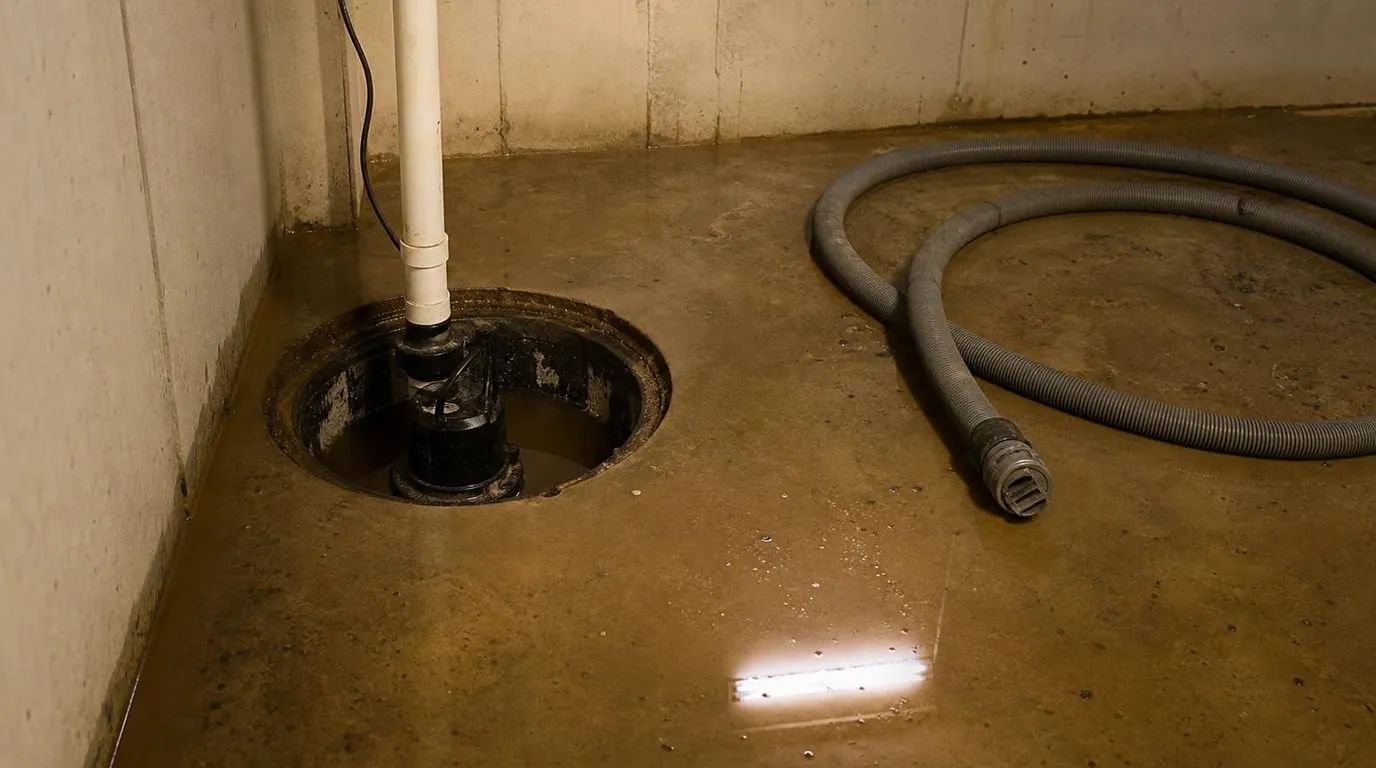
A sump pump spends years doing its job invisibly, then fails on the one night it matters: during the storm, during the outage, at peak inflow. Sump failure floods are among the most preventable major water losses in basement homes, and among the most common.
Quick answer: If your sump pump has failed and the basement is flooding, cut power to the area before entering the water, fix or bypass the pump if you safely can, and start extraction immediately. Groundwater is at least Category 2 water, so soaked carpet pad and drywall usually come out. Going forward, a battery backup pump and a water backup insurance endorsement are the two protections that matter most.
Why Pumps Fail at the Worst Moment
| Failure mode | Why it clusters with storms |
|---|---|
| Power outage | The same storm driving water in knocks the grid out |
| Stuck float switch | Works at test volumes, jams at sustained high inflow |
| Undersized or worn pump | Handles normal seepage, not a 100-year rain event |
| Clogged intake or impeller | Sediment stirred up by heavy inflow |
| Frozen or blocked discharge line | Winter melt events with the outlet iced over |
| Old age | Average service life is 7 to 10 years; many run far longer untested |
The pattern across all of these: the pump’s capacity is only proven on the day it is exceeded.
The Response Sequence
- Electricity first. Water and energized outlets or appliances share the basement. Kill the breakers before stepping in.
- Restore pumping if possible. Check the breaker and cord, lift the float manually, clear a visible clog. A utility pump or wet vac can bridge the gap.
- Extract and move air. Every hour of standing water expands the loss. Get contents elevated or out.
- Triage materials. Carpet pad, particleboard furniture, and cardboard are losses; hard furniture and framing are usually savable. Our basement flooding cleanup guide covers the full triage.
- Document for the claim before disposal, and confirm whether your policy carries the water backup endorsement.
Groundwater carries soil bacteria and whatever the drainage path collected, so treat it as Category 2 at minimum. Finished basements with saturated pad and lower drywall generally need flood cuts and professional drying rather than fans.
Preventing the Repeat
- Battery backup pump: covers outages, the number one failure trigger.
- Water-powered backup: no battery to die; runs on municipal pressure.
- High-water alarm (standalone or smart): turns a silent failure into a 2 a.m. warning you can act on.
- Quarterly test: pour a bucket into the pit and watch the cycle.
- Replace on schedule: a $250 pump at year 8 is cheaper than any flood.
And on the paperwork side: standard homeowners policies exclude sump overflow. The endorsement that covers it typically costs a few dollars a month.
Related Services
Bingham Restoration provides emergency extraction, drying, and basement rebuild after sump failures. See our water damage restoration services or call 520-FLOODED — crews respond around the clock.
Frequently Asked Questions
Why do sump pumps fail during storms?
The most common storm failure is a power outage, which kills the pump exactly when inflow peaks. Mechanical causes include stuck float switches, overwhelmed capacity, clogged intakes, and frozen or blocked discharge lines.
Is sump pump failure covered by insurance?
Not by a standard homeowners policy. You need a water backup / sump overflow endorsement, which is inexpensive and one of the most valuable add-ons a basement owner can carry.
What should I do first when the sump pump fails and the basement floods?
Do not enter standing water until electricity to the area is off. Then address the pump (power, float, clog), start extraction, and move contents up and out. Speed determines how much of the basement is salvageable.
How dirty is sump failure floodwater?
Groundwater entering through a sump system is generally Category 2, and if it mixed with sewage backup it is Category 3. Either way, saturated carpet pad and drywall typically need removal rather than drying.
What backup systems prevent sump pump flooding?
Battery backup pumps run through outages, water-powered backups use municipal pressure with no electricity, and a high-water alarm gives you warning either way. Pumps should also be tested quarterly and replaced roughly every 7 to 10 years.
Need Emergency Restoration Right Now?
Our crews arrive in 48 minutes on average and bill your insurance directly.
Call 520-FLOODED