
Bingham Restoration Resources
Slab Leak Water Damage: Detection, Repair, and Restoration
Published July 19, 2026
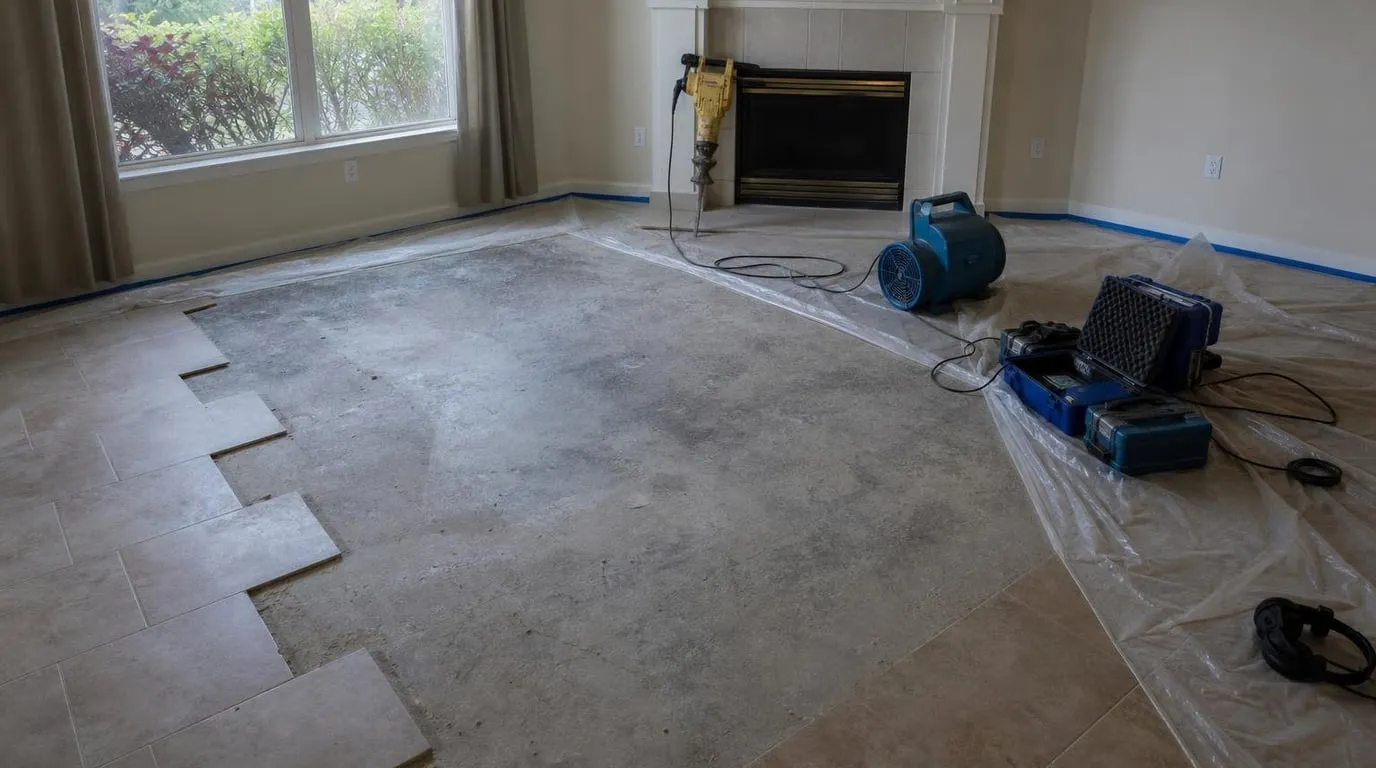
A slab leak is a pressurized water line failing inside or beneath the concrete slab your home sits on. There is no puddle to find and no drip to hear, just water moving into the ground and up into your floors, sometimes for months. By discovery, the plumbing problem has usually become a water damage project.
Quick answer: Suspect a slab leak if your water bill jumps, floors develop warm or damp spots, or you hear water running with all fixtures off. Confirm it with professional leak detection rather than demolition. The fix involves two separate scopes: the plumbing repair (spot repair, reroute, or repipe) and the restoration of everything the water reached.
How Slab Leaks Announce Themselves
- The water bill. A sustained, unexplained increase is often the first and only early sign.
- Warm floor spots. Hot-side leaks (the majority) heat the slab above them.
- Sound of flow. Water running audibly at the meter or in walls when everything is off.
- Moisture where it makes no sense. Cupped wood, damp carpet, lifting tile, wet baseboards in the middle of the house.
- Movement cracks. Long-running leaks erode supporting soil; cracks in tile or drywall can follow.
If the meter’s leak indicator spins with the house shut down, water is going somewhere. Our hidden water damage guide covers the broader detection checklist.
Detection Without Demolition
Modern leak detection locates most slab leaks within a foot or two: acoustic sensors pick up the leak’s signature through the slab, thermal imaging maps hot-side leaks through flooring, and pressure isolation confirms which line has failed. This matters because the alternative is opening concrete on guesswork. Detection first, jackhammer second. Crews also map how far the water spread, which defines the structural drying scope.
Two Projects, Not One
The plumbing scope. Spot repair (open the slab, fix the section), reroute (abandon the line, run new pipe through walls or attic), or full repipe. On homes with aging copper, a single pinhole is usually a preview; the same corrosion is working on the rest of the line.
The restoration scope. Everything the water touched: flooring removal, slab drying (concrete releases moisture slowly), baseplate and drywall drying or replacement, and antimicrobial treatment where moisture persisted long enough for growth. Slab moisture takes serious equipment time; see the structural drying process for why quick fixes fail here.
Insurance typically covers access and resulting damage but not the pipe itself, so the claim documentation must separate the scopes cleanly. That is standard practice for our estimators.
Related Services
Bingham Restoration coordinates leak detection, drying, and full rebuild after slab leaks, with direct insurance billing. See our water damage restoration services or call 520-FLOODED.
Frequently Asked Questions
What are the signs of a slab leak?
An unexplained jump in the water bill, warm spots on the floor, the sound of running water with everything off, damp flooring or baseboards, low water pressure, and cracks appearing in flooring or walls.
How do professionals find a slab leak?
Electronic acoustic listening equipment, line pressure testing, thermal imaging for hot-side leaks, and tracer gas methods pinpoint the leak without exploratory demolition in most cases.
Does insurance cover slab leak damage?
Most policies cover the resulting water damage and the cost of accessing the leak (tearing out and replacing flooring or slab), but not the pipe repair itself. Long-term leaks can be contested as gradual damage.
Repair the pipe or reroute it?
Spot repairs open the slab at the leak. Rerouting abandons the failed line and runs new pipe overhead. For older copper systems with one failure, rerouting or repiping often makes more sense, because the rest of the line is the same age.
How much water damage can a slab leak cause?
Substantial. Slab leaks run undetected for weeks or months, wicking into flooring, baseplates, and drywall across large areas. It is common for the drying and rebuild scope to exceed the plumbing repair cost several times over.
Need Emergency Restoration Right Now?
Our crews arrive in 48 minutes on average and bill your insurance directly.
Call 520-FLOODED