
Bingham Restoration Resources
Monsoon Roof Leaks in Phoenix: Emergency Response and Repair
Published July 13, 2026
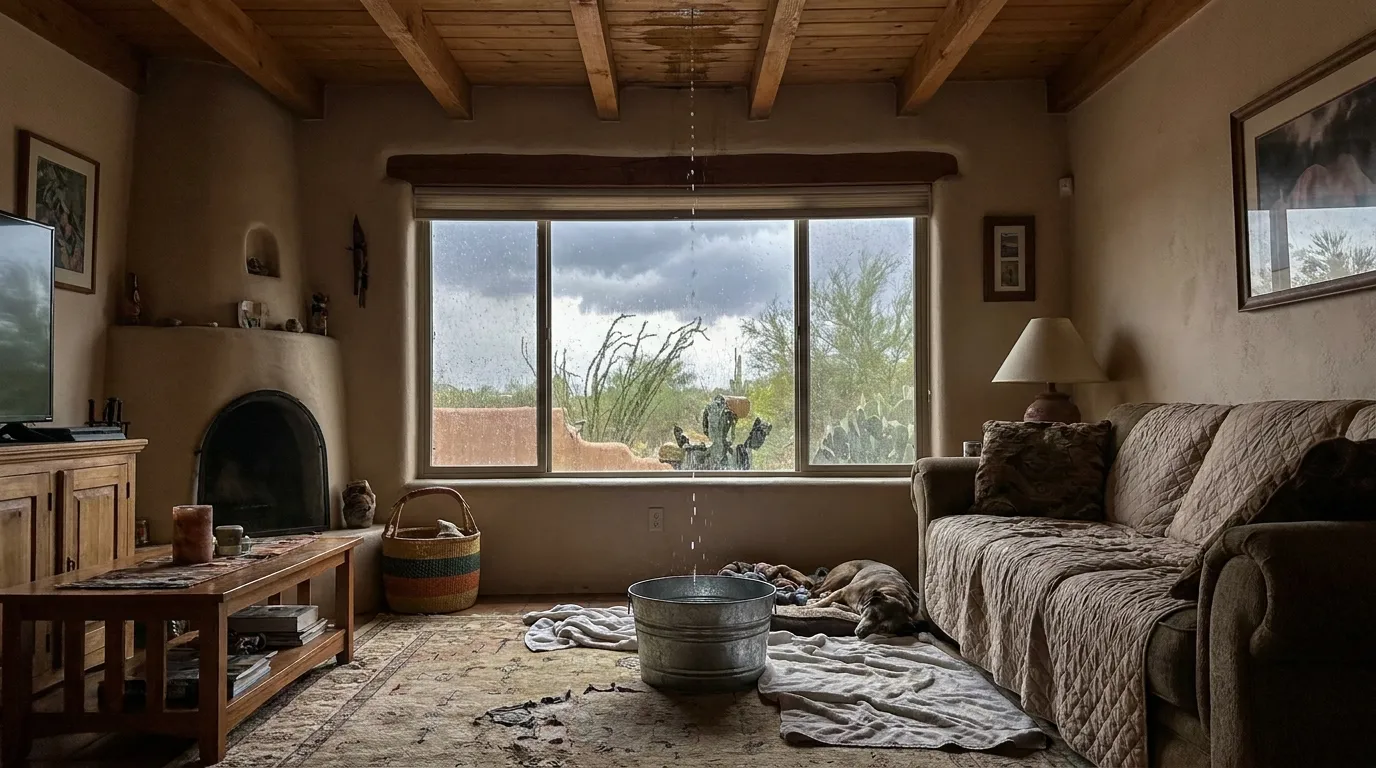
Phoenix gets most of its annual rainfall in a handful of violent weeks. Monsoon storms drop inches of rain in under an hour, drive it horizontally on outflow winds, and find every vulnerability in a roof that baked through nine dry months. When the ceiling starts dripping mid-storm, the response order matters.
Quick answer: Contain the water, move contents, and relieve any ceiling bulge into a bucket. Once the storm passes, get the roof tarped before the next cell arrives and have the attic moisture-mapped. Monsoon storms come in clusters, and the second storm through an open roof does far more damage than the first.
Why Monsoon Storms Beat Phoenix Roofs
- Wind-driven rain gets under tile courses and lifts shingle edges that handle vertical rain without issue.
- Flat and low-slope roofs, common across the Valley, pond water within minutes when scuppers and drains are blocked by nine months of dust and debris.
- Sun-baked materials fail at the seams. UV exposure cracks underlayment, dries out sealant at penetrations, and splits parapet coatings. The monsoon is simply the first water test of the year.
- Haboob dust before the rain clogs drainage paths right before the downpour hits them.
During the Storm: Damage Control
- Move furniture and electronics out from under the leak.
- Contain drips; use plastic sheeting over what cannot move.
- If the ceiling drywall bulges with trapped water, pierce it with a screwdriver at the low point and drain into a bucket. A controlled hole beats a collapsed ceiling.
- Photograph and video everything as it happens.
- Stay off the roof. Wet tile in lightning conditions is not a homeowner job.
After the Storm: The 48-Hour Sequence
The work between storms decides the outcome. A proper response covers, in order: emergency tarping of the breach, attic inspection with moisture readings on insulation and framing, removal of saturated insulation, drying of the ceiling cavity, and then permanent roof repair. Our emergency restoration timeline walks the sequence hour by hour.
Wet blown-in insulation is the item homeowners most often ignore. It compresses, loses R-value permanently, and holds moisture against the drywall it sits on, which is how one leak becomes a ceiling replacement plus mold remediation in a hot attic.
Insurance Notes for Arizona Monsoon Claims
Adjusters distinguish between storm damage (covered) and wear and tear (excluded). Wind-lifted tiles, hail impact, and debris punctures support a claim; underlayment that crumbled from age invites a denial. Time-stamped photos during the storm, a prompt professional inspection, and mitigation records all strengthen the file. If the claim goes sideways, see what to do when a water damage claim is denied.
Related Services
Bingham Restoration runs monsoon response crews across the Valley with a 48-minute average arrival, from Phoenix to the East Valley. See our water damage restoration services or call 520-FLOODED during any storm, day or night.
Frequently Asked Questions
Why does my roof only leak during monsoon storms?
Monsoon rain arrives sideways on 40 to 60 mph winds, driving water under tiles, flashing, and parapet caps that shed normal vertical rain fine. Add debris-clogged scuppers on flat roofs and the storm finds every weakness at once.
What should I do while my ceiling is actively leaking?
Contain the water with buckets, move belongings, and poke a small relief hole in a bulging ceiling to drain it into a container before it collapses. Then get the attic checked as soon as it is safe.
Does insurance cover monsoon roof leaks in Arizona?
Storm-created openings and resulting interior damage are generally covered. Leaks through worn-out roofing that should have been maintained are often excluded, which makes the inspection and documentation critical.
How fast does mold grow after a monsoon leak in Phoenix?
Fast. Attics in July and August are hot, and wet insulation in a 120°F attic creates near-ideal growth conditions. The standard 48-hour window can effectively shrink in monsoon heat.
Should I tarp my roof after a monsoon leak?
Yes, professional emergency tarping protects the home between storms, since monsoon systems often arrive in multi-day sequences. Do not climb a tile roof yourself; broken tiles and falls are common.
Need Emergency Restoration Right Now?
Our crews arrive in 48 minutes on average and bill your insurance directly.
Call 520-FLOODED