
Bingham Restoration Resources
Refrigerator Water Line Leaks: The Slow Flood Behind the Fridge
Published July 11, 2026
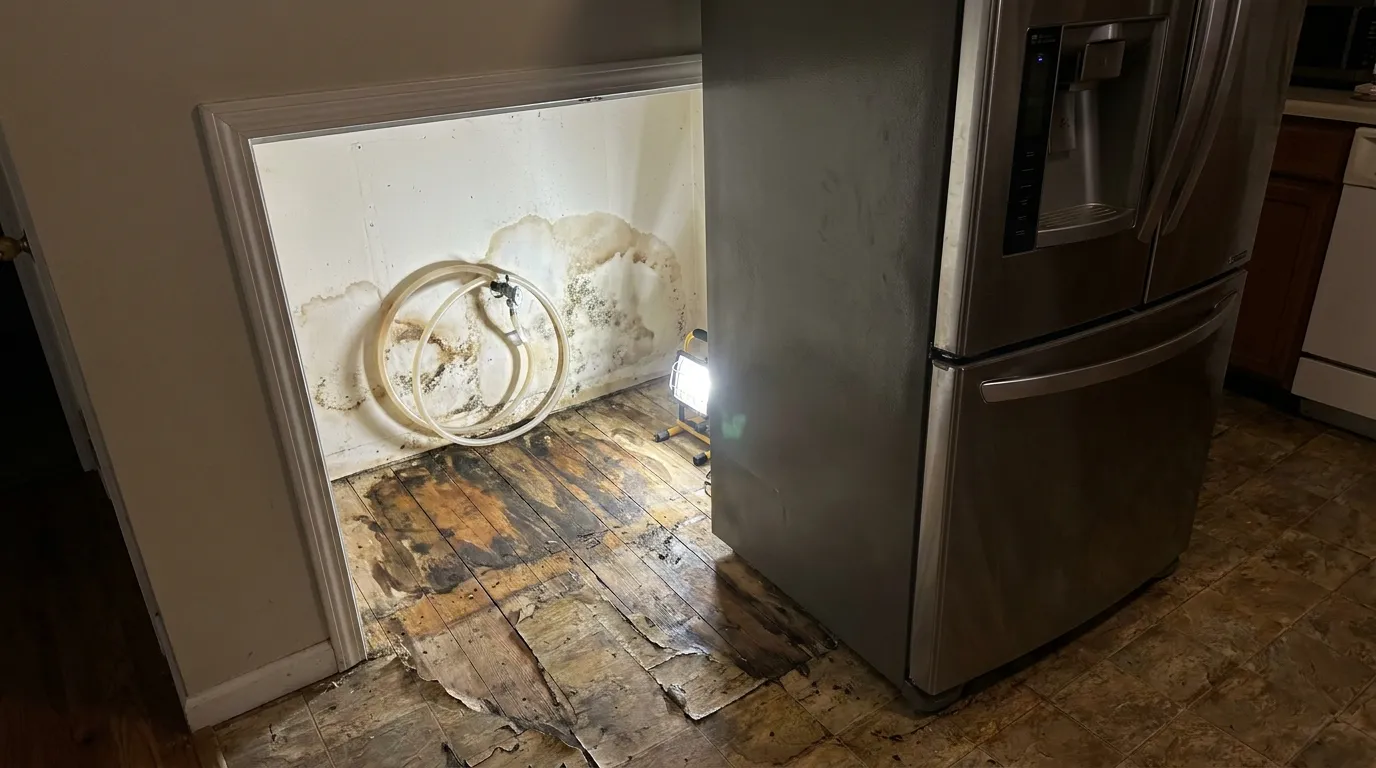
The refrigerator water line is the smallest supply line in your house and one of the most common sources of hidden water damage. It feeds the ice maker and door dispenser through a thin 1/4-inch tube that lives, pressurized around the clock, in a spot nobody looks at for years.
Quick answer: If you find water behind or under your refrigerator, shut off the line’s supply valve (check under the sink or behind the unit), pull the fridge out, and assess the flooring. Staining, cupped boards, or soft subfloor means the leak has been active for a while, and the wet area is almost always bigger than what you can see.
Why These Leaks Stay Hidden So Long
A refrigerator sits flush against the wall in an alcove. A slow leak at the inlet valve or a split in the tubing drips down the back where there is no visibility, no airflow, and no traffic. The water spreads across the alcove floor, wicks into the wall base behind the unit, and works into the subfloor seams.
Most homeowners discover the leak one of three ways: flooring in front of the fridge starts to cup, a ceiling stain appears in the room below, or a musty odor develops. Each of those means the leak is weeks old at minimum. That is well past the 48-hour mold threshold.
Common Failure Points
| Failure point | Cause |
|---|---|
| Plastic tubing splits | Age, brittleness, kinks from pushing the fridge back |
| Compression fittings | Loosen from vibration; overtightened plastic ferrules crack |
| Saddle valves | Self-piercing valves clog and weep; many jurisdictions no longer allow them |
| Inlet valve on the fridge | Internal solenoid valve cracks or weeps |
| Ice maker fill assembly | Overfills and drips inside, then out the back |
What to Do When You Find It
- Shut off the water line valve. If you cannot find one, close the house main.
- Pull the refrigerator out carefully; walk it forward to avoid gouging wet, softened flooring.
- Document the failure point, the water, and all visible damage before cleanup.
- Check the room below if the kitchen is above finished space.
- Get the area moisture-mapped. Flooring, wall base, and subfloor readings determine whether this is a fan-and-towels event or a structural drying project.
Repair the Line, Then Actually Dry the Floor
The plumbing repair is cheap: a new braided stainless line and a proper quarter-turn valve. The mistake homeowners make is stopping there. Laminate and engineered flooring trap water underneath, and subfloor that reads wet will feed mold under the new fridge for months. Professional drying, verified with meters, is what closes the loss for good. Our guide to hardwood floor water damage explains what is savable and what is not.
Related Services
Bingham Restoration responds to hidden kitchen leaks with moisture mapping, drying, and full rebuild. See our water damage restoration services or call 520-FLOODED.
Frequently Asked Questions
How do I know if my refrigerator water line is leaking?
Look for water pooling under or in front of the fridge, warped or discolored flooring nearby, a musty smell, reduced ice production, or water sounds when no dispenser is running. Pull the unit out and inspect the line directly if you suspect a leak.
Where is the refrigerator water line shutoff?
Usually a small saddle or quarter-turn valve under the kitchen sink, in the basement or crawlspace below the kitchen, or behind the refrigerator itself. Find yours before you need it.
How much damage can a fridge water line leak cause?
A pinhole leak in a 1/4-inch pressurized line can release dozens of gallons a day. Because the leak hides behind the unit, damage to flooring, subfloor, and adjacent walls often accumulates for weeks before discovery.
Does insurance cover refrigerator water line leaks?
Sudden ruptures are typically covered. Slow leaks discovered late can be contested as gradual damage, so document the failure point and call for mitigation as soon as you find it.
Are plastic refrigerator water lines safe?
Polyethylene lines are the most failure-prone, especially where they flex behind the unit. Braided stainless steel lines cost little and are significantly more reliable.
Need Emergency Restoration Right Now?
Our crews arrive in 48 minutes on average and bill your insurance directly.
Call 520-FLOODED