
Bingham Restoration Resources
Water Heater Leaking? What to Do Before It Gets Worse
Published July 7, 2026
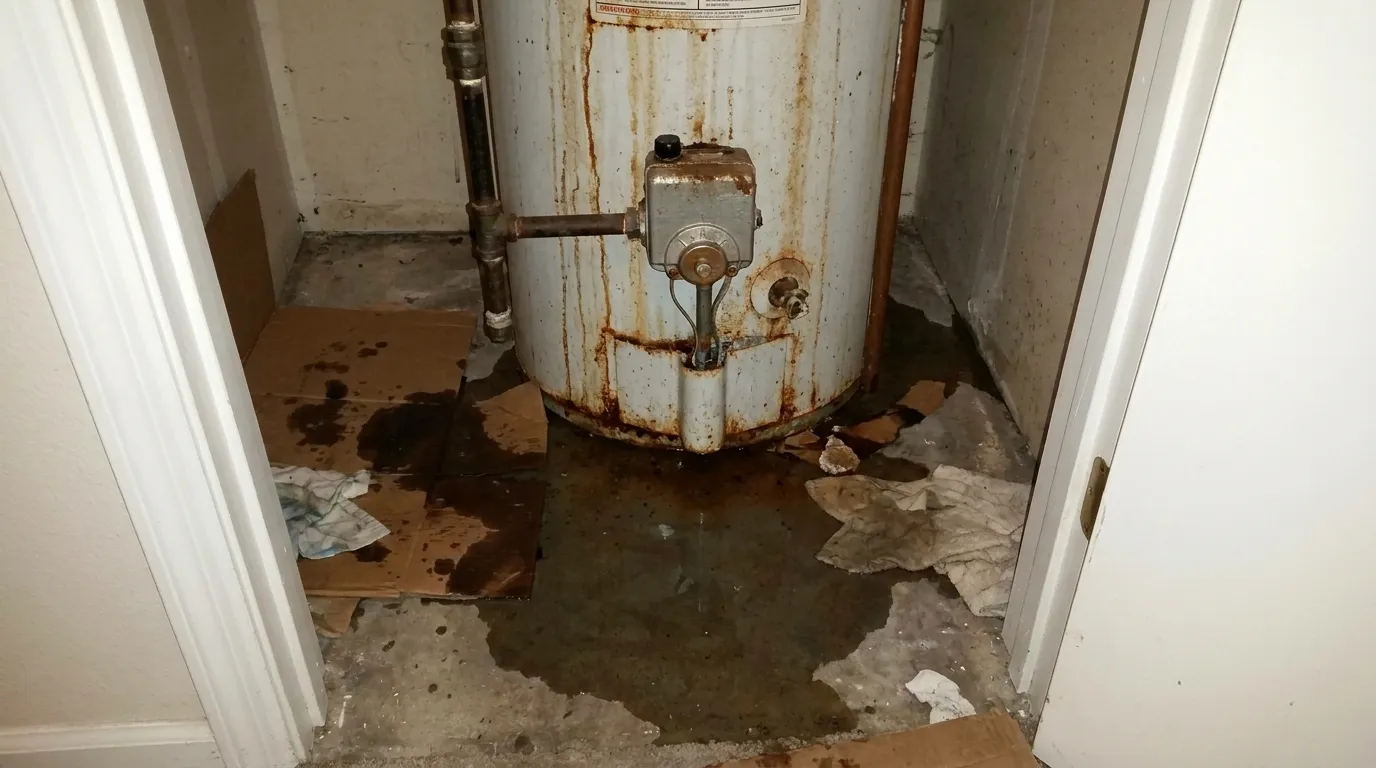
A leaking water heater is a timer, not a maintenance note. The tank holds 40 to 80 gallons under pressure, refills itself automatically, and usually sits in the worst possible place for a flood: a hall closet, a garage corner against drywall, or an attic platform above your living space.
Quick answer: If your water heater is leaking, shut off the cold water supply valve on top of the tank, cut the power or gas, and drain or contain the water. A leak from a fitting may be repairable; a leak from the tank body means the tank has corroded through and must be replaced before it fails completely.
What to Do Right Now
- Close the cold supply valve on the line entering the top of the tank. If it will not turn, shut off water at the house main.
- Cut power. Flip the breaker for electric units. Turn the gas control to OFF for gas units.
- Contain the water. Towels and a wet vacuum for small leaks; for a failed tank, get standing water off flooring fast.
- Photograph everything before cleanup: the tank, the leak point, the water spread, and affected materials. This documentation supports your insurance claim.
- Call for mitigation if water reached walls or flooring. Water heater closets share walls with bedrooms and hallways, and water moves under baseplates within minutes.
Where Is the Leak Coming From?
The leak location tells you whether this is a repair or a replacement.
| Leak location | What it means | Repair or replace |
|---|---|---|
| Inlet/outlet fittings on top | Loose or corroded connections | Repair |
| Temperature & pressure (T&P) relief valve | Excess pressure or a failed valve | Repair, but diagnose the cause |
| Drain valve at the bottom | Worn valve seat | Repair |
| Tank body or seam | Internal corrosion has breached the tank | Replace |
| Under the tank with no visible source | Usually tank-bottom corrosion | Replace |
A tank-body leak never improves. The glass lining has failed, the steel is rusting from the inside, and the remaining wall thickness is unknown. Full-bottom failures release the entire tank plus continuous supply flow until someone shuts the water off.
Why Water Heater Leaks Cause Outsized Damage
Water heaters fail quietly. A slow drip behind the tank can run for weeks before anyone notices, which is enough time for mold to establish in the surrounding wall cavities. The 48-hour mold window applies here just as it does in a visible flood, except nobody starts the clock.
Attic and second-floor installations are the worst case: a failed tank drains through ceilings, insulation, and light fixtures across multiple rooms. If your heater sits above living space, check the drain pan and its discharge line twice a year.
What Professional Mitigation Looks Like
For a leak that reached building materials, crews extract standing water, remove saturated baseboard and wet insulation, and set air movers and dehumidifiers with daily moisture readings until framing and drywall hit dry standard. The structural drying process typically runs 3 to 5 days. Skipping it and trusting a box fan is how a $150 valve failure becomes a mold remediation project.
Related Services
Bingham Restoration handles water heater floods around the clock, from extraction through rebuild, with direct insurance billing. See our water damage restoration services or call 520-FLOODED for an active leak.
Frequently Asked Questions
Should I turn off a leaking water heater?
Yes. Shut off the cold water supply valve on top of the tank first, then cut power (breaker for electric, gas valve for gas). This stops the tank from refilling and feeding the leak.
Is a leaking water heater an emergency?
A tank leak can be. Tanks hold 40 to 80 gallons, and a corroded tank bottom can fail suddenly. A leak from the tank body itself means replacement, and the water damage risk is immediate.
Does insurance cover water heater leaks?
Most policies cover the resulting water damage from a sudden failure but not the water heater itself. Gradual leaks that were ignored can be denied as neglect, which is why fast documentation matters.
How long does it take to dry out after a water heater flood?
Typically 3 to 5 days with professional drying equipment. Water heaters usually sit on or near wood framing and drywall, and closets trap moisture, so monitored drying matters more than it seems.
How long do water heaters last before they leak?
Tank water heaters last 8 to 12 years on average. Past the 10-year mark, the odds of tank corrosion rise sharply. The manufacture date is printed on the tank's serial number label.
Need Emergency Restoration Right Now?
Our crews arrive in 48 minutes on average and bill your insurance directly.
Call 520-FLOODED