
Bingham Restoration Resources
Dishwasher Leak Under the Cabinet: Finding Hidden Damage
Published July 10, 2026
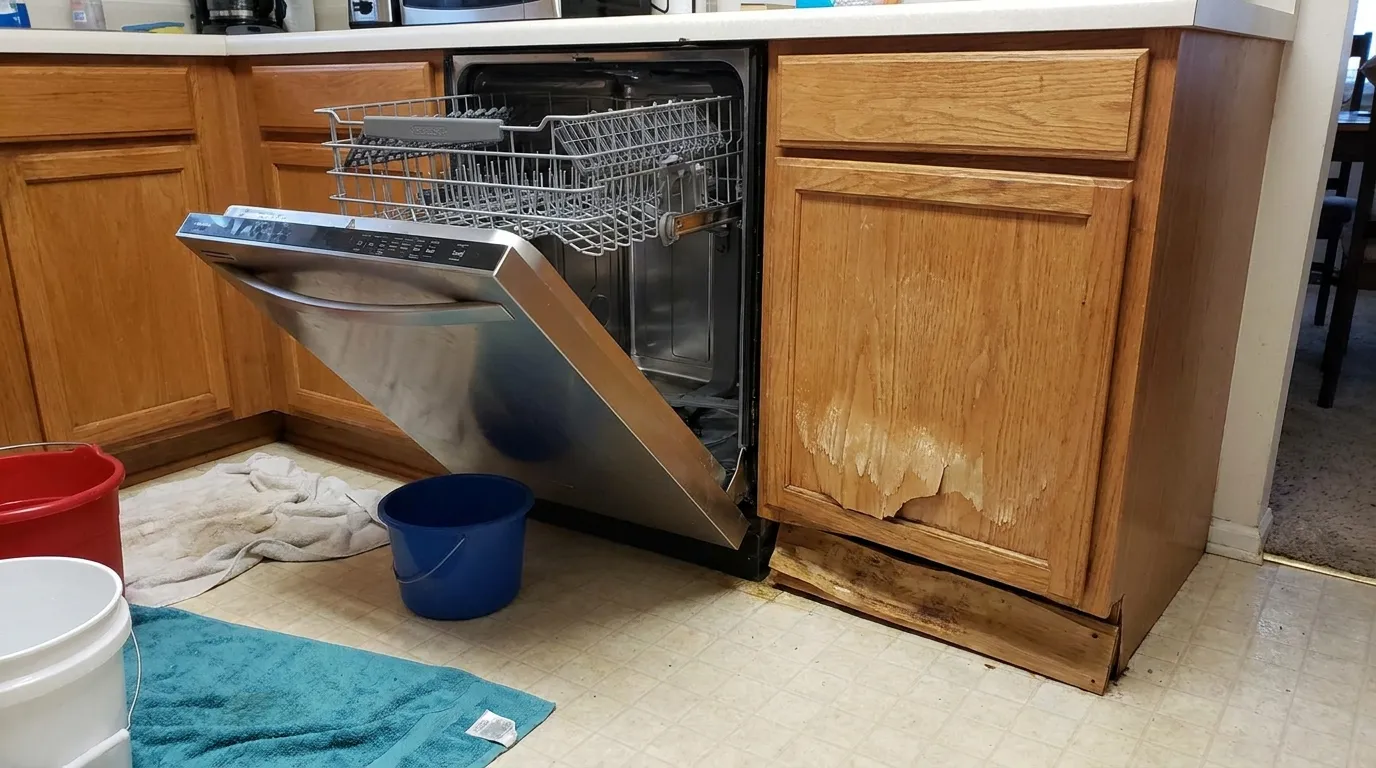
Dishwasher leaks are slow-motion losses. The unit sits in an enclosed cavity, the leak drips onto subfloor nobody can see, and the first visible symptom is often a warped floor plank or a musty smell weeks later. By then the water damage claim involves cabinets, flooring, and frequently mold.
Quick answer: If you find water under or around your dishwasher, stop using it, shut off its supply valve (usually under the kitchen sink), pull the toe kick panel to inspect underneath, and check the cabinet bases on both sides. If wood is swollen, dark, or soft, moisture has been there for days or longer and the area needs professional moisture mapping.
Where Dishwasher Leaks Come From
- Supply line: pressurized connection under the sink or behind the unit; failures flow continuously.
- Drain hose: cracks or loose clamps leak gray water during every cycle.
- Door gasket: worn seals leak onto the floor in front, then under the unit.
- Tub or pump seal: internal failures that drip directly onto the subfloor.
- Overflow from clogs or wrong detergent: sudsy water over the door lip.
A gasket leak drops clean rinse water; a drain hose leak deposits food-soiled Category 2 water into an enclosed cavity every cycle. The source matters for both repair and cleanup scope, as covered in our water damage categories guide.
Why Under-Cabinet Leaks Do So Much Damage
Three reasons:
- Nobody sees them. The cavity is dark and covered by a toe kick. Small leaks run for months.
- The materials are the most vulnerable in the house. Particleboard cabinet bases and MDF toe kicks swell on first contact with water and do not recover.
- The moisture cannot evaporate. An enclosed, unventilated cavity keeps humidity near 100%, which is ideal for mold and rot.
This is the same dynamic as hidden water damage anywhere else in the house, compressed into the most expensive room per square foot.
What Proper Cleanup Involves
For anything beyond a fresh, small spill, a professional response looks like this:
- Moisture mapping with meters and thermal imaging to define how far water traveled under flooring and into adjacent cabinet runs.
- Controlled demolition where needed: toe kicks off, swollen bases removed, flooring lifted at the wet edge.
- Targeted drying with air movers ducted into the cavity and a dehumidifier, verified daily against dry-standard readings.
- Antimicrobial treatment for gray-water sources.
- Rebuild of cabinet bases, toe kicks, and flooring.
Kitchens hide moisture well. Crews routinely find readings 6 to 8 feet from the dishwasher under intact-looking floors.
Prevention Worth Doing
- Replace the supply line with braided stainless steel and inspect the drain hose clamp yearly.
- Pull the toe kick and look underneath once a year with a flashlight.
- Put an inexpensive leak sensor in the cavity; they alarm at the first drip.
Related Services
Bingham Restoration handles kitchen water losses from detection through cabinet rebuild. See our water damage restoration services or call 520-FLOODED to get a technician out fast.
Frequently Asked Questions
How do I know if my dishwasher is leaking underneath?
Warning signs include a warped or swollen toe kick, cupped flooring in front of the unit, a musty smell in the sink cabinet, and darkened or soft cabinet bases. By the time water is visible on the kitchen floor, the leak has usually been running for a while.
Is dishwasher water clean or gray water?
The supply line is clean (Category 1), but any water that has been through a wash cycle is Category 2 gray water containing food soil and detergent, which requires antimicrobial cleanup.
Will insurance cover dishwasher leak damage?
Sudden failures are usually covered. Long-running slow leaks are often disputed, because insurers classify them as maintenance issues. Prompt discovery and documentation are your best protection.
Can a dishwasher leak cause mold?
Yes, and it is one of the most common kitchen mold sources. The dark, enclosed space under and beside a dishwasher stays wet, and mold can establish within 48 hours.
Do I need to replace cabinets after a dishwasher leak?
Particleboard cabinet bases that have swollen usually need replacement because they lose structural integrity. Plywood boxes caught early can often be dried and saved.
Need Emergency Restoration Right Now?
Our crews arrive in 48 minutes on average and bill your insurance directly.
Call 520-FLOODED