
Bingham Restoration Resources
Washing Machine Flood Cleanup: A Step-by-Step Response
Published July 8, 2026
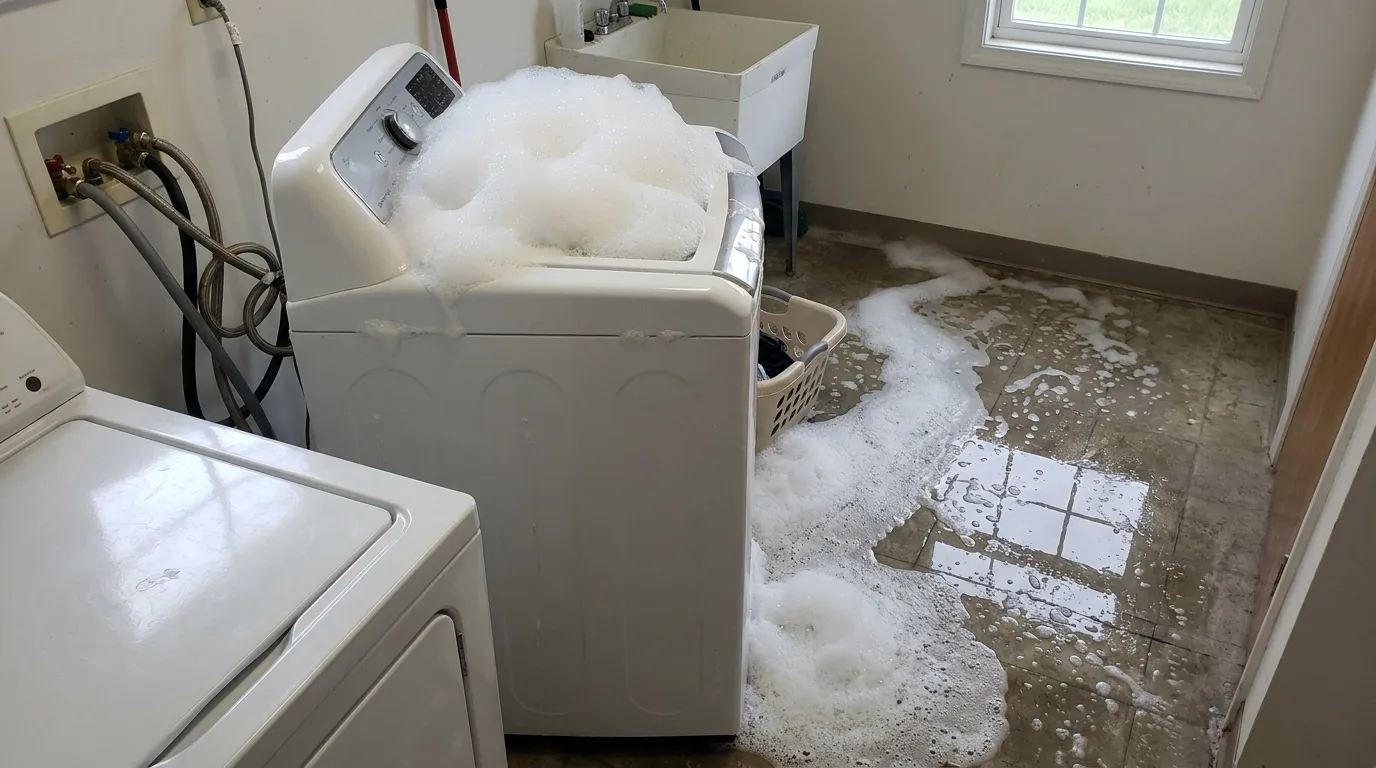
Washing machine floods rank among the most common water losses in American homes, and the laundry room is rarely built to contain them. No floor drain in most homes, drywall on all sides, and a pressurized supply line that flows until someone turns it off.
Quick answer: Shut off the machine’s water supply valves (or the house main), unplug the machine if you can do so safely, extract standing water immediately, and get airflow on wet materials. If the water came from the drain side rather than the supply side, it is gray water and affected porous materials need professional treatment.
Step-by-Step Cleanup
- Stop the water. The supply valves are usually behind the machine. If unreachable or stuck, use the house main shutoff.
- Kill power to the area if water is near outlets or the machine’s plug.
- Identify the source before you clean: supply hose, drain hose, drain standpipe backup, or overflow from the drum. The source determines the contamination level.
- Extract fast. Wet vacuum, towels, mop. Water under the machine and along walls matters more than the visible puddle.
- Move air. Pull the machine away from the wall and get fans on the wet flooring and baseboards.
- Photograph everything for the insurance claim, including the failed part.
Was It Clean Water or Gray Water?
The answer changes the entire cleanup:
| Source | Category | What it means |
|---|---|---|
| Burst or leaking supply hose | Category 1 (clean) | Drying-focused response, materials often saved |
| Drain hose or standpipe backup | Category 2 (gray) | Detergent, soil, and bacteria; antimicrobial treatment required |
| Overflow mid-cycle | Category 2 (gray) | Same as above |
| Backup containing sewage | Category 3 (black) | Full containment and disposal of porous materials |
Gray water soaked into carpet pad, baseboard, or drywall is not a mop-and-fan situation. See our guide to water damage categories for why category drives scope.
Why the Supply Hose Is the Real Villain
Most catastrophic washing machine losses do not come from the machine. They come from the two rubber hoses behind it, which sit under constant municipal pressure for years. When one bursts while you are at work, the line flows for hours. Insurance industry data has long put average burst-hose claims in the five figures.
Two cheap preventions: braided stainless steel hoses (replace every 5 years), and turning off the supply valves when leaving home for more than a few days.
When to Call a Professional
Call for mitigation if any of these apply: water ran for more than a few minutes, water reached carpet or wall bases, the flood came from the drain side, or the laundry room is on an upper floor. Upper-floor laundry floods drain through the subfloor into ceilings below, and that damage is invisible from above. Hidden moisture left in wall cavities starts the mold clock within 48 hours.
Related Services
Bingham Restoration extracts, dries, and rebuilds after appliance floods, with a 48-minute average response. Explore our water damage restoration services or call 520-FLOODED.
Frequently Asked Questions
Is washing machine water clean or contaminated?
Supply line water is Category 1 (clean). Drain or discharge water that has run through a wash cycle is Category 2 (gray water) and requires antimicrobial treatment of everything it touched.
How much water does a washing machine flood release?
A burst supply hose is the worst case: it is a pressurized line that flows continuously, often 500+ gallons per hour, until someone shuts it off. An overflow from the drum itself is usually 15 to 30 gallons.
Does homeowners insurance cover washing machine floods?
Sudden failures like a burst hose are generally covered. Slow leaks from a hose that visibly deteriorated over months can be denied as maintenance neglect.
Should washing machine supply hoses be replaced?
Yes, every 5 years, and rubber hoses should be upgraded to braided stainless steel. Burst rubber supply hoses are one of the most common causes of major residential water losses.
Can water from a laundry room reach other rooms?
Almost always. Laundry rooms are rarely waterproofed, and water travels under wall baseplates into adjacent rooms and through floor penetrations to lower levels within minutes.
Need Emergency Restoration Right Now?
Our crews arrive in 48 minutes on average and bill your insurance directly.
Call 520-FLOODED