
Bingham Restoration Resources
How Much Does Fire Damage Restoration Cost?
Published July 22, 2026
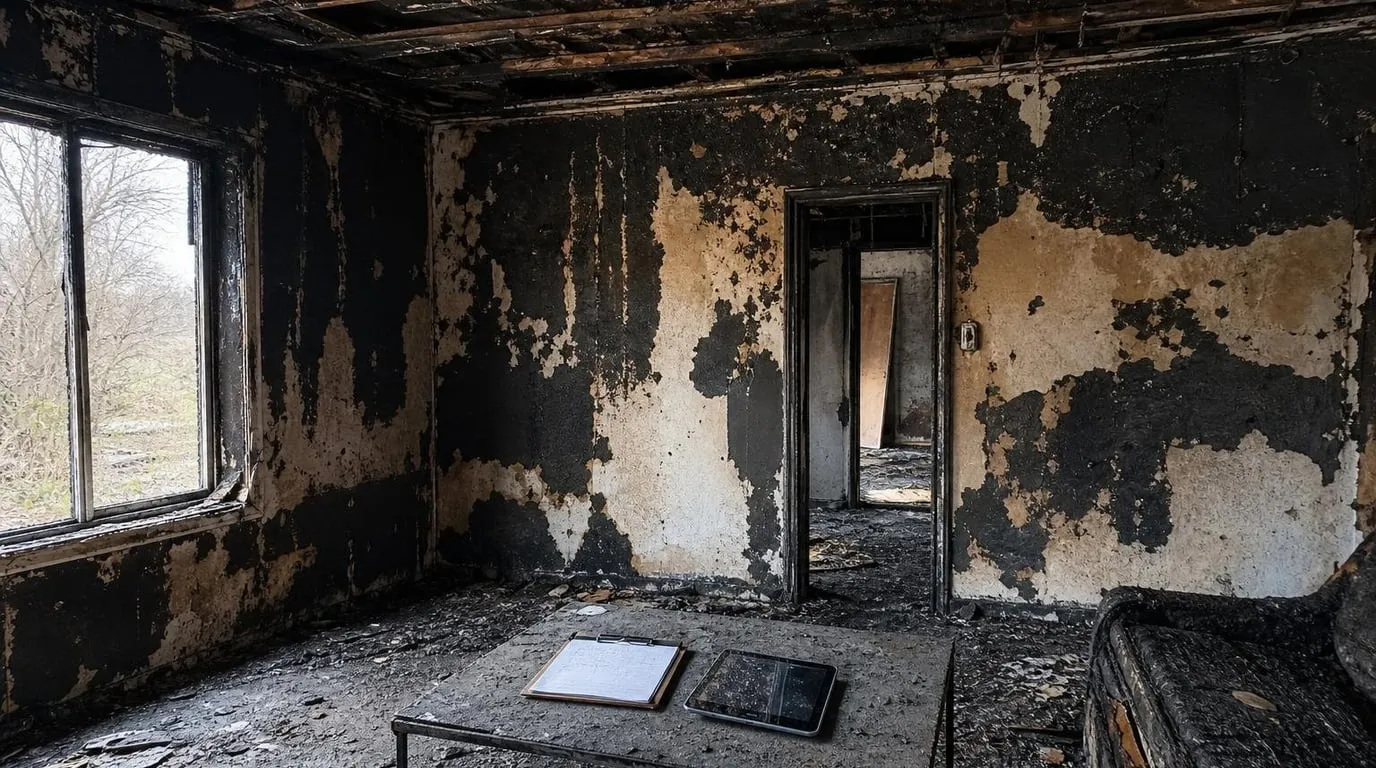
Fire damage restoration cost has the widest range of any restoration category, because “fire damage” spans everything from a smoky kitchen incident to a structure fire with partial rebuild. Understanding what drives the number helps you read an estimate and a claim intelligently.
Quick answer: Most residential fire restoration projects cost between $3,000 and $50,000. Smoke and soot cleanup for a small contained fire typically runs $3,000 to $10,000; a room fire with smoke migration through the house runs $15,000 to $40,000; structural fires with demolition and rebuild commonly exceed $75,000. Fire is a covered peril on virtually all homeowners policies.
Cost by Severity
| Scenario | Typical range | What’s included |
|---|---|---|
| Minor smoke event (contained kitchen or appliance fire) | $3,000–$10,000 | Soot removal, deodorization, affected-room cleaning |
| Single-room fire with house-wide smoke | $15,000–$40,000 | Burn area demo, whole-home smoke cleaning, duct cleaning, contents |
| Multi-room structural fire | $40,000–$100,000+ | Structural demo and rebuild, full contents pack-out, suppression water drying |
| Major structural loss | $100,000+ | Reconstruction of major portions of the home |
The Four Cost Drivers
1. Smoke travels; fire stays. The burn area might be one wall, but smoke followed the air pathways through the entire house, into closets, ducts, attic, and every porous surface. The cleaning scope, not the burn scope, usually dominates the bill. Our guide to smoke versus fire damage explains why insurers treat them as one loss.
2. Soot type. Fast-burning fires leave dry soot that cleans relatively easily. Slow, smoldering fires and burning plastics leave greasy residue that smears into surfaces and demands aggressive techniques; see soot cleanup. Protein fires (kitchen) leave a nearly invisible film with a penetrating odor that requires full repainting in many cases.
3. Suppression water. Fire crews may put thousands of gallons into the structure. That water saturates floors and walls outside the burn area and requires the full structural drying process. It is common for the water scope to rival the fire scope.
4. Contents. Furniture, clothing, electronics, and documents affected by smoke need specialized cleaning, typically through a pack-out process with off-site cleaning and storage.
How Insurance Handles It
Fire is the original insured peril; coverage is broad. The claim typically includes structure, smoke damage throughout, suppression water damage, contents, and additional living expenses (ALE) if the home is uninhabitable. The practical challenges are scope negotiation and documentation, which is why restoration contractors who document to carrier standards shorten fire claims considerably. For process details, see how we handle insurance claims.
Why Fast Response Reduces the Number
Soot is acidic. Within days it etches metal fixtures, yellows countertops, and permanently stains grout and finishes. Odor compounds migrate deeper into materials the longer they sit. The same house cleaned in week one costs meaningfully less to restore than in month two.
Related Services
Bingham Restoration handles fire losses end to end, from board-up and smoke and soot removal to suppression-water drying, contents, and rebuild, with direct insurance billing. See our fire damage restoration services or call 520-FLOODED.
Frequently Asked Questions
What is the average cost of fire damage restoration?
Nationally, most residential fire restoration projects fall between $3,000 and $50,000, with an average in the $12,000 to $25,000 range. Minor smoke-only events run less; structural fires with rebuild run into six figures.
Why is smoke damage so expensive to clean?
Smoke penetrates every open cavity, duct, and porous surface in the home, far beyond the burn area. Restoration involves cleaning or sealing every affected surface, deodorizing the air volume, and often cleaning HVAC systems and all contents.
Does homeowners insurance cover fire restoration?
Yes, fire is a core covered peril on essentially every homeowners policy, including smoke damage, water damage from firefighting, contents, and additional living expenses while you are displaced.
Is water damage from firefighting part of the fire claim?
Yes. Suppression water is treated as part of the fire loss, and it is often a third or more of the total scope, since thousands of gallons may have gone into the structure.
Should I get multiple estimates for fire restoration?
You can, but scope matters more than price. Fire estimates diverge because companies define the affected area differently. An estimate that misses smoke migration or duct contamination looks cheaper and costs more later.
Need Emergency Restoration Right Now?
Our crews arrive in 48 minutes on average and bill your insurance directly.
Call 520-FLOODED