
Bingham Restoration Resources
Kitchen Fire Damage Cleanup: Grease, Smoke, and Residue
Published July 26, 2026
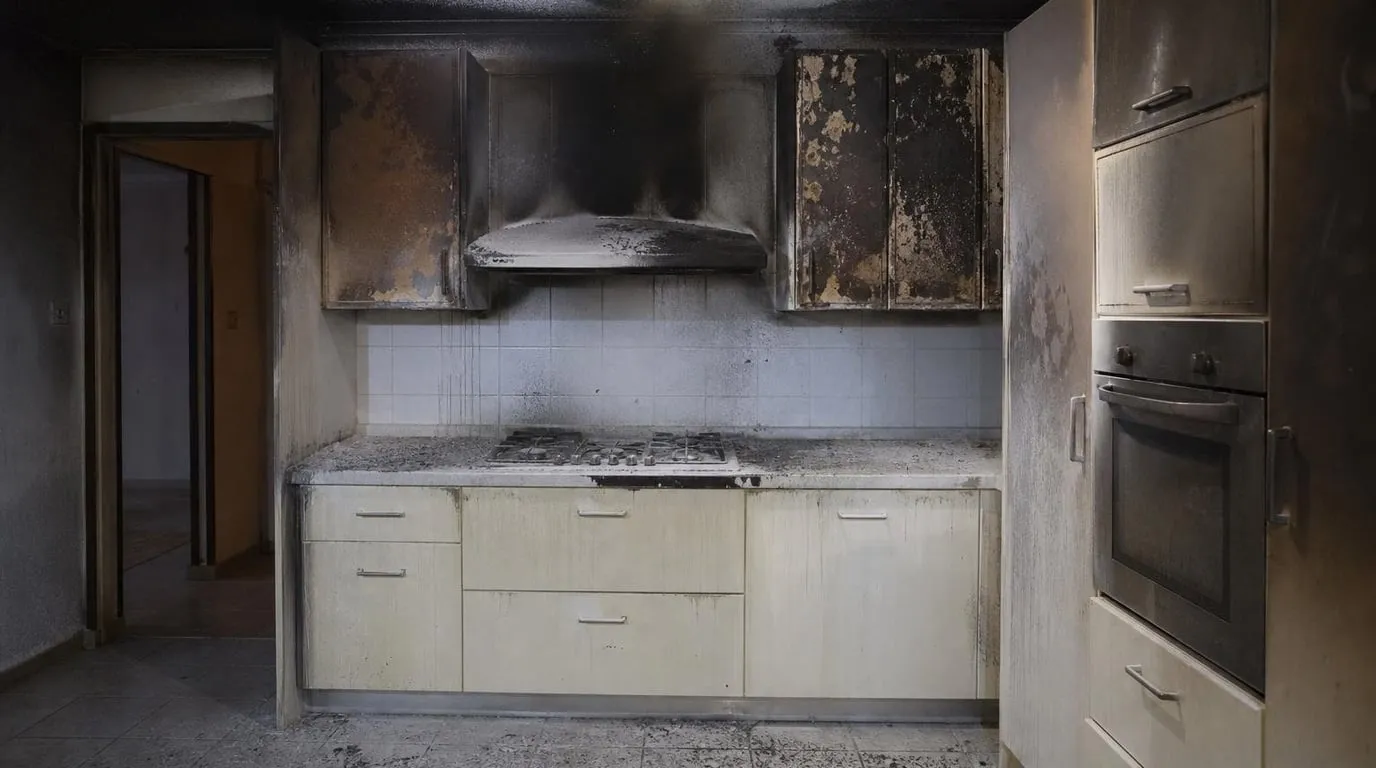
Kitchen fires are the most common home fire, and the most deceptive loss in restoration. The flames may have touched nothing but one pan and a range hood, yet weeks later the house still smells rancid and nobody can find the source. The explanation is protein smoke, and it behaves unlike anything else in fire cleanup.
Quick answer: Kitchen fire cleanup has three distinct problems: the visible burn damage around the stove, the extinguisher or suppression residue, and hardest of all, protein smoke residue distributed through the entire house as an invisible, odor-bearing film. The first two are straightforward; the third requires enzyme-based professional cleaning and deodorization, because ordinary cleaners do not touch it.
The Three Layers of a Kitchen Fire Loss
1. The burn zone. Scorched cabinets, melted range hood components, heat-cracked backsplash and countertop. This scope is obvious and estimates rarely miss it. Heat-damaged melamine and thermofoil cabinet faces typically delaminate and get replaced; solid wood can often be refinished.
2. Suppression residue. Dry chemical extinguisher powder is corrosive and spreads far beyond where it was aimed. It needs prompt removal from appliance interiors, electronics, and metal surfaces. If the fire was doused with water, standard water mitigation applies to cabinets and flooring.
3. Protein smoke: the whole-house problem. Burning grease and food vaporize rather than char. The vapor rides heated air through the house and condenses on walls, ceilings, cabinet interiors, closet contents, and duct surfaces as a thin amber film. It is hard to see, resists ordinary cleaners, and produces a persistent rancid odor that intensifies with humidity.
Why Protein Residue Defeats DIY Cleaning
Household degreasers smear the film without lifting it, and the residue’s near-invisibility means most of it never gets cleaned at all — you cannot clean what you cannot find. Professional crews treat every surface in affected rooms systematically, using enzyme cleaners formulated for protein soils, then verify by odor rather than appearance. The general soot playbook is covered in our soot cleanup guide; protein fires are its hardest case.
Deodorization follows cleaning: thermal fogging or hydroxyl treatment to neutralize what absorbed into porous materials, plus HVAC cleaning so ducts stop re-seeding the odor. The full odor methodology is in how to get smoke smell out of a house.
The Cleanup Sequence
- Ventilate and stop using the HVAC system (it spreads residue).
- Photograph everything for the claim before cleanup.
- Discard exposed food, including anything in cabinets that were open.
- Prompt professional assessment, since protein film keeps bonding to surfaces as days pass.
- Systematic cleaning, room by room, followed by deodorization and sealing where needed.
Insurance Notes
Kitchen fires are fully covered events on standard policies, and carriers expect smoke scope beyond the kitchen; do not let anyone limit the claim to the burn zone. Document the odor’s presence in distant rooms early. For scope and price context, see fire damage restoration cost.
Related Services
Bingham Restoration handles kitchen fire losses from board-up through odor elimination and cabinet rebuild. See our fire damage restoration services or call 520-FLOODED.
Frequently Asked Questions
Why does my whole house smell after a small kitchen fire?
Kitchen fires produce protein smoke: vaporized grease and food particles that travel throughout the house and condense as a thin, nearly invisible film with a strong rancid odor. The burn was contained; the smoke was not.
Can I clean up after a kitchen fire myself?
Wiping visible scorch marks, yes. But protein residue does not respond to normal household cleaners, and the odor source is distributed across surfaces you cannot see. Small fires with big smells are exactly the cases that need professional chemistry.
Does insurance cover kitchen fire damage?
Yes. Kitchen fires are a covered peril, including smoke and odor damage throughout the house, suppression damage (extinguisher powder, water), and affected contents.
Is fire extinguisher residue harmful?
Dry chemical extinguisher powder is corrosive to metals and irritating to lungs. It should be cleaned promptly from appliances and surfaces, and any powder in the HVAC intake or ducts should be professionally removed.
Do kitchen cabinets need replacement after a fire?
Charred or heat-blistered cabinets, yes. Cabinets exposed only to smoke can often be cleaned and sealed, though melamine and thermofoil surfaces exposed to high heat frequently delaminate and need replacement.
Need Emergency Restoration Right Now?
Our crews arrive in 48 minutes on average and bill your insurance directly.
Call 520-FLOODED