
Bingham Restoration Resources
Electrical Fire Cleanup: What Makes These Fires Different
Published July 28, 2026
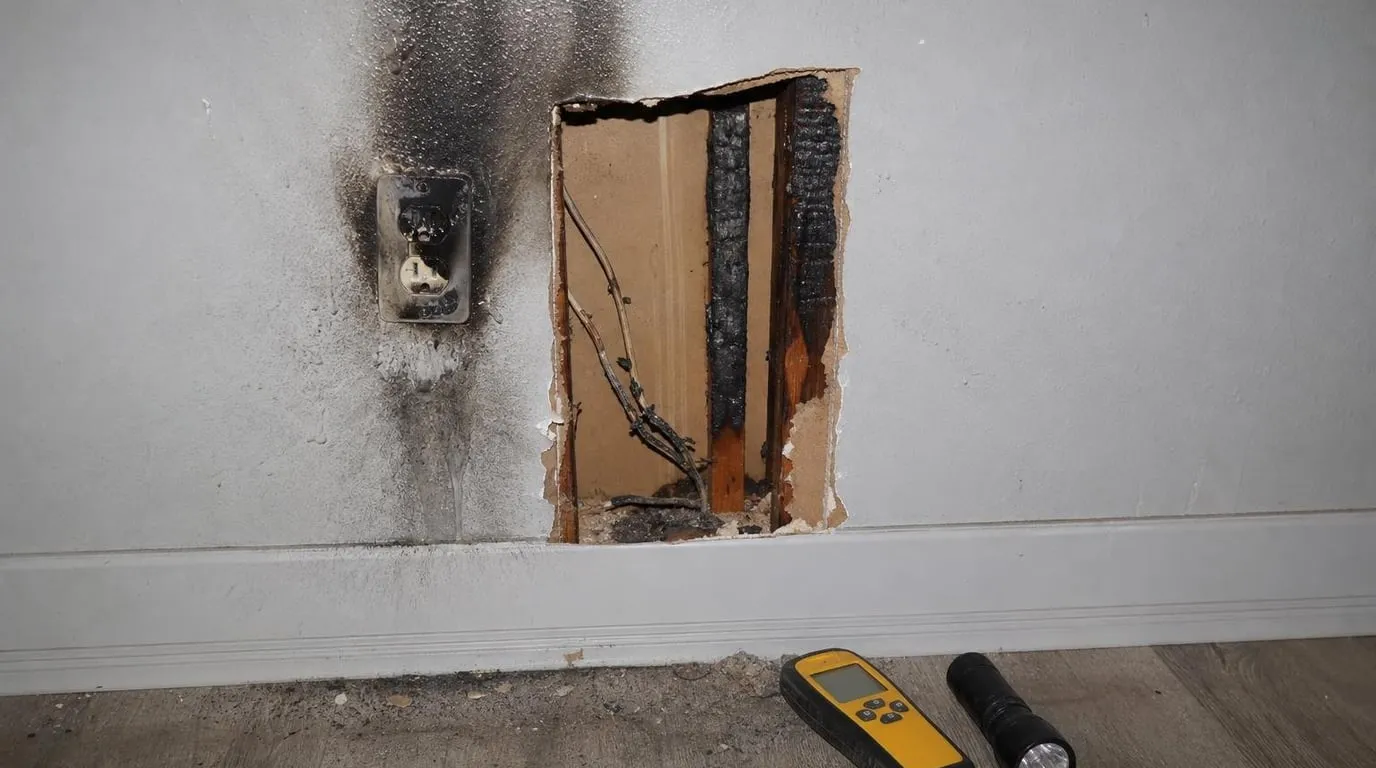
Electrical fires differ from every other house fire in one fundamental way: the cause is built into the building. The fire may be out, but the failed connection, overloaded circuit, or degraded wiring that started it is still part of your electrical system until someone finds it.
Quick answer: After an electrical fire, the sequence is inspection first, cleanup second. A licensed electrician must evaluate the involved circuit and the panel before power is restored and before restoration begins. Cleanup itself deals with unusually corrosive soot from burned wire insulation, hidden charring inside wall cavities along the wiring path, and smoke distribution through the house.
Why Inspection Comes First
A grease fire’s cause leaves with the pan. An electrical fire’s cause is a system condition: a loose neutral, an overloaded circuit, aluminum branch wiring, a failed splice in a junction box. Restoring power before diagnosis risks a second ignition, sometimes in a different part of the same run. The electrician’s findings also shape the restoration scope, because the repair may require opening walls beyond the burn area.
Common origins worth knowing: outlet and switch connections (heat cycling loosens terminations), overloaded circuits feeding modern loads on 1960s wiring, damaged cords pinched under furniture, and DIY junctions hidden in walls and attics.
The Hidden-Damage Problem
Electrical fires frequently start inside a wall or ceiling cavity and smolder along the wiring path before breaking out. Visible scorching at an outlet can sit at the end of several feet of charred framing you cannot see. Restoration crews open cavities along the circuit, verify the extent of charring, and document it, both for structural safety and because insurance scopes routinely miss in-wall damage without this step. Thermal imaging assists in mapping heat-affected areas.
What Burned Wiring Leaves Behind
PVC wire insulation combustion produces dense, greasy soot laced with chlorides — meaningfully more corrosive than ordinary wood-smoke residue:
- Metals pit and tarnish within days: fixtures, appliance surfaces, electronics internals.
- Electronics anywhere in the smoke path are at risk even if untouched by fire; corrosive film on circuit boards causes failures weeks later.
- Surfaces need degreaser-based cleaning matched to synthetic soot, not dry-soot methods. The distinction is covered in our soot cleanup guide.
Odor treatment follows the standard professional sequence described in smoke smell removal: source removal, cleaning, HVAC decontamination, then fogging or hydroxyl.
The Full Sequence
- Power isolated; electrician inspects circuit, panel, and related runs.
- Restoration assessment, including cavity inspection along the wiring path.
- Controlled demolition of charred materials; electrical repairs made.
- Corrosion-priority cleaning: metals and electronics first, then general surfaces.
- Deodorization, sealing, and rebuild.
Related Services
Bingham Restoration coordinates electricians, cleanup, and rebuild after electrical fires, with documentation your insurer will accept. See our fire damage restoration services, review what fire restoration costs, or call 520-FLOODED.
Frequently Asked Questions
Is it safe to stay in a house after an electrical fire?
Not until a licensed electrician has inspected the circuit involved and confirmed the rest of the system is sound. The condition that started the fire, whether an overloaded circuit, failed connection, or damaged wiring, may exist elsewhere in the same system.
What does burning wire insulation leave behind?
PVC insulation combustion produces corrosive chloride residue and greasy black soot that bonds to surfaces and accelerates corrosion on metals and electronics. It requires prompt, chemistry-specific cleaning.
Does insurance cover electrical fires?
Yes, electrical fires are covered perils, including in-wall damage, smoke residue, and electronics damaged by the event. Insurers may investigate whether DIY wiring contributed, which can complicate but rarely voids a claim.
Why do electrical fires damage areas you can't see?
The fire often starts and travels inside wall cavities along the wiring path. Charring can extend feet beyond the visible scorch point, which is why cavities along the circuit get opened and inspected.
Should electronics be checked after an electrical fire?
Yes. The fault that caused the fire may have sent surges through the system, and corrosive soot damages electronics even when they were not near the fire. Assessment beats plugging things back in to see.
Need Emergency Restoration Right Now?
Our crews arrive in 48 minutes on average and bill your insurance directly.
Call 520-FLOODED