
Bingham Restoration Resources
HVAC Mold: When Your Air System Spreads the Problem
Published August 15, 2026
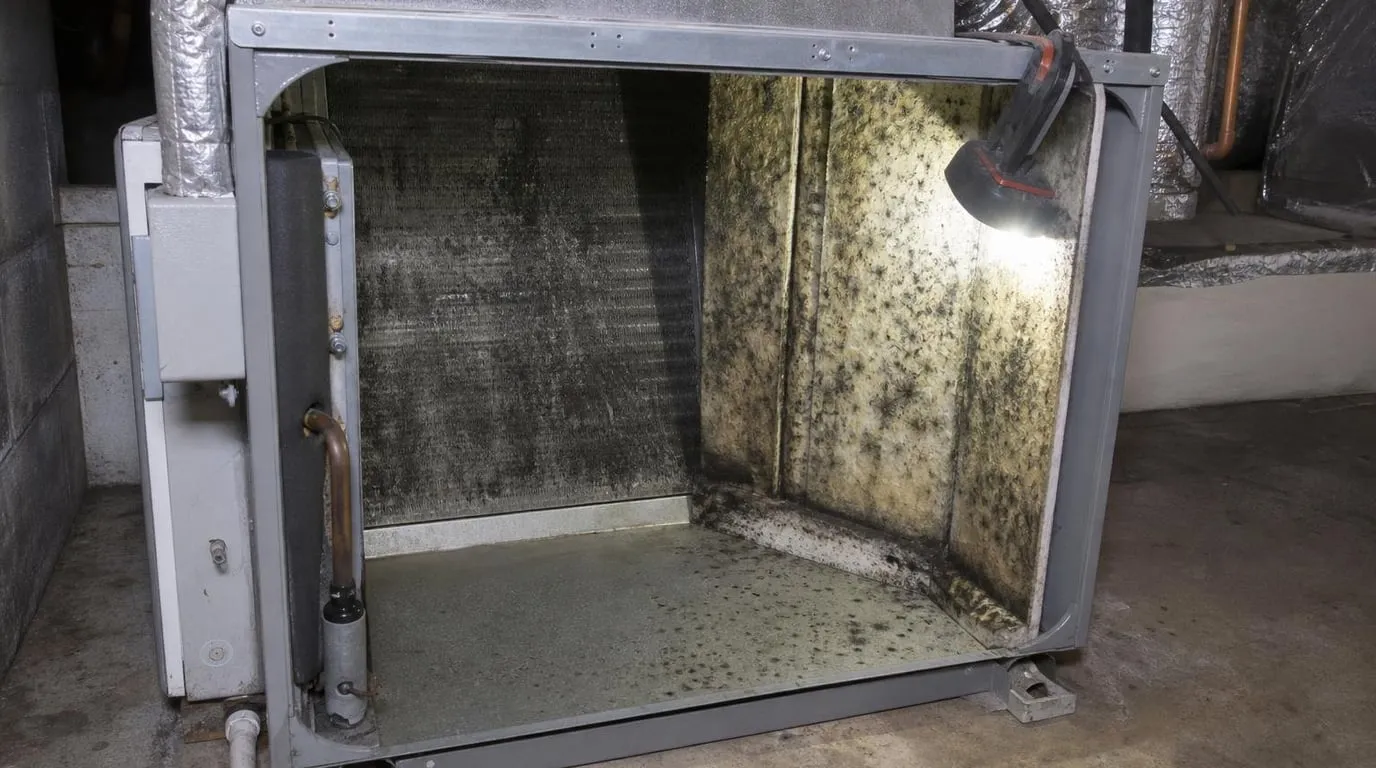
Most mold problems stay where the moisture is. HVAC mold breaks that rule: a colony on the evaporator coil or duct liner sits in the airstream of a machine whose job is to move every cubic foot of air in your house, repeatedly, all day. It is the difference between a weed in the yard and a weed in the irrigation system.
Quick answer: HVAC mold usually starts at the evaporator coil and drain pan, where condensation is constant, then spreads to duct liners. The tell is a musty smell from all vents at system startup. Remediation means cleaning or replacing contaminated components (coils cleaned, metal ducts mechanically cleaned, porous liners and flex duct replaced), plus fixing the moisture condition. Whole-house air quality does not recover until the system is clean.
Why HVAC Systems Grow Mold
The cooling side of an HVAC system manufactures the exact conditions mold needs:
- The evaporator coil condenses water continuously in cooling season; that is how it dehumidifies. The coil, pan, and surrounding cabinet stay wet for months.
- Dust arrives constantly, delivering food to the wet surfaces despite filtration.
- Internal insulation liners are porous fiberglass — excellent spore anchorage.
- Condensation forms inside or on ducts wherever insulation is missing or crushed, especially runs through hot attics.
- Clogged condensate drains back water up into the cabinet, escalating everything above.
Signs the System Is the Source
The pattern that distinguishes HVAC mold from room mold: symptoms are house-wide and correlate with the system running. Musty odor from every register at startup, allergy symptoms in every room rather than one, visible speckling at supply registers, and air samples elevated in rooms with no local moisture source. If a musty smell appears only in one room, work through the room-by-room search first.
What Proper Remediation Involves
- Inspection of the air handler interior, coil, pan, and representative duct sections.
- System shutdown during remediation, so it stops distributing.
- Component-appropriate treatment:
| Component | Treatment |
|---|---|
| Evaporator coil | Professional cleaning with coil-safe products |
| Drain pan and condensate line | Clean, clear, and treat |
| Bare sheet metal ducts | Mechanical brush-and-vacuum cleaning with HEPA collection |
| Internally lined ducts with growth | Replacement: liners cannot be decontaminated |
| Flexible duct with growth | Replacement |
| Filters and housings | Replace filters; clean housings |
- Moisture correction: drain slope, insulation gaps, and humidity control, or the colony returns next cooling season.
- Verification, ideally with post-remediation air sampling through independent testing.
Any room-level mold that the system seeded gets handled under the standard containment-and-removal process, with costs following the ranges in mold remediation cost, where duct involvement is one of the main multipliers.
Related Services
Bingham Restoration remediates HVAC-involved mold with in-house lab verification and coordinates duct replacement where liners are colonized. See our mold and asbestos services or call 520-FLOODED.
Frequently Asked Questions
How do I know if there's mold in my HVAC system?
A musty smell from every vent when the system starts is the classic sign. Others: visible growth at registers or in the air handler, dark speckling on duct insulation, unexplained house-wide allergy symptoms, and moisture around the unit.
Where does mold grow inside an HVAC system?
The evaporator coil and drain pan (constantly wet in cooling season), internal fiberglass insulation liners, duct interiors where condensation forms, and filter housings. The coil area is the most common origin.
Can HVAC mold make the whole house smell and test high for spores?
Yes. The system moves the home's entire air volume many times a day, so a colony inside it functions as a distribution hub, seeding every conditioned room.
Can moldy ductwork be cleaned, or does it need replacement?
Bare sheet metal duct can be mechanically cleaned. Internally insulated duct and flexible duct with growth on the liner generally must be replaced, because porous liners cannot be reliably decontaminated.
How do I prevent mold in my HVAC system?
Change filters on schedule, keep the condensate drain clear, have the coil inspected and cleaned annually, control indoor humidity below about 55 percent, and fix any duct condensation problems (usually insulation gaps).
Need Emergency Restoration Right Now?
Our crews arrive in 48 minutes on average and bill your insurance directly.
Call 520-FLOODED