
Bingham Restoration Resources
Window Condensation Mold: Cause, Cleanup, and Prevention
Published August 13, 2026
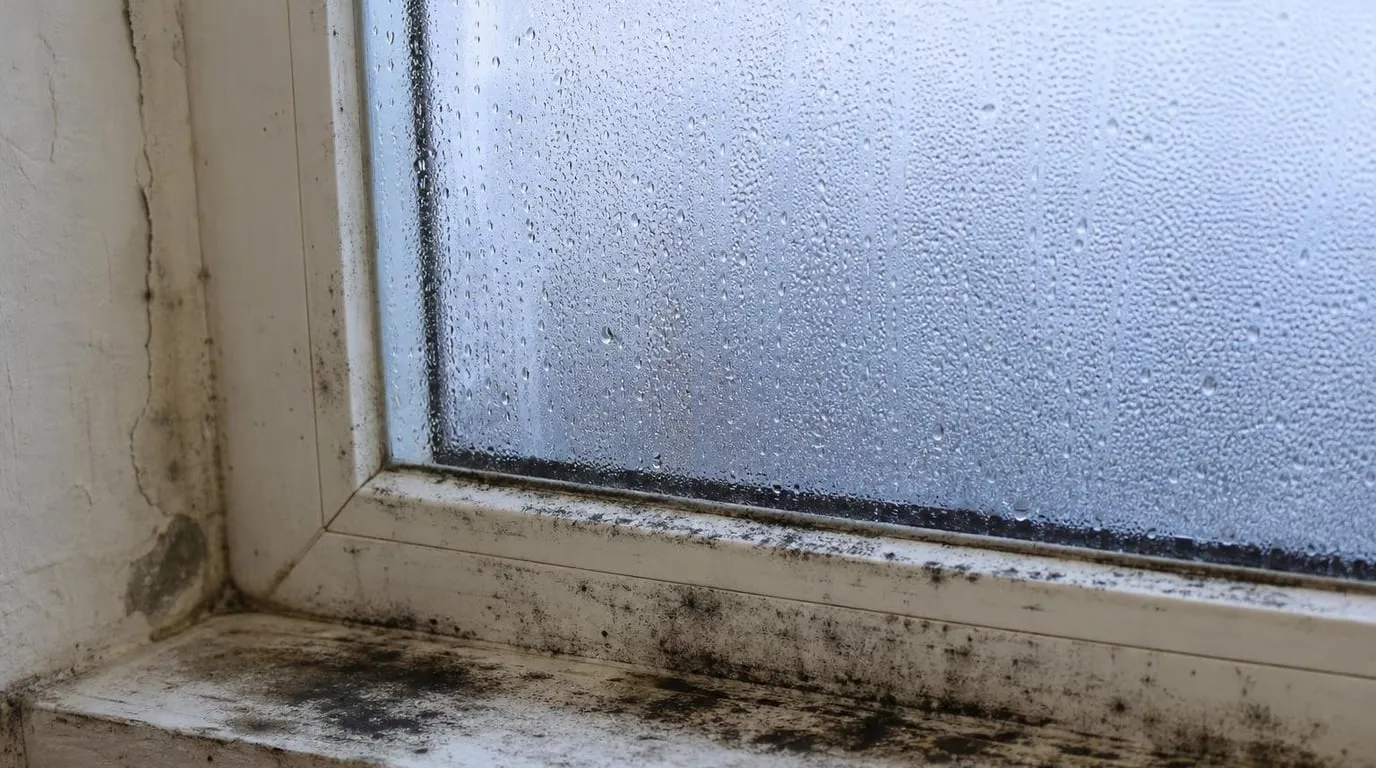
Every winter, the same black speckling appears along the bottom of the window sash and creeps across the sill. Window condensation mold is the most visible humidity report your house produces, and it is telling you something about the whole building, not just the window.
Quick answer: Mold grows at windows because glass and frames are the coldest indoor surfaces, so airborne moisture condenses there night after night. Clean the mold with detergent and disinfectant, then break the cycle: lower indoor humidity to 30–45%, improve air circulation at the windows, and address failing windows or chronic moisture sources. Cleanup without the humidity fix is an annual subscription.
The Physics in One Paragraph
Air holds moisture in proportion to its temperature. When room air touches glass at 35°F, it cools below its dew point and sheds water on the surface — the same reason a cold drink sweats. Window frames and the wall corners around them run cold too, which is why the mold pattern hugs the glass line, the sash bottom, and the sill. Dust plus condensation plus a cold, still corner is a complete mold recipe.
Cleaning It Properly
- Gloves and a mask; mold disturbs easily.
- Wash the growth off with detergent solution; avoid dry brushing, which flicks spores.
- Follow with a disinfectant, and let surfaces dry fully.
- Vinyl and metal come clean; wood with gray or black staining under the finish needs sanding and refinishing, and soft, crumbling wood needs replacement.
- Check what the curtains and blinds touched, since fabric near the glass often carries growth.
If mold extends past the window onto the wall or below the sill into the wall cavity, the problem has graduated; see mold behind walls for how that gets confirmed.
Fixing the Cycle
Lower the humidity. Target 30–45% in winter (a $15 hygrometer keeps you honest). The big levers: run bathroom fans during and after showers, run the kitchen hood when cooking, vent the dryer properly, and address humidifiers running too high. Chronic whole-house humidity can also point at a wet basement or crawlspace pushing moisture upward, a dynamic covered in crawlspace water damage.
Move air at the glass. Open blinds during the day, keep furniture and heavy drapes from trapping still air against windows, and let heating registers under windows do their job.
Upgrade the cold surface. Single-pane windows and failed double-pane units (fog between the panes) will condense at humidity levels healthy homes should hold. Storm windows, insulating film, or replacement raises the surface temperature and ends the nightly condensation.
When It’s More Than the Windows
Condensation mold at windows in a home that also has musty odors, stained ceilings, or humidity readings above 55% year-round is a symptom, not the disease. That pattern justifies a broader moisture inspection, the same triage described in finding a musty smell’s source.
Related Services
Bingham Restoration handles everything from sill-level cleanup guidance to full remediation when window moisture has reached walls and cavities. See our mold and asbestos services or call 520-FLOODED.
Frequently Asked Questions
Why does mold grow around my windows in winter?
Warm indoor air holds moisture; window glass and frames are the coldest indoor surfaces. Moisture condenses there nightly, and the dust and paint on sills provide food. Repeat for a season and mold follows.
Is black mold on window sills dangerous?
Window sill mold is usually a modest exposure because the area is small, but it signals indoor humidity high enough to grow mold, and it can spread to walls and curtains. Sensitive individuals can react to even small colonies.
How do I clean mold off window sills and frames?
Wear gloves and a mask, wash with detergent solution, disinfect, and dry thoroughly. Vinyl and aluminum clean well; bare or water-stained wood may need sanding and refinishing, and crumbling material should be replaced.
What indoor humidity prevents window condensation?
Keep winter indoor humidity between 30 and 45 percent. If windows drip at those levels, the windows' insulating performance is the problem, and ventilation or window upgrades are the fix.
Does window condensation mean my windows are bad?
Persistent heavy condensation on the room side suggests single-pane or failing units. Fog between the panes means the insulated glass seal has failed. Both make the surfaces colder and the mold cycle worse.
Need Emergency Restoration Right Now?
Our crews arrive in 48 minutes on average and bill your insurance directly.
Call 520-FLOODED