
Bingham Restoration Resources
Bathroom Mold: When to DIY and When It's a Bigger Problem
Published August 12, 2026
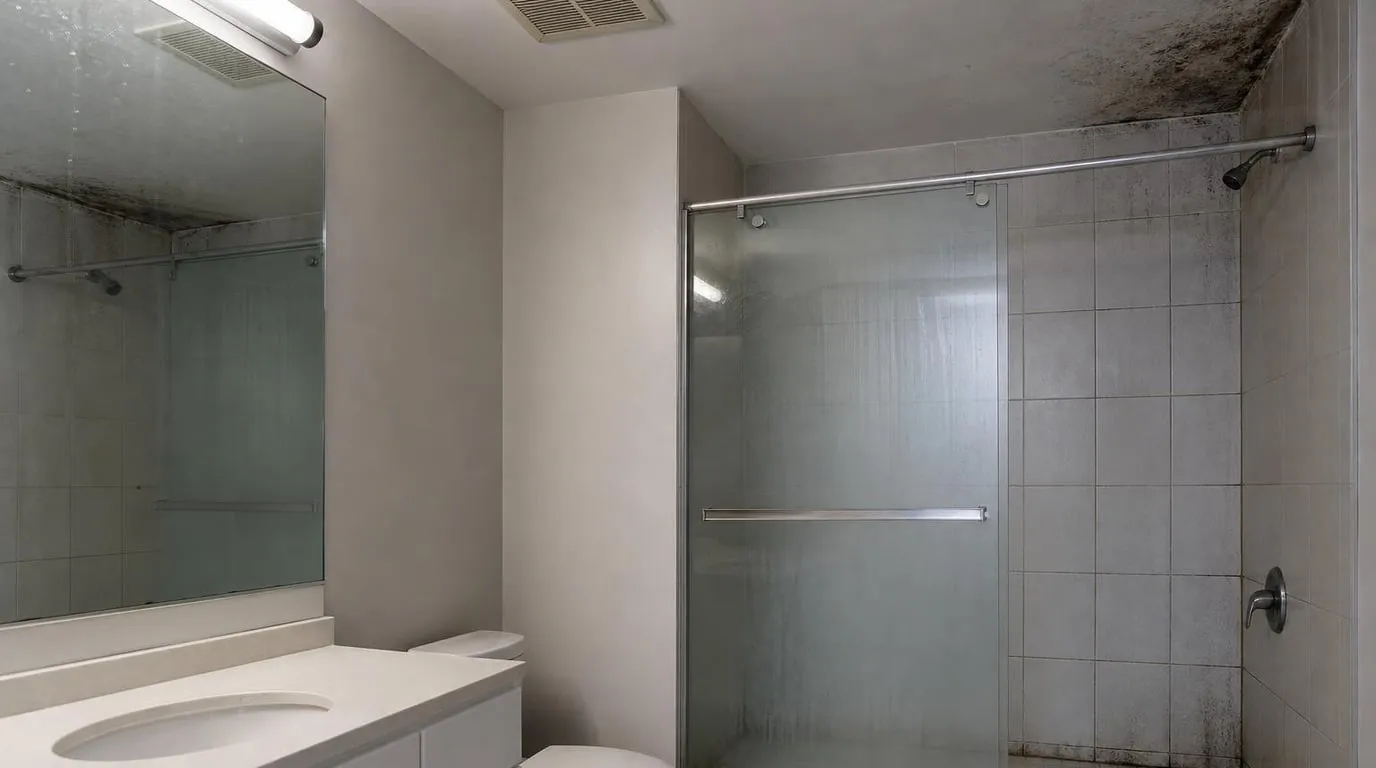
Bathroom mold spans the full range from cosmetic to structural. The speckled mildew on shower caulk is a cleaning task; the dark bloom spreading across the ceiling is a ventilation failure; and the soft wall behind the tile is a remediation project. Knowing which one you have is most of the battle.
Quick answer: Surface mold on tile, grout, glass, and caulk is a DIY job: scrub, disinfect, replace stained caulk, and fix the ventilation. Mold on drywall or the ceiling, mold that returns within weeks, or any musty smell from behind the walls signals moisture beyond the surface, and that tier needs moisture inspection and often professional removal.
The Three Tiers of Bathroom Mold
| Tier | What you see | Response |
|---|---|---|
| Surface mildew | Speckling on grout, caulk, glass, painted surfaces | DIY cleaning + ventilation fix |
| Material involvement | Growth on/through drywall, ceiling blooms, stained recurring patches | Inspection; likely partial material replacement |
| Cavity involvement | Musty smell, soft walls, loose tile, spongy floor, stains below | Professional moisture mapping and remediation |
Tier 1 DIY: scrub non-porous surfaces with detergent solution, follow with a disinfectant, dry the surfaces, and strip and replace any caulk with staining under it. Never mix bleach and ammonia products, and ventilate while you work.
Tier 2 caution: drywall and ceiling paint are porous; mold anchored there regrows through new paint reliably. Small patches (under roughly 10 square feet, per EPA guidance) can be cut out and replaced by a capable DIYer with the moisture problem fixed. Beyond that, or on repeated recurrence, treat it as tier 3.
Tier 3 confirmation: persistent musty odor, tile going hollow, flooring going soft at the tub, or staining in the room below means water has been reaching the assembly — grout failure, a shower pan leak, or a supply/drain leak inside the wall. That diagnostic path is covered in mold behind walls.
The Ventilation Fix (or It All Comes Back)
Recurring bathroom mold is a humidity problem wearing a mold costume. A shower pushes humidity near 100%, and everything depends on how fast the room dries:
- Run the exhaust fan during and 20 to 30 minutes after every shower; a timer switch makes this automatic.
- Verify the fan actually works. Hold a tissue to the grille. Weak fans, blocked ducts, and fans venting into the attic (a mold problem relocation program, see attic mold) are all common.
- Size matters: the fan’s CFM rating should at least match the room’s square footage.
- Squeegee shower walls, leave the door or curtain open to dry, and wash bath mats regularly.
When to Bring In Professionals
Large areas, cavity signs, fast recurrence, or symptomatic household members justify a professional look. Proper remediation for cavity involvement follows the containment-removal-verification sequence described in our remediation timeline guide, plus repair of the water path that fed it. Bathrooms are also where hidden water damage most often escalates quietly.
Related Services
Bingham Restoration handles bathroom mold from inspection through tile-out remediation and rebuild. See our mold and asbestos services or call 520-FLOODED.
Frequently Asked Questions
Is bathroom mold dangerous?
Surface mildew on tile and caulk is common and low-risk for most healthy people. Mold on drywall, ceilings, or spreading despite cleaning indicates a moisture problem that can involve the wall cavity, and prolonged exposure affects sensitive individuals.
What kills mold in the bathroom?
For non-porous surfaces: scrub with detergent, then disinfect. Bleach works on tile and glass but does not penetrate porous materials like drywall or wood, where mold roots survive and regrow.
Why does my bathroom mold keep coming back?
Because the moisture keeps coming back. Inadequate exhaust ventilation is the usual cause: the fan is undersized, blocked, vented into the attic, or simply not run long enough after showers.
When is bathroom mold a professional job?
When it covers a large area, grows on or through drywall or the ceiling, returns quickly after cleaning, smells musty behind the walls, or coincides with soft tile, spongy floors, or staining in the room below.
Should moldy caulk be cleaned or replaced?
Replaced. Mold under silicone or in caulk lines cannot be reliably cleaned out. Strip the caulk, treat and dry the joint, and recaulk with a mold-resistant product.
Need Emergency Restoration Right Now?
Our crews arrive in 48 minutes on average and bill your insurance directly.
Call 520-FLOODED