
Bingham Restoration Resources
Attic Mold Removal: Ventilation, Roof Leaks, and Remediation
Published August 19, 2026
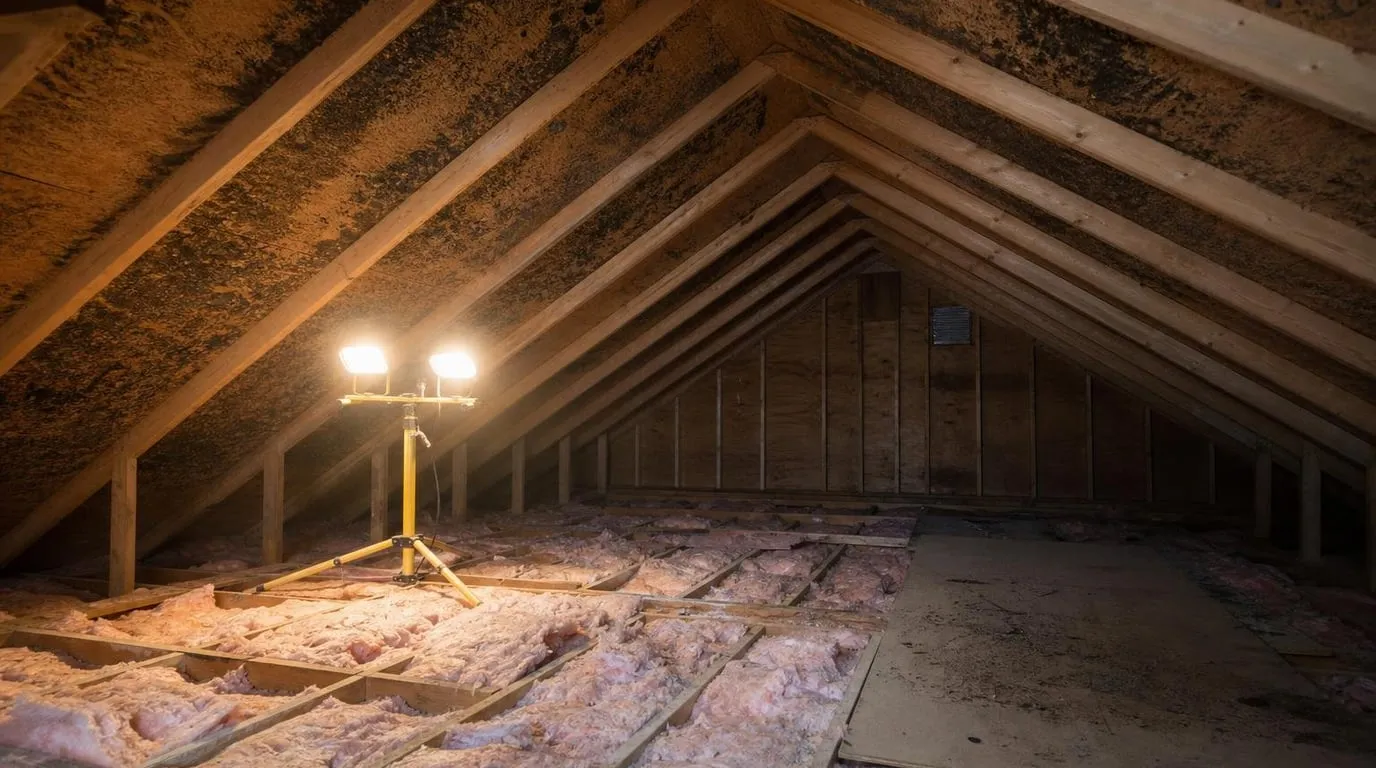
Attic mold is discovered more often than it is noticed: by the home inspector during a sale, by the roofer quoting a replacement, by the HVAC tech running a new line. It grew for years in the one space nobody visits, and it almost always traces back to a short list of fixable causes.
Quick answer: Attic mold grows when humid air meets cold roof sheathing, whether from blocked ventilation, bathroom or dryer ducts exhausting into the attic, ceiling air leaks, or roof leaks. Removal involves contained cleaning of the sheathing (media blasting or abrasive methods), replacing contaminated insulation, and, critically, correcting the moisture mechanism. Expect $4,000 to $10,000 for professional remediation.
The Usual Suspects
Exhaust fans venting into the attic. The most common single cause. Every shower sends a cloud of humid air onto cold sheathing all winter. The fix is cheap (duct the fan through the roof or gable), and the growth pattern gives it away: a dark bloom radiating from above the bathroom. (Dryer vents do the same with more lint.)
Blocked or inadequate ventilation. Soffit vents stuffed with insulation, missing baffles, or too little exhaust vent area trap moisture-laden air. Healthy attics breathe; sealed ones condense.
Ceiling air leaks. Recessed lights, attic hatches, and top-plate penetrations leak warm humid air upward all heating season — the building-science version of a slow leak.
Roof leaks. Localized staining and growth below a flashing failure or missing shingle. This one adds a roof and storm dimension to the project.
The telltale for condensation-driven mold: growth concentrated on the north-facing sheathing and near the eaves, often uniform “shadowing” across large areas, worse after a cold winter.
What Removal Involves
- Containment at the attic access, with negative air, so the work does not push spores into living space.
- Insulation removal where contaminated: blown-in insulation cannot be cleaned and holds spores.
- Sheathing treatment. Dry-ice or soda blasting strips growth from wood cleanly and reaches truss crevices; abrasive hand methods work for smaller areas. HEPA vacuuming and antimicrobial application follow.
- Structural replacement of any sheathing soft with rot.
- The permanent fix: reroute exhausts outdoors, clear and baffle ventilation paths, air-seal the ceiling plane, repair roof intrusions. This step is the whole ballgame; cleaned sheathing under the same conditions regrows.
- New insulation and clearance verification.
Pricing sits in the mid four figures for most homes; the variables and market context are in our mold remediation cost guide.
Why It’s Worth Doing Before You Must
Attic mold surfaces at the worst possible times: real estate inspections (where it delays or reprices sales) and roof replacements (where sheathing replacement suddenly enters the quote). It also degrades structural wood continuously. Homeowners who catch a musty upstairs smell early (see tracking a musty smell) tend to pay for cleaning; those who wait tend to pay for sheathing.
Related Services
Bingham Restoration remediates attic mold with containment, media blasting, and the ventilation corrections that keep it gone. See our mold and asbestos services or call 520-FLOODED.
Frequently Asked Questions
What causes mold in an attic?
Almost always one of three things: blocked or inadequate ventilation trapping humid air, bathroom or dryer exhaust venting into the attic instead of outside, or roof leaks wetting the sheathing. Winter condensation on cold sheathing is the common mechanism.
Is attic mold dangerous if I never go up there?
It matters more than it seems. Attic air communicates with living space through ceiling penetrations, and attic mold degrades roof sheathing structurally. It also reliably surfaces during home sales inspections.
How is mold removed from attic sheathing?
Contained media blasting (dry ice or soda) or abrasive hand methods remove growth from wood, followed by HEPA vacuuming and antimicrobial treatment. Sheathing with structural rot gets replaced. Contaminated insulation is removed and replaced.
How much does attic mold remediation cost?
Typically $4,000 to $10,000 depending on attic size, access, insulation replacement, and the ventilation or exhaust corrections needed to prevent recurrence.
Will attic mold come back after removal?
Only if the moisture mechanism survives the project. Ventilation correction, exhaust rerouting, and air-sealing the ceiling plane are what make remediation permanent.
Need Emergency Restoration Right Now?
Our crews arrive in 48 minutes on average and bill your insurance directly.
Call 520-FLOODED