
Bingham Restoration Resources
Kansas City Mold Remediation: Humid Summers, Wet Basements
Published August 16, 2026
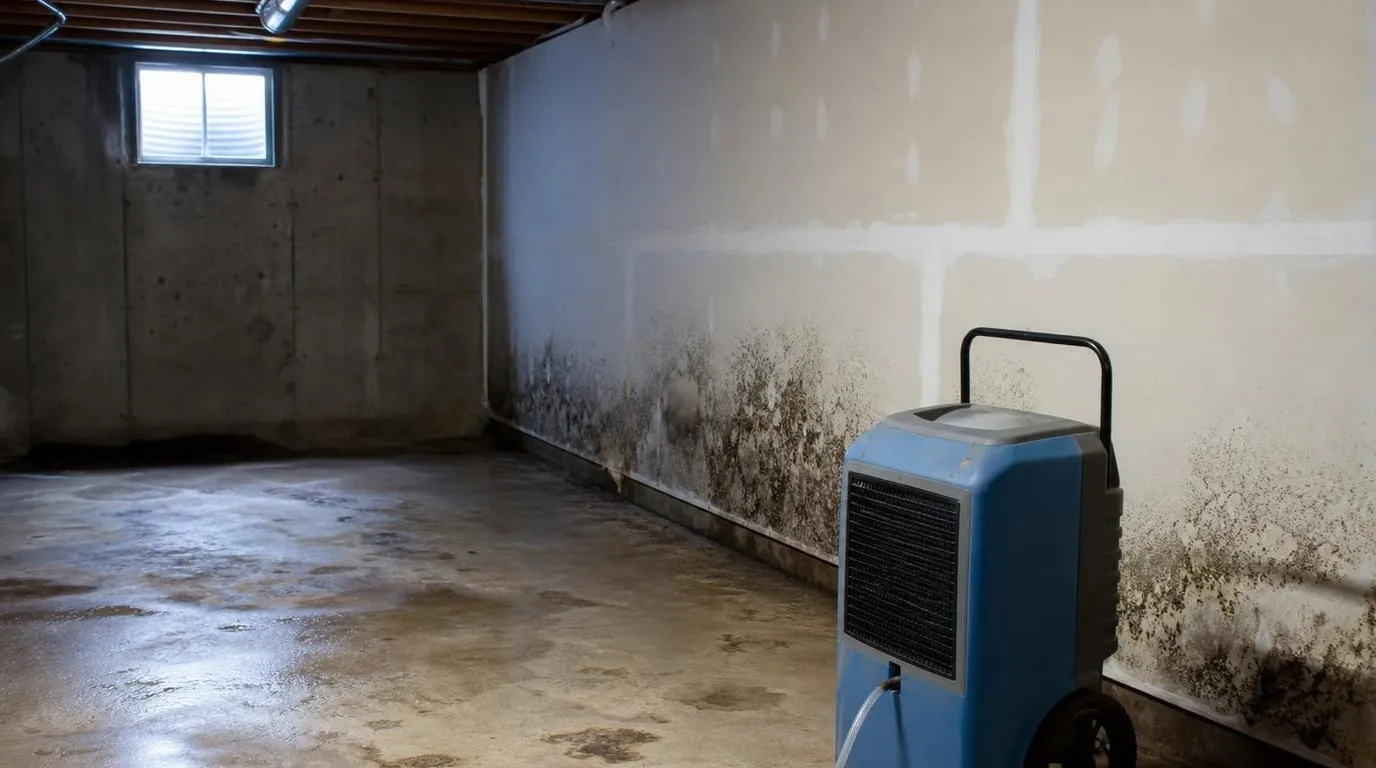
Kansas City mold has an address: the basement. The metro’s expansive clay soil swells against foundations after every storm system, summer dew points sit in the 60s and 70s, and thousands of finished basements wrap that moisture in carpet, drywall, and wood framing. Remediation crews here spend most of their year below grade.
Quick answer: Mold remediation in Kansas City follows the IICRC S520 standard (containment, HEPA-filtered negative air, removal of colonized materials, moisture correction, and clearance verification), but the local work is dominated by basement and foundation moisture. Fixing the water path (grading, gutters, sump capacity, dehumidification) is as much a part of the KC remediation as the removal itself.
Why KC Grows Mold
Clay soil against the foundation. The region’s expansive clay absorbs storm water, swells, and holds moisture against basement walls for weeks. Hydrostatic pressure pushes water through cracks, cove joints, and block cores. Every wet spring writes the same story into drywall at the basement perimeter.
Storm loading. Severe weather season delivers inches of rain in single events, overwhelming gutters and grading, and driving the sump-failure floods described in our sump pump guide.
Humid summers. Even a dry basement runs humid from June through September as outdoor dew points meet cool below-grade surfaces. Condensation on cold walls and ducts feeds growth without a drop of liquid water intrusion.
Freeze-thaw winters. Foundation cracks widen annually, and frozen pipe events add sudden water losses that, under-dried, become spring mold discoveries.
The Remediation Process, KC Edition
- Assessment and moisture mapping: perimeter meter surveys and thermal imaging to find the intrusion paths, not just the visible growth.
- Containment and negative air so basement work does not seed the upstairs.
- Removal of colonized drywall, insulation, and carpet pad; cleaning and treatment of framing and masonry.
- Moisture correction is the step that determines whether the fix lasts: grading and downspout extensions, sump capacity and backup, crack sealing, and right-sized dehumidification. Skip it and the mold returns with the next storm system.
- Clearance verification before rebuild, with independent testing available through our environmental testing lab.
Older housing note: much of the metro’s pre-1980 stock carries asbestos in basement flooring, duct wrap, and plaster. Suspect materials get tested before demolition — standard practice for our AHERA-certified team.
Insurance Reality in Missouri and Kansas
Mold following a covered sudden loss (burst pipe, appliance failure) is generally covered within a sublimit; mold from chronic seepage or humidity is excluded. The practical implication: mitigate every water event fast and document it, because that record is what keeps a later mold discovery inside the covered claim. Cost benchmarks are in our mold remediation cost guide.
Related Services
Bingham Restoration serves the Kansas City metro on both sides of the state line with S520-standard remediation and in-house lab testing. See our mold and asbestos services or call 520-FLOODED.
Frequently Asked Questions
Why do Kansas City basements grow so much mold?
Expansive clay soil holds water against foundations, seasonal storms load the ground faster than drainage moves it, and humid summers keep below-grade spaces damp. Finished basements add mold-friendly materials to that moisture.
What humidity should a KC basement hold to prevent mold?
Below 55 percent, verified with a hygrometer. In practice most Kansas City basements need a dehumidifier running from late spring through early fall to stay there.
Does insurance cover mold remediation in Missouri or Kansas?
Only when the mold follows a covered sudden water loss, subject to mold sublimits. Mold from chronic seepage, humidity, or grading problems is typically excluded on both sides of the state line.
Do Missouri or Kansas license mold remediation companies?
Neither state runs a mold licensing program, so credentials and process are the differentiators: IICRC certification, S520-standard containment and removal, and independent clearance testing.
Can I just paint my basement walls with mold-killing paint?
No. Encapsulating active growth without removal and moisture correction hides the problem while it continues behind the coating. Paint has a role after remediation, not instead of it.
Need Emergency Restoration Right Now?
Our crews arrive in 48 minutes on average and bill your insurance directly.
Call 520-FLOODED