
Bingham Restoration Resources
Ice Dam Water Damage: How Roof Ice Gets Into Your Walls
Published September 30, 2026
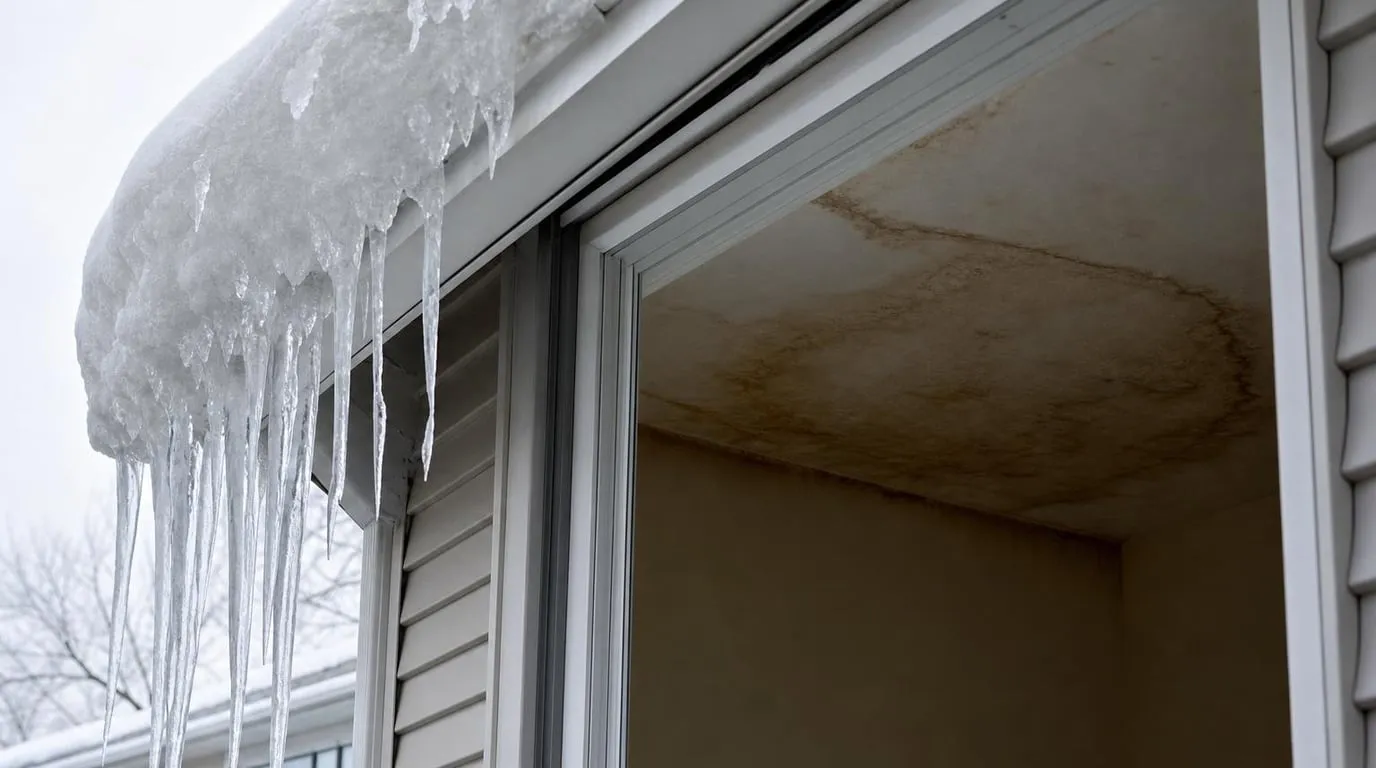
An ice dam is a plumbing failure your roof builds for itself: a ridge of ice at the eave that turns the lower roof into a shallow pool. Shingles shed falling water; they do not resist standing water, and the pool behind a dam finds the laps and nail holes within days. The damage shows up inside as stained ceilings, wet wall tops, and soaked insulation, while the cause sits in plain sight on the gutter line.
Quick answer: Ice dams form when attic heat melts roof snow that refreezes at the cold eaves; the meltwater pooling behind the ice backs up under shingles into the deck, ceilings, and walls. Immediate response: rake snow off the lower roof, open melt channels with calcium chloride, and dry any interior intrusion fast. The permanent fix is in the attic — air sealing, insulation, and ventilation that keep the whole roof cold.
The Mechanism
Three conditions build a dam: snow on the roof, an attic warm enough to melt its underside, and eaves cold enough to refreeze the runoff (they overhang unheated space, so they always are). The cycle runs for days after a snowfall, thickening the ice ridge and deepening the pool behind it. Water then backs up beneath shingle courses and enters at the deck, where it wets everything downstream: sheathing, eave-line insulation, ceiling drywall, and the tops of exterior walls, cavities where moisture lingers well past the 48-hour mold window.
The interior evidence concentrates along exterior walls: ceiling stains a foot or two inside the wall line, water tracking at window heads, peeling paint at the wall-ceiling joint, and damp insulation visible from the attic.
Response: Now, Soon, and Permanent
Now (dam active, water inside). Contain and document interior water, then reduce the pool: rake snow from the lower 3 to 6 feet of roof (from the ground) and lay calcium-chloride-filled socks vertically across the dam to melt drainage channels. Skip the hammer, the axe, and the pressure washer, since mechanical ice removal destroys shingles reliably. Get intruded areas moisture-mapped and dried promptly; wall-top and eave cavities are exactly where thermal imaging earns its keep.
Soon (this winter). Professional steam removal for severe dams; heat cable as a managed stopgap on problem eaves.
Permanent (the attic). Dams are an attic-heat symptom. The durable fix is to air-seal ceiling penetrations (top plates, can lights, hatches, chases), insulate to climate-appropriate depth, and ventilate soffit-to-ridge so the roof deck stays at outdoor temperature. A cold roof cannot dam, and the same work also ends the winter condensation that feeds attic mold.
Insurance and the Repeat-Offender Problem
Sudden ice dam intrusion is generally covered, including the interior drying and repair. What weakens claims is history: a documented dam problem left unaddressed for seasons drifts toward neglect territory. After a first event, fix the attic conditions and keep the records. Homes along the Wasatch Front and across the Kansas City metro see enough freeze-thaw cycles that the repeat scenario is the expected one, as our Salt Lake City water damage work shows every February.
Related Services
Bingham Restoration dries and rebuilds ice dam intrusion and can scope the attic corrections that end the cycle. See our water damage restoration services or call 520-FLOODED.
Frequently Asked Questions
How does an ice dam cause water damage?
Attic heat melts roof snow, meltwater runs down to the cold eave and refreezes into a dam, and the pool that forms behind the dam backs up under the shingles, a path shingles are not designed to resist. The water enters the deck, insulation, ceilings, and wall tops.
What are the signs of ice dam water intrusion?
Thick ice ridges at the eaves, large icicles, ceiling or wall-top staining near exterior walls, water at window heads, and damp attic insulation along the eave line during a freeze-thaw stretch.
How do I remove an ice dam safely?
From the ground: roof rake the snow off the lower courses and use calcium chloride (never rock salt) in sock channels to melt drainage paths. Do not chip ice with tools or climb an icy roof; both cause more damage than the dam.
Does insurance cover ice dam damage?
Interior water damage from ice dams is generally covered on standard policies as sudden loss. Chronic, repeated intrusion from a known unaddressed dam problem can be contested, so document and fix contributing conditions.
What permanently prevents ice dams?
Attic work, not roof gadgets: air-seal ceiling penetrations, insulate to keep attic temperatures near outdoor levels, and ventilate soffit-to-ridge. A uniformly cold roof cannot make a dam.
Need Emergency Restoration Right Now?
Our crews arrive in 48 minutes on average and bill your insurance directly.
Call 520-FLOODED