
Bingham Restoration Resources
How to Prevent Frozen Pipes: A Pre-Winter Checklist
Published October 3, 2026
A burst pipe is among the most expensive routine disasters in American housing, releasing water at full line pressure into wall cavities for however long it takes someone to notice. It is also among the most preventable: nearly every freeze failure traces to a known pipe in a known cold spot that an afternoon of fall work would have protected.
Quick answer: Before winter: insulate every pipe in unconditioned space, seal the air leaks that chill pipe runs, disconnect hoses and winterize spigots, and know where your main shutoff is. During hard freezes: hold indoor heat at 55°F or higher, open cabinets on exterior walls, and let vulnerable faucets drip. Leaving town: shut off the main and drain the lines. The pipes that burst are the ones nobody prepared.
Know Your Vulnerable Pipes
Freeze failures cluster in predictable places:
- Crawlspaces, garages, and attics: supply lines in unconditioned air
- Exterior walls: kitchen and bathroom runs with thin insulation behind them
- Hose bibs and the interior pipe feeding them
- Unheated additions and vacation-vacant homes
- Anywhere cold air leaks onto a pipe: rim joists, penetrations, vents
Walk the house once each fall and list them. Everything below applies to that list.
The Fall Checklist
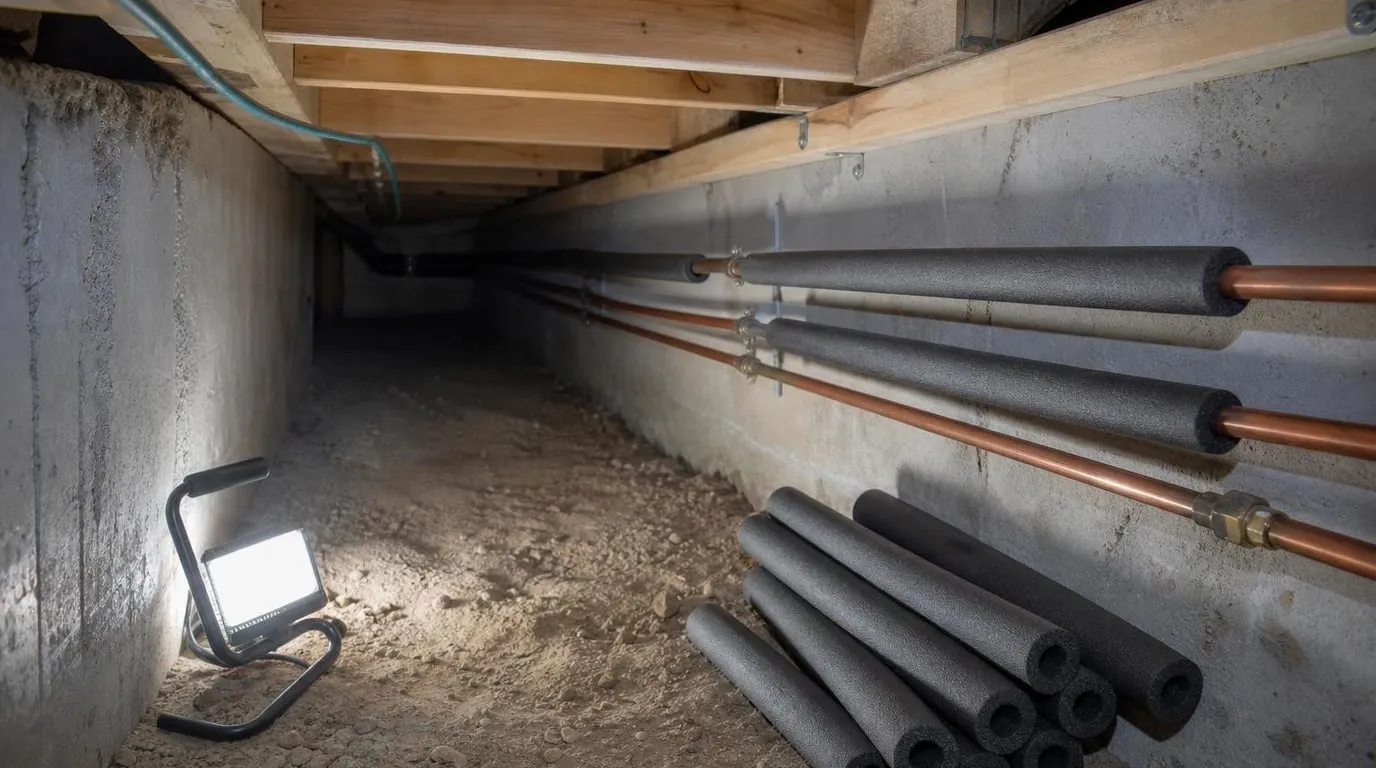
- Insulate exposed runs. Foam sleeves on every accessible pipe in unconditioned space — cheap, fast, effective. Heat cable (thermostatic) for chronic problem runs.
- Seal the cold air. Caulk and foam at rim joists, penetrations, and crawlspace vents near plumbing. Air leaks freeze more pipes than ambient cold does.
- Winterize outside. Disconnect and drain hoses; shut interior valves to hose bibs and drain the stub, or install frost-free bibs.
- Service the heat. The furnace failing during a cold snap is the whole-house freeze scenario; fall maintenance is pipe insurance.
- Find and label the main shutoff, and make sure everyone in the house can operate it. When a pipe does burst, this valve is the difference between a wet closet and a whole-floor loss.
During a Hard Freeze
Hold the thermostat at 55°F or above day and night, open cabinet doors on exterior-wall plumbing so room heat reaches the pipes, and let faucets on vulnerable runs drip, since moving water resists freezing and the open faucet relieves the pressure that actually ruptures pipes. If a faucet stops flowing, act immediately: shut off water to that run and warm the pipe gently (hair dryer or heat, never open flame). A frozen-but-intact pipe is a save; the emergency response to the alternative is covered in frozen pipe burst: the first 60 minutes.
Traveling: The Highest-Stakes Scenario
Vacant homes produce the worst freeze losses because nothing interrupts the water. Before leaving in winter: heat at 55°F minimum, cabinets open, and best of all, main supply off with lines drained. Smart leak sensors and automatic shutoff valves add a remote safety net, and some insurers discount for them. An unnoticed vacation burst can run water for days, producing the saturation-and-mold cascade described in secondary water damage.
Related Services
If prevention loses to weather anyway, Bingham Restoration answers 24/7 with a 48-minute average arrival for extraction, verified drying, and rebuild. See our water damage restoration services or call 520-FLOODED.
Frequently Asked Questions
At what temperature do pipes freeze?
Uninsulated pipes in unheated spaces become vulnerable when outdoor temperatures drop to about 20°F, and sustained cold snaps push risk into any pipe on an exterior wall or in unconditioned space.
What are the most effective ways to prevent frozen pipes?
Insulate exposed pipes in crawlspaces, garages, and attics; seal air leaks near pipe runs; disconnect hoses and use frost-free or shut-off exterior spigots; keep heat at 55°F or above at all times; and during hard freezes, let vulnerable faucets drip and open cabinet doors.
Should I let faucets drip during a freeze?
Yes, for faucets served by vulnerable runs. Moving water resists freezing, and the drip relieves the pressure buildup between an ice blockage and the closed faucet, which is what actually bursts the pipe.
How do I protect pipes when traveling in winter?
Keep the thermostat at 55°F minimum, open cabinets on exterior-wall plumbing, and ideally shut off the main water supply and drain the lines. A smart water shutoff or leak sensors add remote protection.
Why do pipes burst when they freeze?
Ice expansion blocks the pipe, and continued freezing pressurizes the trapped water between the ice plug and closed fixtures until the pipe splits, often rupturing at a point away from the visible freeze.
Need Emergency Restoration Right Now?
Our crews arrive in 48 minutes on average and bill your insurance directly.
Call 520-FLOODED