
Bingham Restoration Resources
Indoor Air Quality Testing: What It Measures, When You Need It
Published September 6, 2026
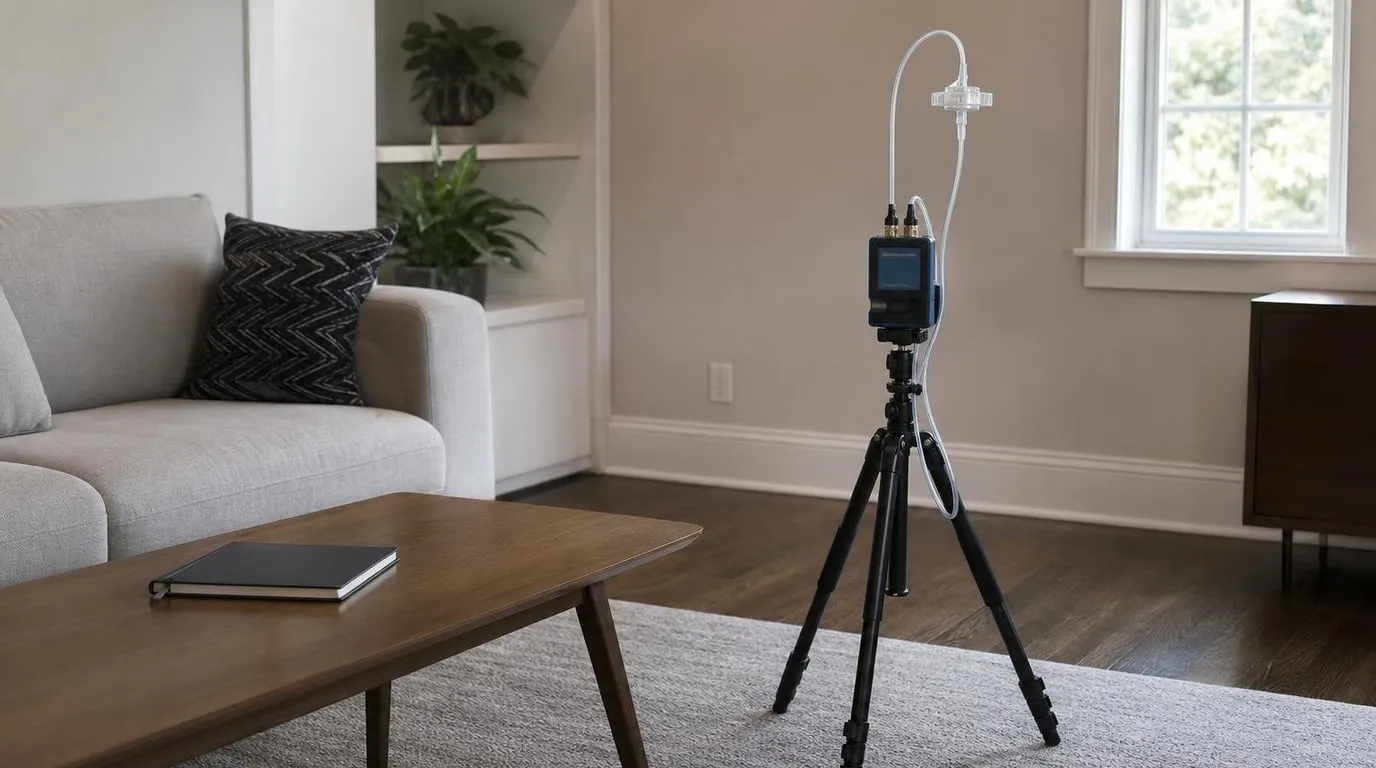
You cannot see the thing you breathe. Indoor air quality testing exists for the problems that announce themselves as symptoms, odors, or suspicion rather than visible damage, and for verifying that a remediation actually returned the air to normal, instead of just the walls.
Quick answer: IAQ testing measures airborne mold spores, particulates, VOCs, humidity, and specific hazards, using calibrated sampling analyzed by a laboratory. It is most valuable after water, fire, or mold events, before closing up a remediation, and when occupants have symptoms without a visible cause. Results are read against outdoor baselines and unaffected areas, not against a single magic number.
What Gets Measured
- Mold spores: counted and identified by genus via air sampling. The comparison logic matters: indoor counts are judged against same-day outdoor samples. Indoor totals above outdoor, or indoor dominance of water-damage species like Stachybotrys or Chaetomium, point to an indoor source.
- Particulates (PM2.5/PM10): combustion residue, wildfire smoke infiltration, construction dust.
- VOCs: off-gassing from materials, smoke residue, chemical odors.
- Humidity and comfort gases: sustained humidity above ~55% is a mold-risk finding in itself; CO monitoring where combustion appliances are involved.
- Targeted hazards: asbestos fiber counts during and after abatement, and lead dust clearance after regulated work.
When Testing Earns Its Cost
After a loss. Post-restoration testing verifies the work: that drying prevented growth, that smoke and soot cleanup actually cleared the particulate load, that the house is done being a job site. This is the verification role covered in air quality testing after restoration.
Around mold remediation. Pre-remediation sampling establishes severity and scope; post-remediation clearance testing, ideally independent of the remediator, proves the containment worked before walls close. The distinction between assessment approaches is detailed in mold testing vs. inspection.
Symptoms without a source. Congestion, headaches, or asthma that improve away from home justify sampling. Elevated results then license the moisture hunt described in finding a musty smell; normal results usefully redirect attention.
Transactions and renovations. Damage-history homes, pre-1980s renovations (asbestos and lead enter the picture), and post-wildfire purchases all benefit from a baseline.
Reading Results Honestly
Two cautions keep IAQ testing useful. First, air sampling is a snapshot — spore release varies by day, humidity, and disturbance, so a single clean sample does not exonerate a suspicious house; patterns and multiple locations do. Second, testing without interpretation invites either panic or false comfort. Spore counts need reading against baselines, species profiles, and the building’s moisture story, which is why sampling should come with a professional’s written interpretation, not just a lab printout.
Related Services
Bingham Restoration runs an in-house laboratory for mold, asbestos, and lead testing with fast turnaround, plus full IAQ sampling around restorations and remediations. See our environmental testing services or call 520-FLOODED.
Frequently Asked Questions
What does indoor air quality testing measure?
Depending on scope: mold spore counts by type, particulates (PM2.5/PM10), volatile organic compounds (VOCs), humidity, carbon dioxide and carbon monoxide, and specific hazards like asbestos fibers or radon when indicated.
When should a home get air quality testing?
After water or fire losses, before and after mold remediation, when occupants have unexplained respiratory symptoms, after renovations disturbing older materials, when buying a home with damage history, and for persistent odors with no visible source.
How does mold air sampling work?
A calibrated pump draws a known air volume through a collection cassette, indoors and outdoors for comparison. A lab counts and identifies spores; indoor counts meaningfully above outdoor baselines, or dominated by water-damage species, indicate an indoor source.
How much does indoor air quality testing cost?
Basic mold air sampling typically runs $250 to $600 for a few sample locations. Broader IAQ panels covering VOCs and particulates run $400 to $1,000+. In-house labs shorten turnaround and often cost.
Can air testing find hidden mold?
It can confirm an indoor mold source and its general severity even when growth is concealed, which is exactly its best use: elevated indoor spore counts justify the moisture investigation that finds the colony.
Need Emergency Restoration Right Now?
Our crews arrive in 48 minutes on average and bill your insurance directly.
Call 520-FLOODED