
Bingham Restoration Resources
Mold Testing in Salt Lake City: When Utah Homes Need It
Published September 16, 2026
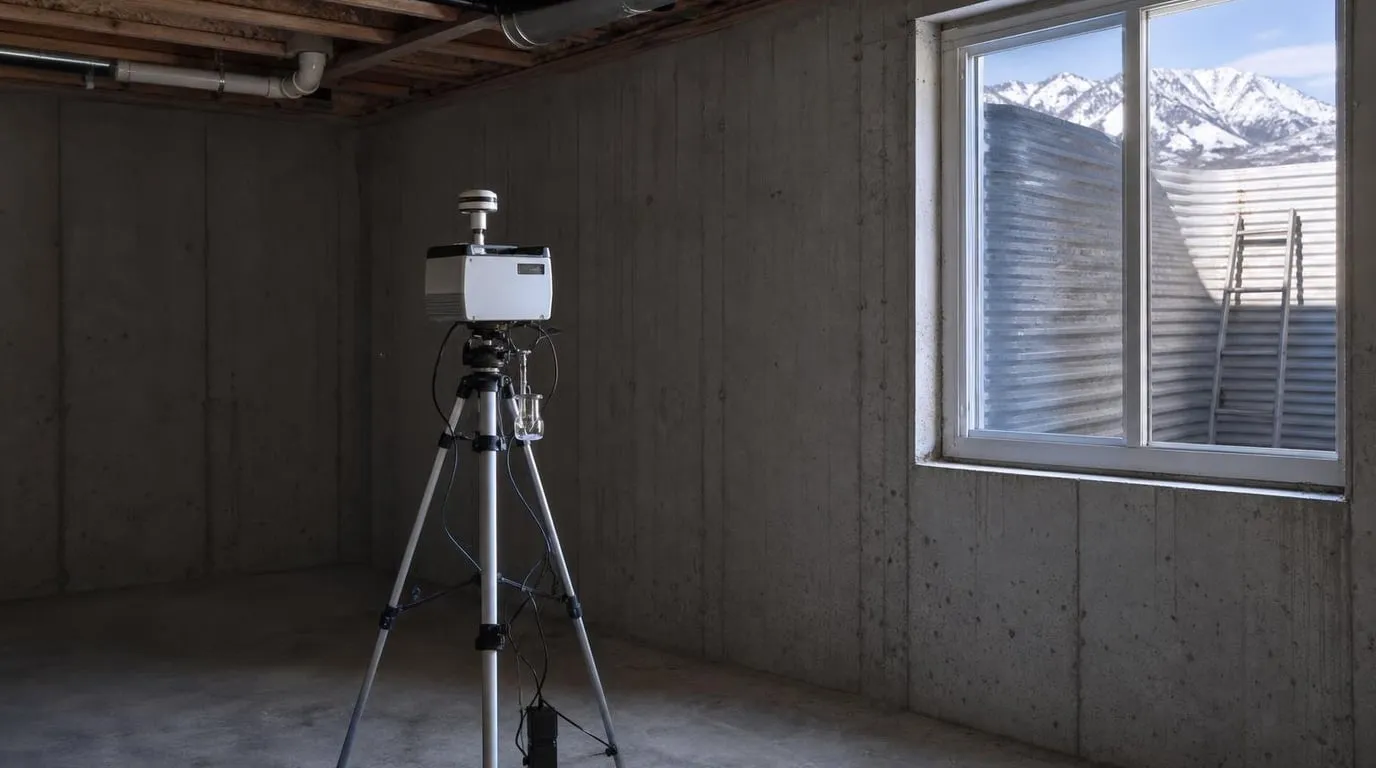
Salt Lake City’s climate runs a seasonal misdirection: bone-dry summers convince homeowners mold is impossible, while winter and spring quietly load the housing stock with moisture — freeze events, ice dams, and the snowmelt that finds every basement on the bench. Mold testing in Utah is mostly the science of checking whether last season’s water actually left.
Quick answer: Salt Lake City homes need mold testing after water events that may not have fully dried, for musty odors or symptoms without visible cause, and as post-remediation clearance. Expect $300 to $600 for professional air sampling with laboratory analysis. Utah has no mold licensing program, so IICRC credentials and accredited lab work are the quality markers that matter.
Where Utah Homes Grow Hidden Mold
Basements. The Wasatch Front’s spring ritual of heavy snowpack melting over saturated ground pushes water through foundation walls and window wells into the finished basements most SLC homes rely on. Under-dried spring seepage becomes autumn’s musty smell. The intrusion mechanics are covered in basement flooding in Salt Lake City.
Frozen pipe paths. January’s burst pipe gets fixed and the visible damage repaired, but wall cavities along the pipe run hold moisture far longer than surfaces do. Testing months later routinely finds growth on the back of intact-looking drywall.
Attics and ice dams. Warm interior air meeting cold sheathing condenses all winter, and ice dam intrusion wets the same assemblies from outside. North-slope sheathing shadowing is the classic finding.
Older housing stock. Sugar House, the Avenues, and Murray-area homes add plaster, layered materials, and decades of patched water history, the profile where testing before purchase earns its fee.
What Testing Involves Here
The process follows the standard playbook detailed in our testing vs. inspection guide: calibrated air sampling read against outdoor baselines, surface sampling of suspect growth, and moisture mapping to explain any findings. Utah adds one wrinkle worth knowing: winter outdoor baselines run very low (snowpack suppresses outdoor spores), which makes indoor elevations easier to detect and winter a genuinely good season to test.
Because Utah does not license mold work, verification discipline substitutes for regulation. The credible sequence: assessment and testing, remediation under containment if warranted, then independent clearance sampling before rebuild, the same standard we describe in mold remediation for SLC homes.
When Results Come Back Elevated
Elevated counts justify moisture investigation and scoped remediation, not panic. Species and location shape urgency: water-damage indicator species in a basement air sample point to active moisture; common outdoor genera slightly elevated may reflect a door left open during sampling. Interpretation is part of what you are paying for, so insist on a written report that connects numbers to building conditions and next steps.
Related Services
Bingham Restoration provides mold testing with in-house laboratory turnaround and S520-standard remediation across Salt Lake City and the Wasatch Front. See our environmental testing services or call 520-FLOODED.
Frequently Asked Questions
Why would a dry climate like Salt Lake City need mold testing?
Utah's aridity protects exteriors, not interiors. Snowmelt-wet basements, frozen pipe losses, ice dam intrusion, and under-dried water damage create indoor moisture pockets where mold grows exactly as it would anywhere else.
When should a Salt Lake City home get mold testing?
After any water loss that may not have fully dried, when a musty smell has no findable source, when occupants have unexplained respiratory symptoms, before buying an older home with damage history, and as clearance after remediation.
What does mold testing cost in Salt Lake City?
Air sampling with lab analysis typically runs $300 to $600 for several locations; adding surface samples or cavity sampling pushes toward $700. Inspection-only moisture mapping runs $200 to $400.
Does Utah license mold inspectors or remediators?
Utah has no state mold licensing program, so credentials carry the weight: IICRC certifications, accredited laboratory analysis, and independent clearance testing are the quality markers to ask about.
What Utah-specific spots does testing focus on?
Basements (snowmelt and window wells), attics with winter condensation or ice dam history, wall cavities on past frozen-pipe paths, and crawlspaces, the places where Wasatch Front moisture events concentrate.
Need Emergency Restoration Right Now?
Our crews arrive in 48 minutes on average and bill your insurance directly.
Call 520-FLOODED