
Bingham Restoration Resources
Mold Inspection Cost: What You Actually Pay For
Published September 7, 2026
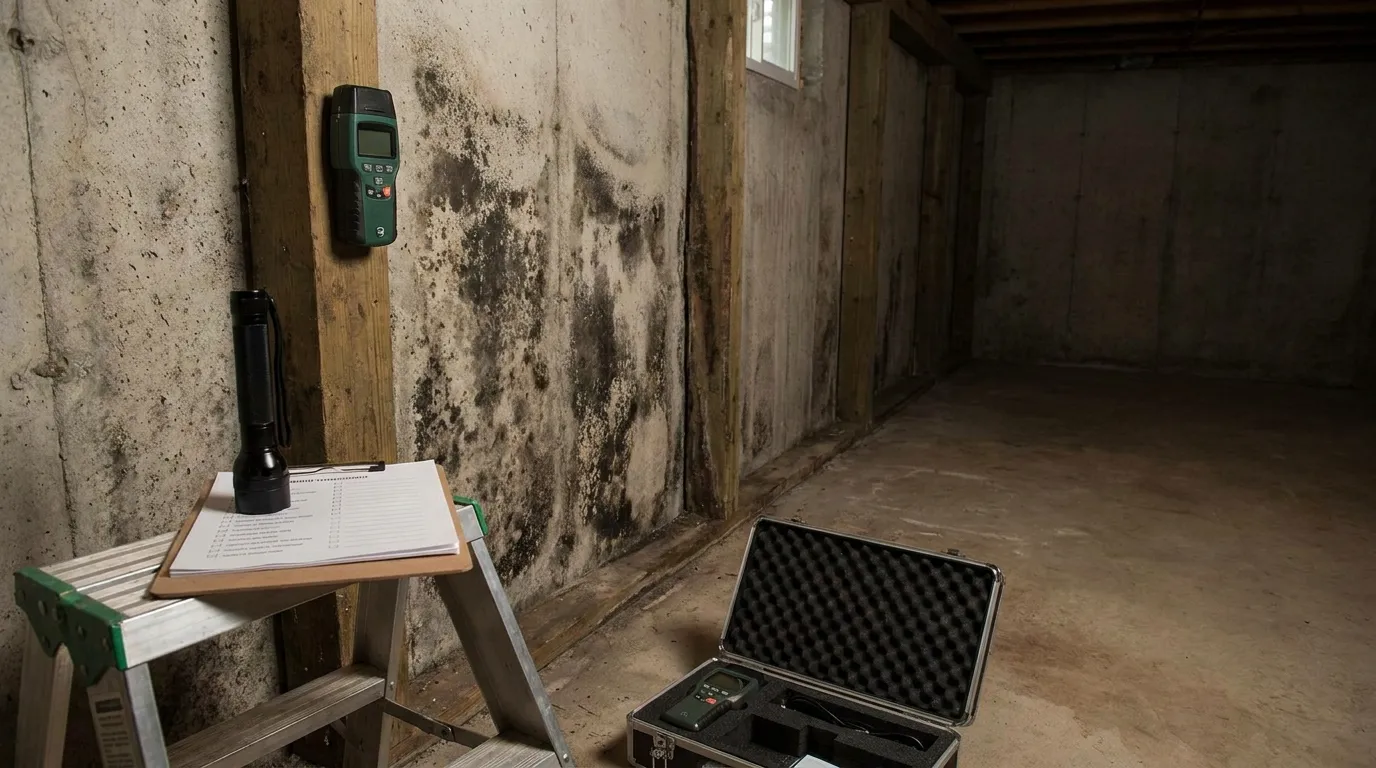
Mold inspection pricing is straightforward once you separate its two components: the investigation (eyes, meters, thermal imaging, experience) and the laboratory sampling (cassettes and swabs with lab fees attached). Most quotes are some bundle of the two, and most confusion comes from comparing bundles as if they were the same product.
Quick answer: A professional mold inspection costs $200 to $400 for the investigation, meaning visual assessment plus moisture mapping, and $300 to $700 when laboratory sampling is added. Sampling adds value when mold is suspected but not visible, when health decisions depend on species, or when you need clearance documentation. When growth is already visible, spend the money on remediation scoping instead.
What Each Tier Buys
| Tier | Typical cost | What you get |
|---|---|---|
| Visual inspection + moisture mapping | $200–$400 | Room-by-room assessment, meter and thermal imaging survey, written findings |
| Inspection + air sampling | $300–$600 | Above, plus 2–4 air samples with lab analysis and interpretation |
| Inspection + air and surface sampling | $400–$700 | Above, plus swab/tape samples of suspect growth |
| Large home / extensive sampling | $700–$1,200+ | More locations, cavity samples, detailed reporting |
The investigation is the higher-value half in most cases. A competent inspector with a moisture meter and thermal camera answers the central question of whether there is a moisture problem and where, while samples answer narrower ones: is this stain mold, how loaded is the air, which species. When sampling makes sense (and when it does not) is covered in depth in mold testing vs. inspection.
When to Pay for an Inspection
- Musty odor with no findable source: the inspector’s tools pick up where your flashlight stopped; see tracking a musty smell.
- Symptoms that improve away from home: sampling adds objective data to a medical conversation.
- Past water damage, uncertain drying: moisture mapping reveals whether the previous loss actually dried.
- Real estate transactions: damage-history houses, or stains the seller explains vaguely.
- Post-remediation clearance: independent verification before walls close, arguably the single most cost-effective sampling event.
And the case to skip it: visible, obvious mold. Inspection confirms what you already know; the useful next step is remediation scoping, where assessments are typically part of the quote. Pricing for that phase is covered in mold remediation cost.
The Independence Question
The cleanest arrangement separates diagnosis from treatment: an inspector paid a flat fee for findings, with no remediation contract at stake, or at minimum, clearance testing performed by someone other than the remediator being cleared. “Free inspections” from firms selling remediation can be honest, but the incentive structure deserves your awareness. Ask any inspector three things: what instruments they use, whether the fee includes a written report with photos and moisture readings, and who runs their laboratory.
Related Services
Bingham Restoration offers moisture-mapped inspections with in-house laboratory analysis for fast turnaround, and independent-lab clearance options after remediation. See our environmental testing services or call 520-FLOODED.
Frequently Asked Questions
How much does a mold inspection cost?
A visual inspection with moisture mapping typically runs $200 to $400 for an average home. Adding air or surface sampling brings the total to $300 to $700, with larger homes and more sample locations at the high end.
Is a mold inspection worth it?
When there is a real question (musty odor without a source, symptoms, past water damage, or a real estate decision), yes. When mold is plainly visible, skip straight to remediation quotes; you do not need to pay to be told what you can see.
What does a mold inspector actually do?
Interviews you about the building's water history, visually inspects moisture-prone areas, maps moisture with meters and thermal imaging, and collects samples where justified. The deliverable is a written report tying findings to causes.
Are free mold inspections legitimate?
Be careful. Free inspections from companies that sell remediation carry an obvious incentive. Independent inspection, or an inspection-only fee, buys advice with no stake in finding a project.
Does insurance pay for mold inspection?
Sometimes, when tied to a covered water loss claim. Standalone inspections for general concern are typically out of pocket.
Need Emergency Restoration Right Now?
Our crews arrive in 48 minutes on average and bill your insurance directly.
Call 520-FLOODED