
Bingham Restoration Resources
Mold Testing vs. Mold Inspection: What's the Difference?
Published September 9, 2026
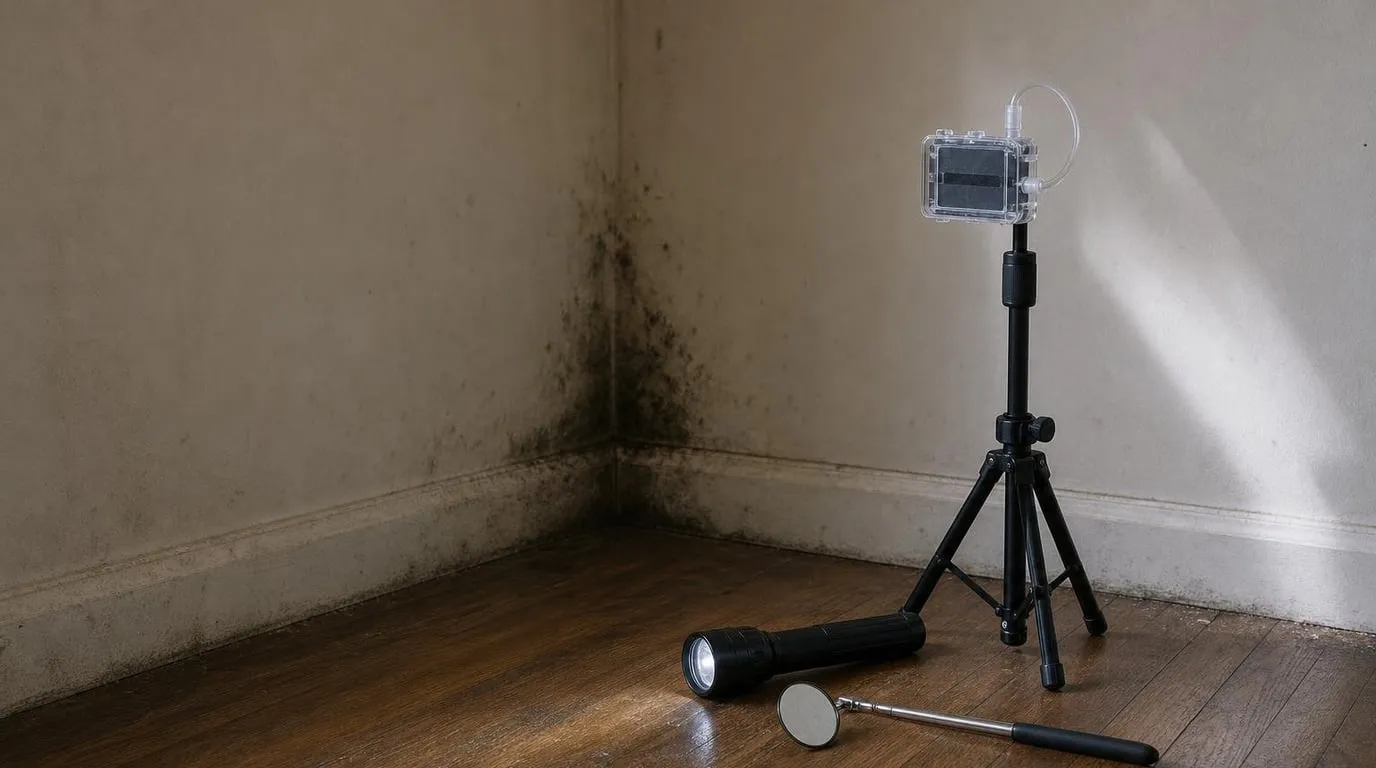
“Do I need mold testing or a mold inspection?” is really the question “am I trying to find something, or measure something?” The two services get sold together so often that the distinction blurs, but they answer different questions, and paying for the wrong one produces data you cannot act on.
Quick answer: A mold inspection is detective work: visual assessment and moisture mapping that locates growth and, more importantly, the moisture feeding it. Mold testing is measurement: lab-analyzed air or surface samples that quantify spores and identify species. Inspection is the right first step in almost every scenario; testing earns its cost for hidden-source confirmation, health documentation, and post-remediation clearance.
What Each One Answers
| Question | Inspection | Testing |
|---|---|---|
| Is there a moisture problem, and where? | ✔ | |
| Is that stain mold? | Usually | ✔ (surface sample) |
| Is there hidden mold affecting the air? | Indirectly | ✔ (air sample vs. outdoor baseline) |
| What species is present? | ✔ | |
| Is the air safe after remediation? | ✔ (clearance) | |
| Why did the mold grow, and will it return? | ✔ |
Notice inspection owns the causal questions. Mold is a moisture symptom, and only the investigation (meters, thermal imaging, building history) explains it. A lab report saying “elevated Aspergillus” without a moisture diagnosis is a fact without a plan. The investigative toolkit is the same one described in finding mold behind walls.
Scenarios, Sorted
Visible mold. Inspection to scope extent and cause; testing optional. EPA guidance is blunt here: known mold needs removal whatever its species, so identification rarely changes the plan. Save the sampling money for clearance later. Remediation pricing context is in mold remediation cost.
Musty smell, nothing visible. Inspection first — moisture mapping finds most hidden sources directly, as covered in the musty smell guide. Air sampling backs it up when the inspection cannot locate a source but suspicion remains.
Health symptoms. Both: inspection to find any source, air sampling to produce objective counts a physician can factor in. Symptom patterns are covered in black mold symptoms.
Real estate. Inspection with targeted sampling; the moisture diagnosis protects the buyer more than the spore count does.
After remediation. Testing, full stop. Clearance sampling before containment comes down is the receipt that the work succeeded, and it is most credible performed independently of the remediator.
A Word on DIY Kits
Hardware-store settle plates grow colonies from any indoor air, because all air carries spores. No calibrated volume, no outdoor comparison, no interpretation. A positive result is close to meaningless, and the anxiety it produces is real. Calibrated sampling with lab analysis and written interpretation, as described in indoor air quality testing, is the version of testing worth paying for.
Related Services
Bingham Restoration provides moisture-mapped inspections and in-house laboratory testing for mold, asbestos, and lead, with fast turnaround. See our environmental testing services or call 520-FLOODED.
Frequently Asked Questions
What is the difference between mold testing and mold inspection?
Inspection is the investigation: visual assessment, moisture mapping, and diagnosis of where and why mold could grow. Testing is laboratory measurement: air or surface samples quantifying and identifying mold. Inspection finds problems; testing measures them.
Do I need mold testing if I can see mold?
Usually not for the decision at hand. Visible mold needs removal regardless of species, and EPA guidance says as much. Testing adds value for health documentation, hidden-extent questions, and post-remediation clearance.
Which is better for a musty smell with nothing visible?
Start with inspection. Moisture mapping usually locates the source directly. Air sampling helps when the inspection comes up empty but suspicion remains, confirming whether an indoor source exists at all.
What is clearance testing?
Post-remediation sampling, ideally by a party independent of the remediator, verifying spore levels returned to normal before containment comes down and walls close. It is the most consistently worthwhile use of mold testing.
Are home mold test kits worth using?
Generally no. Settle-plate kits grow mold from air that always contains some spores, so they 'find mold' in virtually every home, with no calibrated volume, no baseline comparison, and no interpretation.
Need Emergency Restoration Right Now?
Our crews arrive in 48 minutes on average and bill your insurance directly.
Call 520-FLOODED