
Bingham Restoration Resources
Fire Damage Restoration in Tucson: Desert Recovery Guide
Published July 29, 2026
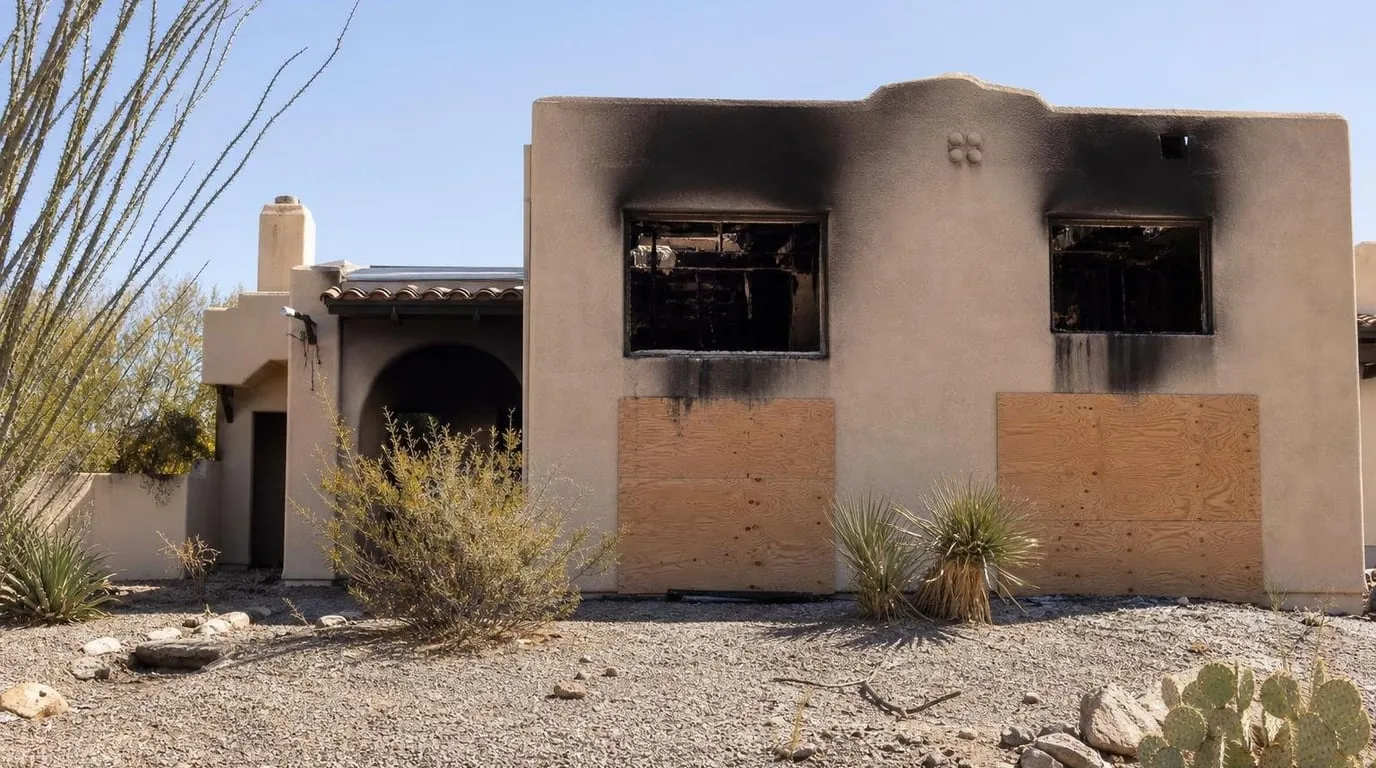
Fire recovery in Tucson runs through conditions most restoration guides never mention: 105-degree attics, monsoon cells that arrive hours after the fire trucks leave, and a housing stock that ranges from mid-century block ranches to century-old adobe. Each changes the playbook.
Quick answer: Fire damage restoration in Tucson follows the standard arc (board-up, assessment, smoke and soot removal, suppression-water drying, rebuild) with three local twists: fire-created openings must be weatherproofed fast during monsoon season, desert heat accelerates soot corrosion and odor penetration, and older adobe, block, and pre-1985 homes need material-specific handling, including asbestos testing before demolition.
The Tucson Complications
Monsoon exposure. From June through September, a burned-through roof section is a race against the next storm. Emergency tarping and board-up are the first crew tasks, because suppression water plus monsoon water turns a fire loss into a combined fire-and-flood loss. If storm water does get in, the monsoon response sequence applies alongside the fire scope.
Heat dynamics. Soot is acidic, and heat accelerates every reaction: fixtures etch faster, plastics yellow sooner, and odor compounds drive deeper into materials in a hot, closed house. Fast mitigation matters more in a Tucson July than almost anywhere else. It also affects scheduling; attic and containment work happens in morning windows for crew safety.
The housing stock. Adobe and burnt-adobe homes shrug off flame better than stick framing but drink smoke odor into their porous mass; cleaning is specialized and replacement is rarely an option in historic districts. Mid-century block ranches present similar masonry-cleaning scope. And anything built before the mid-1980s may carry asbestos in plaster, ceiling texture, or flooring — which means asbestos testing before demolition, not after.
What the Restoration Process Looks Like
- Emergency response: board-up, roof tarping, structural assessment, utility isolation.
- Water first: suppression water extraction and drying, since wet materials degrade daily. See the structural drying process.
- Soot and smoke: residue-matched cleaning, HVAC decontamination (swamp coolers and ducts hold smoke residue tenaciously), and deodorization. Full odor methodology in smoke smell removal.
- Contents: pack-out, off-site cleaning, and climate-controlled storage.
- Rebuild to pre-loss condition.
Insurance in Practice
Arizona fire claims cover structure, smoke throughout the home, suppression damage, contents, and additional living expenses. Two documentation points earn their keep in Tucson: photograph any storm exposure of the damaged structure (it keeps monsoon water inside the fire claim), and insist the smoke scope extend beyond the burn area, since desert homes with open plans distribute smoke widely. Cost context is in our fire restoration cost guide.
Related Services
Bingham Restoration serves Tucson with 24/7 fire response, trained restoration crews, and direct insurance billing. See our fire damage restoration services or call 520-FLOODED.
Frequently Asked Questions
How fast should fire cleanup start in Tucson?
Within days. Tucson's heat accelerates soot's acidic damage to metals and finishes, and if monsoon season is active, any fire-created roof opening needs protection before the next storm cell.
Does desert heat affect fire restoration?
Yes. High ambient temperatures intensify odor off-gassing, speed soot corrosion, and complicate worker safety scheduling. Crews often run deodorization and attic work in early-morning windows during summer.
Are Tucson's adobe and masonry homes harder to restore after fire?
Different rather than harder. Adobe and block resist structural burn damage better than framing, but they absorb smoke odor deeply and porous masonry requires specialized cleaning rather than replacement.
Does insurance cover fire damage in Tucson?
Fire is a covered peril on standard Arizona homeowners policies, including smoke, suppression water, contents, and additional living expenses during displacement.
What about older Tucson homes and asbestos?
Homes built before the mid-1980s may contain asbestos in plaster, ceiling texture, flooring, or duct insulation. Fire and demolition can disturb it, so testing before demo is standard practice and legally required for regulated work.
Need Emergency Restoration Right Now?
Our crews arrive in 48 minutes on average and bill your insurance directly.
Call 520-FLOODED