
Bingham Restoration Resources
Mold Behind Walls: Signs, Testing, and Removal
Published August 10, 2026
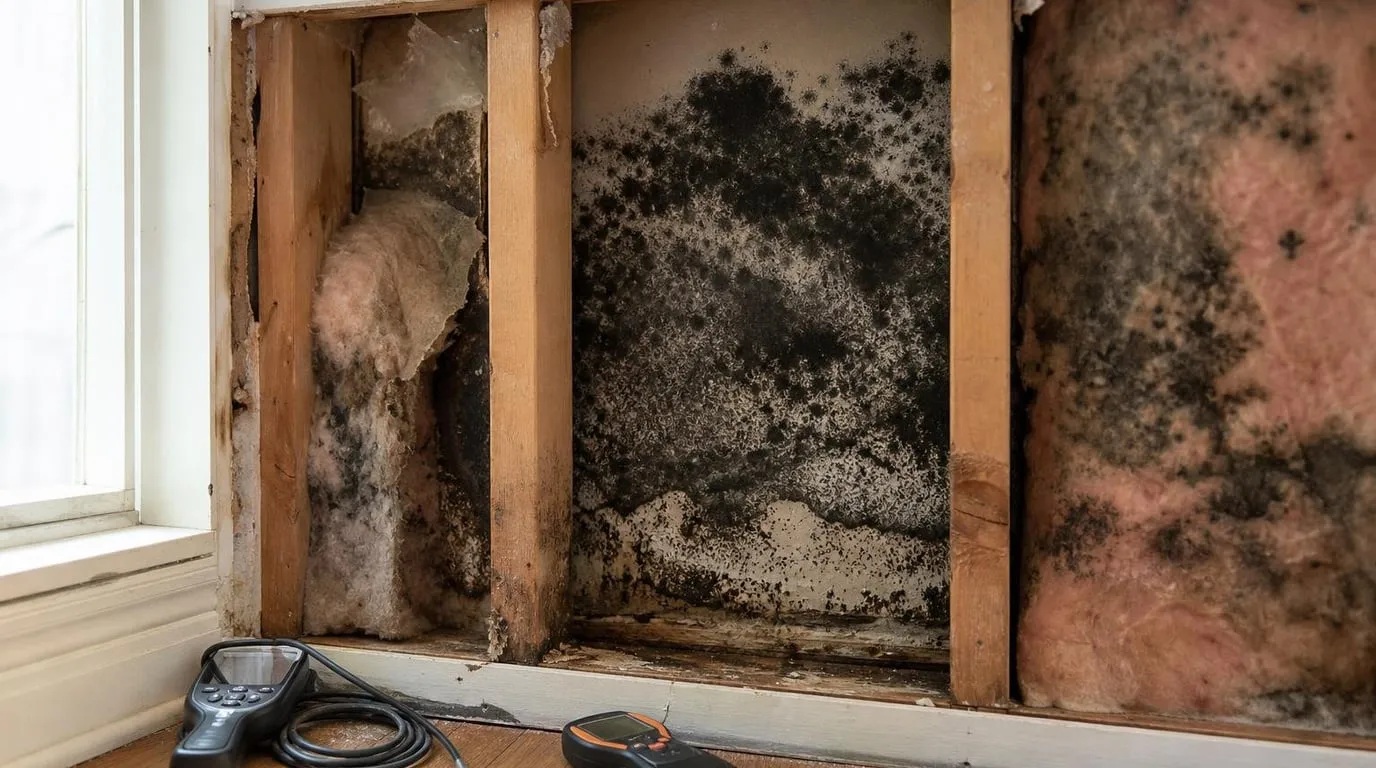
The mold you can see is rarely the problem; it announces itself and gets cleaned. The colony behind the drywall, fed by a slow supply-line leak, a window flashing failure, or one flood that never fully dried, grows for months in the dark, and the house knows before you do.
Quick answer: Suspect mold behind a wall when a musty odor persists, paint bubbles or stains without explanation, drywall softens, or symptoms flare indoors, especially anywhere water intruded in the past. Confirmation uses moisture meters, thermal imaging, borescope inspection, and cavity air sampling. Removal means opening the wall under containment, discarding colonized materials, treating framing, fixing the moisture source, and verifying before rebuild.
Why Wall Cavities Grow Mold So Well
A wall cavity is a mold incubator by design: dark, undisturbed, unventilated, lined with paper-faced drywall (a preferred food), and insulated in a way that holds moisture against surfaces. A leak that would dry in a day on the counter persists for weeks inside the wall. The common feeds:
- Supply or drain lines running through the wall, with slow fitting drips
- Window and door flashing failures wicking rain into sheathing
- Exterior grade or siding issues wetting the wall base
- Condensation on cold-side surfaces in poorly insulated walls
- A past flood dried by airflow alone, leaving the cavity wet
Evidence Before Demolition
The signs, roughly in order of how often they appear first:
- Musty odor that will not resolve, the single most reliable indicator; see finding the source of a musty smell.
- Paint and surface changes: bubbling, peeling, or shadowy discoloration as moisture and growth work through from behind.
- Texture changes: drywall that feels soft or damp, baseboard pulling or warping.
- Health patterns: congestion, irritation, or asthma that eases away from home; the symptom picture is covered in black mold symptoms.
Professional confirmation is non-destructive first: moisture meter surveys map the wet zone, thermal imaging shows the cooling signature of damp materials, a borescope through a small hole gives visual confirmation, and cavity air sampling quantifies spores. This sequence defines the removal scope before the first cut, which keeps both the demolition and the bill contained.
What Removal Involves
Cavity mold is a removal job, not a treatment job:
- Containment with negative air pressure, so opening the wall does not seed the house.
- Controlled demolition of colonized drywall and insulation, cut wide of the visible margin — growth extends beyond what shows.
- Framing treatment: HEPA vacuuming, damp wiping, antimicrobial application; structural wood usually stays.
- Source repair and cavity drying, verified by meter.
- Clearance verification before the wall closes. Skipping this is how walls get rebuilt over live colonies.
The full market pricing picture is in mold remediation cost; cavity involvement is the main variable that moves small jobs into the mid four figures.
Related Services
Bingham Restoration finds and removes concealed mold with in-house lab confirmation on both ends of the job. See our mold and asbestos services or call 520-FLOODED.
Frequently Asked Questions
What are the signs of mold behind a wall?
A persistent musty smell, unexplained staining or discoloration, bubbling or peeling paint, soft or bowed drywall, and allergy-type symptoms that improve when you leave the house. Any past water event behind that wall raises the probability sharply.
How do you check for mold inside a wall without tearing it open?
Moisture meters locate damp sections, thermal imaging maps cold wet zones, borescope cameras inspect through a small hole, and wall-cavity air sampling can confirm elevated spores. Demolition comes after evidence, not before.
Can mold inside walls make you sick?
Yes. Spores and MVOCs migrate into living space through outlets, gaps, and air movement. Concealed colonies produce the same allergic and respiratory effects as visible ones.
Will mold inside a wall go away if it dries out?
No. Growth pauses without moisture, but the colony and its allergenic material remain, and it reactivates with the next humidity event. Established cavity mold requires removal.
Does insurance cover mold found inside walls?
If it resulted from a covered sudden water loss, generally yes within the mold sublimit. If it grew from a slow leak over months, carriers often deny it as gradual damage, one more reason to act on early signs.
Need Emergency Restoration Right Now?
Our crews arrive in 48 minutes on average and bill your insurance directly.
Call 520-FLOODED